


Saturday, June 13, 2026
Home Blog Page 157

Euler Motors raises ₹638-Cr in funding round led by Hero MotoCorp

0
Saurav Kumar, founder & CEO, Euler Motors

Electric vehicle (EV) manufacturer Euler Motors announced on Monday that it has raised ₹638 crore in a Series D funding round, led by Hero MotoCorp. The round also included participation from existing investor British International Investment (BII), the UK’s development finance institution.

According to the company, Euler Motors will use the funds to strengthen its sales and service network and develop new products to accelerate the adoption of commercial EVs in India.

“With this fresh capital and strategic backing from new and existing investors, we are poised to accelerate our scale, continue innovating to deliver superior products, and come a few steps closer towards becoming India’s No. 1 commercial EV brand,” said Saurav Kumar, Founder and CEO, Euler Motors, in the statement. With this round, the company has raised approximately Rs 1,420 crore to date.

Earlier in January, Euler Motors had raised up to $20 million in debt funding from responsAbility Investments AG to scale up its production and distribution infrastructure and boost its R&D capabilities.

This capital infusion followed the successful closure of its Series C funding round, in which the company secured an additional ₹200 crore from investors such as British International Investment, Blume Ventures, and Piramal Alternatives India Access Fund.

At the time, Euler stated that the funding would support the development and expansion of its four-wheeler commercial EV, the Storm EV, aimed at serving logistics and e-commerce clients.

“As we strengthen and diversify our presence in the emerging mobility landscape, this investment allows Hero MotoCorp to venture into a rapidly growing electric three and four-wheeler market, while unlocking adjacent business opportunities and continuing to cement its leadership in the future of sustainable mobility,” said Pawan Munjal, Executive Chairman of Hero MotoCorp.

Euler Motors’ key investors also include Blume Ventures, Asian Development Bank Ventures, Athera Partners, and Piramal Alternatives India Access Fund, highlighting strong backing from both domestic and international institutions.

Euler Motors’ successful ₹638 crore Series D funding round, led by Hero MotoCorp, underscores growing investor confidence in India’s EV sector.

With continued support from key investors and a strong focus on expanding infrastructure and product innovation, Euler Motors aims to accelerate the adoption of commercial electric vehicles across the country.

IndusInd Bank signs MoU to support early-stage startups

0

IndusInd Bank on Monday announced that it has entered into an agreement with AIC STPINEXT to offer essential financial solutions and structural support to early-stage startups and MSMEs.

AIC STPINEXT operates as a special purpose vehicle of the Software Technology Parks of India (STPI), functioning under the Ministry of Electronics and Information Technology (MeitY).

Under this collaboration, IndusInd Bank will deliver a range of tailored banking solutions to support early-stage startups associated with STPI/STPINEXT.

“The Bank will offer a specialized Current Account product with no quarterly average balance requirement, making it easier for startups to manage their finances,” IndusInd Bank said in a regulatory filing.

Additionally, the Bank will extend support by providing expert guidance and organizing workshops focused on financial management, covering topics such as banking fundamentals, equity infusion, Employee Stock Ownership Plans (ESOPs), segment-based funding, and more.

To further enhance operational efficiency, in addition, the Bank will provide early-stage startups with complimentary payroll and attendance management services at no extra cost.

Shares of IndusInd Bank were trading at ₹782.70 on the BSE, reflecting a marginal gain of 0.05% from the previous close.

IndusInd Bank’s strategic partnership with AIC STPINEXT marks a significant step towards empowering early-stage startups and MSMEs in India. Moreover, by offering tailored financial products, expert-led workshops, and free operational tools, the bank aims to foster innovation and, ultimately, drive sustainable growth in the startup ecosystem.
 

India remains critical growth market; startup ecosystem continues to expand: Salesforce

0
Sanket Atal, Managing Director of Operations & Technology at Salesforce India

Salesforce continues to view India’s startup ecosystem as a key growth driver, especially amid the rapid adoption of artificial intelligence (AI). Arundhati Bhattacharya, President and CEO of Salesforce (South Asia), highlighted India as one of the most dynamic and engaged communities within the company’s global ecosystem.

Recently, the cloud-based software giant held the second edition of TDX Bengaluru, reflecting the increasing impact of India’s Trailblazer community — a diverse network of developers, administrators, architects, IT leaders, and customer-focused innovators. This community has now grown to over 3.9 million members across the country. Additionally, Salesforce’s Indian ecosystem comprises more than 900 partners and 128 active community groups nationwide.

Speaking on the sidelines of the event, Sanket Atal, Managing Director of Operations & Technology at Salesforce India, said that the country’s startup ecosystem is expanding at a rapid pace. “The community has now grown to more than 360, and it continues to expand. Most of these startups are adopters of Salesforce products and are actively building on top of our platform, including agent layers like AgentForce. Many are in the prototyping phase, eager to bring their ideas to market. Some have already listed products on our AppExchange,” Atal said, adding that more than a third of these startups are AI-based.

He also noted that India is now the world’s second-largest startup ecosystem, adding that Indian startups are fully on par with their global counterparts.

As technology continues to advance rapidly, Christophe Coenraets, Senior Vice President of Trailblazer Relations at Salesforce, stressed the need to equip more developers with practical, hands-on experience. “Last year, we went around the country. We had a program called AI Now Tour that became AgentForce Now Tour, which was essentially full-day hands-on workshops, and also to enable Indian developers with brand new technology. In addition to that, this community is incredible because it kind of self-organises. We have a lot of events that are led by people in the community, and the job of my team and Salesforce in general is to empower these people,” he stated.

At present, autonomous agents are responsible for generating 30% of the code at Salesforce, and the company anticipates this number could increase to as much as 50% by the end of the year.

Last year, Salesforce introduced Agentforce, its autonomous AI application developed to offer tailored support to both employees and customers. The tool functions across various communication channels and is capable of engaging in natural language conversations 24/7. It includes built-in security guardrails and can escalate issues to human staff when necessary. Additionally, Salesforce runs Trailhead, its online learning platform designed to help users enhance their skills.

Nvidia in advanced talks to invest in PsiQuantum

0
Jensen Huang, Founder & CEO, Nvidia

Nvidia is reportedly in advanced discussions to make an investment in the quantum computing startup PsiQuantum.

Nvidia and PsiQuantum have declined to comment on the reported investment discussions.

Back in March, Reuters revealed that PsiQuantum is in the process of raising at least $750 million from investors, including BlackRock, at a pre-money valuation of $6 billion.

Quantum computing holds the promise of executing complex calculations that surpass the capabilities of even the most advanced AI systems powered by Nvidia chips. This emerging technology could pave the way for breakthroughs in areas such as cybersecurity, scientific research, and commercial innovation.

Nvidia’s potential investment marks a notable shift in its approach to quantum computing. In March, CEO Jensen Huang unveiled plans for a new quantum computing research center in Boston, which will collaborate with scientists from Harvard and MIT. This move contrasts with his earlier view that functional quantum computers were likely still two decades away.

PsiQuantum distinguishes itself from other quantum startups by utilizing standard semiconductor manufacturing processes instead of relying on unconventional materials.

The company is partnering with the governments of Australia and the United States to build two quantum computers—one in Brisbane and the other in Chicago—over the next few years.

Nvidia’s potential investment in PsiQuantum highlights its growing interest in quantum computing and advanced technologies. If finalized, the deal could significantly accelerate developments in the quantum space and strengthen Nvidia’s position in next-generation computing.

Moonvalley raises $43 Mn to boost AI-powered video creation tools

0

Moonvalley, a Los Angeles-based startup focused on developing AI tools for video creation, recently secured $43 million in additional funding, according to a filing with the SEC. The filing, submitted on Thursday, reveals that the company has raised around $53 million so far from 14 unnamed investors.

This $10 million injection is part of the existing funding round rather than a completely new one, bringing Moonvalley’s total funding to approximately $124 million, according to PitchBook estimates. This follows the company’s $70 million seed round in November last year. Moonvalley declined to provide any comments on the matter.

The growing availability of video generator tools has caused a surge in providers, saturating the market. Startups like Runway, Lightricks, Genmo, Pika, Higgsfield, Kling, and Luma, alongside tech giants such as OpenAI, Alibaba, and Google, are rapidly releasing new models, many of which offer similar features.

Moonvalley’s Marey model, developed in partnership with AI animation studio Asteria, provides advanced customization options including precise camera and motion controls, and can produce HD clips up to 30 seconds long. The company also claims its model poses lower legal risks compared to some other video-generation tools.

Where Moonvalley aims to stand out—and attract significant venture capital interest—is in the unique data it uses to train its models, combined with enhanced safeguards embedded within its video creation platform.

Moonvalley is collaborating with partners to manage licensing agreements and compile videos into datasets that the company then purchases. This strategy is similar to approaches used by Bria and Adobe, with Adobe sourcing training content from creators via its proprietary Adobe Stock platform.

The startup is also developing an interface for its model, which has not yet been publicly unveiled. According to Moonvalley’s co-founders in recent interviews, the software includes storyboarding features and detailed clip adjustment tools. Marey can create videos not only from text prompts but also from sketches, photos, and other video clips, Moonvalley claims.

Moonvalley was founded by Naeem Talukdar, former head of product growth at Zapier, alongside former DeepMind scientists Mateusz Malinowski and Mik Binkowski. John Thomas, who previously co-founded the startup Draft with Talukdar, has joined as COO. Additionally, Bryn Mooser, head of AI animation studio Asteria, is a co-founder of Moonvalley.

In a March blog post, Moonvalley stated, “We founded Moonvalley to make generative video technology that works for filmmakers and creative professionals.” The company emphasized its commitment to “addressing fear and distrust, as well as solving technical problems that keep generative AI from being a realistic tool for professional production.”

Moonvalley is positioning itself as a leader in the competitive AI video creation space by focusing on innovative technology tailored for creative professionals. By prioritizing ethical data sourcing, developing advanced customization tools, and addressing industry concerns around trust and technical limitations, the startup aims to deliver a practical and reliable solution for filmmakers and content creators.

VerSe Innovation to lay off 350 employees in May to focus on profitability

0
L-R: Virendra Gupta and Umang Bedi, co-founders, VerSe Innovation

VerSe Innovation, the parent firm of content platform Dailyhunt and short-video app Josh, is set to lay off around 350 employees this month as part of a larger restructuring effort to improve profitability and advance its focus on artificial intelligence (AI).

The company explained that it is streamlining operations, optimizing talent across various business units, and focusing resources on high-growth areas as part of its ongoing efforts.

“VerSe Innovation has been undergoing a strategic transformation to build a more agile, focused, and future-ready organisation,” a company spokesperson said.

“This strategic transformation is geared at accelerating investments in AI, streamlining operations, and aligning the company’s strategy and structure to its long-term priorities and growth,” the statement added.

The layoffs are part of VerSe’s efforts to automate manual processes, reduce operational costs, and improve structural efficiency as it targets profitability by the end of FY25.

VerSe Innovation’s updated financial report shows that the company generated an operating revenue of ₹1,029 crore in FY24, a decline from ₹1,104 crore in the previous year. It also reduced its net loss to ₹889 crore in FY24, down from ₹1,909.7 crore in FY23.

However, VerSe had earlier reported a different FY24 figure, stating ₹1,261 crore in operating revenue and an EBITDA loss of ₹710 crore.

Looking ahead, VerSe projects over 75% revenue growth in FY25—significantly outpacing the estimated 10–15% growth in India’s digital advertising market. This anticipated surge stems from several key initiatives.

Notably, the company is advancing AI-powered platforms such as NexVerse.ai, launching a subscription-based service called Dailyhunt Premium in partnership with Magzter, and expanding VerSe Collab, a platform designed to manage influencer campaigns.

In April 2022, VerSe Innovation raised $805 million in a funding round led by the Canada Pension Plan Investment Board and the Ontario Teachers’ Pension Plan Board, which valued the company at around $5 billion. So far, VerSe has secured over $2 billion across multiple funding rounds and has been preparing to launch an initial public offering (IPO) this year.

VerSe Innovation is actively restructuring its operations to improve profitability, while also sharpening its focus on high-growth segments like AI and positioning itself for future expansion. By reducing costs, streamlining talent, and investing in strategic initiatives, the company aims to strengthen its financial performance and ultimately sustain long-term growth.

Cohere acquires Ottogrid to enhance market research capabilities

0
Aidan Gomez, CEO, Cohere

AI startup Cohere has acquired Ottogrid, a Vancouver-based company that creates enterprise solutions to automate various advanced market research processes.

According to Omar, Ottogrid will discontinue its product but will provide customers with “ample notice” and “a reasonable transition period.”

“We’re very excited to join the Cohere team and integrate Ottogrid into Cohere’s … platform,” Omar said in a statement. “Through our work with Cohere, we’re [going to] dramatically impact how people can automate their workflows, enrich their data, and scale their operations.”

The company announced on Thursday that its annualized revenue has recently hit $100 million, driven by a strategic pivot towards private AI deployments for clients in industries such as healthcare, government, and finance.

Ottogrid, originally launched as Cognosys in 2023 by Omar and Homam Malkawi, rebranded in October 2024 following a significant platform redesign that added numerous new integrations, tools, and APIs.

Currently, Ottogrid features a “native table interface” with AI-driven document analysis capabilities. For instance, customers can extract data from websites and save it directly to spreadsheets or automatically enhance sales lead lists.

Before its acquisition, Ottogrid raised $2 million in venture capital from investors such as GV (Google Ventures), Untapped Capital, Replit CEO Amjad Masad, Vercel CEO Guillermo Rauch, and Cohere co-founders Ivan Zhang and Aidan Gomez, among others.

Omar states that as part of Cohere, Ottogrid will primarily focus on North, Cohere’s recently launched ChatGPT-style application designed to help knowledge workers with tasks like summarizing documents.

Cohere CEO Aidan Gomez said, “I’m super excited to bring the Ottogrid team aboard and incorporate Ottogrid’s product directly into North. We’re bringing enterprises a new way to tackle research with smart tables, helping make employees’ day-to-day work more enjoyable and productive.”

Cohere’s acquisition of Ottogrid marks a strategic move to enhance its AI-driven market research and knowledge management capabilities.

Groww to acquire Fisdom in $150 Mn all-cash deal

0
L-R: Neeraj Singh, Harsh Jain, Lalit Keshre, Ishan Bansal, co-founders, Groww

Fintech giant Groww has signed a definitive agreement to acquire wealth-tech startup Fisdom in an all-cash deal, subject to regulatory approval, according to sources. The agreement values Fisdom between $140 million and $160 million.

This acquisition is seen as a strategic step to strengthen Groww’s wealth management capabilities and broaden its product suite. Moreover, it marks Groww’s second major acquisition, following its purchase of Indiabulls AMC in May 2023.

Anand Dalmia and Subramanya SV founded Bengaluru-based Fisdom in 2015. Since then, the company has provided a wide range of wealth management services, including mutual funds, stocks, bonds, portfolio management services (PMS), and tax filing solutions.

Backed by investors such as PayU, Saama Capital, and Quona Capital, Fisdom now serves over a million customers through a network of more than 15 offices across India.

Fisdom provides a comprehensive suite of wealth management solutions, including mutual funds, stocks, bonds, portfolio management services (PMS), and tax filing assistance.

Fisdom has partnered with 15 national and regional banks—such as Punjab National Bank and Indian Bank—to help these institutions distribute wealth products to their customers.

In FY24, Fisdom generated ₹84 crore in revenue, reflecting a 28% year-on-year growth. It also cut its net losses by 19% to ₹57.4 crore. Notably, Fisdom achieved EBITDA profitability in the March quarter of FY24, demonstrating improved operational efficiency and strong growth momentum.

Groww, founded in 2016 as a mutual fund investment platform, steadily broadened its product offerings to include stocks, IPOs, and ETFs by 2020. Consequently, by September 2023, NSE data showed that Groww had become India’s largest stockbroker by active client base.

As of April 2025, Groww maintained its leadership with a market share of over 26%. The company achieved profitability in FY23, reporting ₹1,277 crore in revenue and ₹449 crore in profit. Building on that momentum, Groww posted ₹3,145 crore in revenue and an operating profit of ₹535 crore in FY24.

After acquiring Indiabulls AMC in May 2023 to establish an asset management arm, Groww plans to acquire Fisdom to further strengthen its position in the wealth management space.

Groww’s strategic acquisitions reflect its commitment to expanding and enhancing its wealth management offerings. With the acquisition of Indiabulls AMC already boosting its asset management capabilities, the planned purchase of Fisdom will further accelerate its growth and solidify its leadership in the fintech space. Ultimately, these moves position Groww to deliver more comprehensive and innovative financial solutions to its growing customer base.

Fyn Mobility raises $2.5 Mn, eyes global expansion

0
L-R: Visakh Sasikumar, CEO & Founder and Niroop Janardhanan, CBO, Fyn Mobility

Chennai-based Fyn Mobility has secured $2.5 million in a new funding round, backed by prominent investors including Vijay Kedia, Lloyd Balajadia—promoter of Philippines-based Lloyd Laboratories—and Swiggy CFO Rahul Bothra.

The EV-as-a-Service (EVaaS) startup plans to utilize the funds to grow its electric vehicle fleet, enhance its technology infrastructure, and venture into international markets, particularly in Southeast Asia.

Fyn is also in discussions with growth-stage investors to raise an additional $10 million to support its global expansion and technology advancement efforts.

“We’re building the future of mobility. Fyn’s vision is to become the world’s largest tech enabled supplier for the mobility sector. This has the potential to become larger than most of the aggregator and marketplace models in the market. Fyn is building out a unique and scalable business model which will redefine the mobility industry for good with a tech plus execution game at a fraction of the funding raised by other startups”, said Visakh Sasikumar, Co-Founder and CEO of Fyn.

The startup revealed that it partners with blue-chip clients such as Amazon, Flipkart, Blue Dart, and Porter, delivering up to 20% savings in logistics costs, efficient fleet deployment, and actionable, data-driven operational insights.

With its recent funding and a strong portfolio of enterprise clients, Fyn Mobility is poised to scale its operations, enhance its technology, and expand internationally. As it eyes new markets in Southeast Asia and beyond, the startup aims to redefine electric mobility through cost-efficient, tech-enabled logistics solutions.

IWG expands with 40 new centers by 2025, accelerates partnership model

0
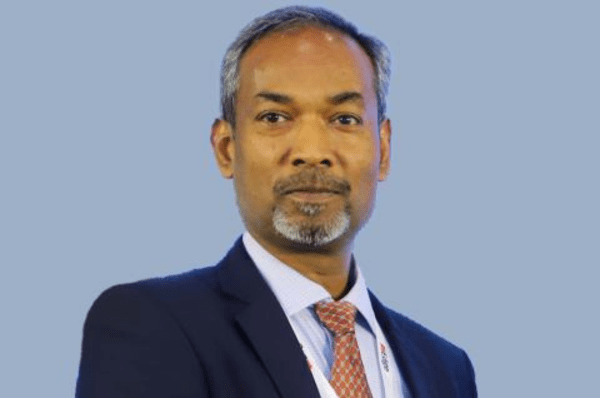
Marc Descrozaille, CEO - Middle East, Africa and APAC at IWG

IWG, a leading provider of flexible office spaces, plans to open 40 new centers by the end of 2025 through its growing partnership model, building on the 10 centers it launched between January and April 2025, according to regional CEO Marc Descrozaille.

“We have been in India since 2004 and and it took us all these years to get to 105 centers, with Regus initially, and later with Spaces and HQ. Conditions have changed after covid, both on the demand and the supply side. Clients want to be able to work from different office spaces. And therefore we expect growth going forward,” he said.

The company recently rolled out a partnership model, marking a significant shift in its operations.

“We are operating the space, bringing in the clients, and managing all distribution while landlords are investing in the space,” said the company, adding that it is transitioning from a traditional tenant approach to becoming strategic partners.

While the company is actively expanding its partnership model, it still values its legacy lease and sub-lease approach. IWG plans to continue operating its existing centers under the traditional model unless landlords specifically request a transition to the new partnership structure.

As of now, the convention model contributes about 75-80% of our overall revenue. At some point of time the ratio will be 50:50,” said Descrozaille.

He however admits that the margins typically for this new model will be smaller. “But on the other hand, IWG will not make the upfront investment.”

“Equally important is ensuring we have the right talent in place to support this growth. That means investing in our people—developing internal capabilities, building succession pipelines, and aligning our teams with long-term goals,” he said.

Regarding the opportunity in India, he noted that the country currently ranks among IWG’s top 15 global markets. With strong respect for and recognition of the market’s potential, the company aims to position India within its top three or four markets over the next five years.

“One element that is very unique to India is the size of the market. In other countries when we think of expanding, we think of moving from tier-I to tier-II cities, but in India we can even go to tier-III and tier-IV cities. So it’s very much a volume game, which is quite unique in terms of the size in India compared to anywhere else,” said Descrozaille.

IWG is strategically expanding its footprint with plans to open 40 new centers by the end of 2025, driven by a growing shift toward its partnership model. While the company continues to value its traditional lease structure, it is adapting to changing market dynamics and landlord preferences. With India emerging as a key growth market, IWG is setting ambitious goals to elevate its position among the company’s top global markets in the next five years.