Thursday, May 7, 2026
Home Blog Page 112

PhonePe’s Indus Appstore and Alcatel ink strategic OEM partnership 

0

In a significant development for India’s digital ecosystem, PhonePe’s Indus Appstore has announced a strategic OEM partnership with Alcatel, the French consumer technology brand. Under this long-term agreement, the Indus Appstore will come pre-installed on all upcoming Alcatel smartphones sold in India, positioning itself as a key player in the localized app distribution space.

The collaboration reflects both brands’ shared commitment to enhancing accessibility and digital inclusion across India. By offering a homegrown alternative to traditional app stores, the Indus Appstore is expected to provide millions of users with a regionalized, user-first app discovery experience.

With a catalogue spanning 45 categories, the Indus Appstore supports 12 Indian languages, offers voice search in 10 regional languages, and features video-led previews—allowing users to watch an app in action before downloading. These features underscore Indus Appstore’s vision of a more intuitive and personalized mobile experience, especially for first-time internet users and those in tier 2 and 3 cities.

The partnership has been driven by NxtCell India, which exclusively represents the Alcatel brand in India and select international markets under a licensing agreement with TCL. NxtCell’s collaboration with Indus aligns with the Government of India’s ‘Make in India’ initiative, underscoring a commitment to promote local technology solutions and empower both Indian developers and end-users.

The timing of this partnership is strategic, coming shortly after the official launch of the Indus Appstore, and will embed the marketplace into Alcatel’s ecosystem from day one, giving the appstore an edge in expanding its footprint rapidly.

Speaking about the partnership, Priya M Narasimhan, Chief Business Officer, Indus Appstore said,We’re thrilled to partner with Alcatel at the early stages of their journey in India. This collaboration enables Alcatel users to discover and experience apps through a homegrown platform that delivers true localization and personalization. This partnership also expands Indus Appstore’s reach while providing developers and marketers opportunities to showcase their apps and connect with more users across India.

Commenting on the association, Atul Vivek, Chief Business Officer, NxtCell India, said, “As we prepare to reintroduce Alcatel smartphones to the Indian market, our focus is on creating meaningful differentiation through localized innovation. Partnering with PhonePe’s Indus Appstore allows us to deliver a digital experience tailored to Indian preferences right from the first boot. They have been an integral part of our journey since the beginning, and we look forward to a long-term partnership. This association reaffirms our commitment to enabling innovation and reliability for our consumers.”

Cybersecurity startup Mitigata raises $5.9M in funding

0
[L-R] Sarthak Dubey, Mayank Morya, Bhranti Shah, Akshit Kaushik and Mohit Anand, Co-founders of Mitigata

Mitigata, a cybersecurity and risk management startup based in Bengaluru, has raised $5.9 million in a Series A round. The round was led by Nexus Venture Partners, with participation from Titan Capital and WEH Ventures.

The startup will use the funding to enhance its AI-driven security platform, recruit top talent, and expand across India and global markets.

“Most businesses still treat cyber insurance and security as separate cost centers, often relying on fragmented vendors and siloed solutions. At Mitigata, we’ve reimagined and Indianised the model—delivering integrated, high-impact cyber resilience that combines security and insurance into a single, cost-efficient solution tailored to the unique needs of Indian organisations,” said Mohit Anand, Co-founder and CEO, Mitigata. 

Additionally, Mitigata plans to strengthen its full cyber risk lifecycle—from prevention and mitigation to incident response and risk transfer.

To achieve this, the company will launch three global security operations centres in Bengaluru, Mumbai, and Delhi. These centers will enhance its AI-led threat detection, incident response, and managed security services.

Founded in 2021 by Mohit Anand, Sarthak Dubey, Mayank Morya, and Akshit Kaushik, Mitigata offers an all-in-one platform that combines cybersecurity, risk management, compliance, and cyber insurance.

The platform’s intelligent risk manager provides real-time threat insights, helping organizations move beyond fragmented tools and vendors.

“We believe the future of cybersecurity and Insurance is an integrated, full-stack approach. Mitigata is pioneering a new AI led services approach to cyber resilience that covers the entire lifecycle—from prevention and mitigation to risk transfer via insurance. Their model is precisely what Indian enterprises need to thrive securely. We are proud to be partners with this mission-driven team from day zero,” said Anand Datta, Partner, Nexus Venture Partners. 

As a managed security services provider (MSSP), Mitigata offers a comprehensive cyber resilience solution. Its key tools include RELIQ, a cyber risk quantification engine, and advanced capabilities like threat intelligence, phishing simulations, attack surface monitoring, and dark web surveillance.

Moreover, Mitigata features an AI underwriting engine that automates cyber insurance structuring using real-time threat data.

The platform also delivers 24×7 security monitoring, penetration testing, vulnerability assessments, and digital forensics.

Importantly, Mitigata has partnered with major insurers, including HDFC ERGO, ICICI Lombard, TATA AIG, Bajaj Allianz, and New India Assurance, to offer integrated risk transfer solutions.

With this new capital, the company aims to redefine cyber resilience in India and beyond.

Bhindi AI Secures $4M to Expand Human-Like Automation Platform

0

Bhindi.io, an AI startup that mimics human behavior, has raised $4 million in a pre-seed funding round. The round was led by Cyber Fund, which also backed founder Sowmay Jain’s previous project, Fluid.io.

The startup plans to use the funds to develop its product, expand globally, and scale operations.

Over the past two years, AI use has grown rapidly. However, many users now suffer from AI fatigue due to constant prompting and repetitive tasks. Bhindi offers a different approach. Its autonomous agents perform tasks in the background—even when users are offline.

These agents work around the clock to boost productivity and reduce burnout.

So far, the startup has processed over 333,000 messages in 21,913 conversations. It has completed 52,330 agent executions using 300+ agents. While it started with productivity, Bhindi has already expanded into crypto, fintech, content creation, scheduling, and more.

Notably, the platform serves over 5,000 users, with 80% split between India and the U.S.

“Bhindi lets you mimic human behavior by setting up background agents. These are your shadow agents grinding for you. You can also give complex workflows,” said Sowmay Jain. It’s one app, powered by agents, designed to execute intent across domains. “This shift from ‘text-to-action’ toward ‘intent-to-action’ will redefine how humans interact with technology.”

The startup’s unified platform brings 300+ AI agents into a single interface. Users focus on high-level thinking while Bhindi handles routine tasks automatically.

In crypto, Bhindi helps users track CoinDCX portfolios, log P&L statements, and get AI-powered alerts about key market changes—right in Gmail.

In development, the platform reviews GitHub pull requests, spots bugs or suggestions with its Code Interpreter, and leaves detailed comments before manual review.

In fintech, users can chat with the platform to check live stock prices, place orders, and manage portfolios.

In marketing, Bhindi automates influencer outreach. It finds the right YouTube creators, gathers contact data, writes custom messages, and sends them via Gmail using Google Sheets. With this funding, Bhindi aims to make AI truly effortless and human-like.

Cybersecurity startup Safe raises $70 Mn Series C round

0
Saket Modi, co-founder, Safe Security

Safe Security, a cybersecurity startup formerly known as Lucideus, has raised $70 million in a Series C funding round led by Avataar Ventures.

The round also saw participation from Susquehanna Asia Venture Capital, NextEquity Partners, Prosperity7 Ventures, and existing investors including Eight Roads, Cisco chairman and CEO John Chambers, and Sorenson Capital, the company announced on July 31.

Saket Modi, Viditkumar Baxi, and Rahul Tyagi founded Safe Security in 2012 and incubated it at IIT-Bombay, running the company as a bootstrapped startup for its first four years.

Modi, a computer science graduate, along with his team, had earlier contributed to the security assessment of the BHIM app, developed by the National Payments Corporation of India (NPCI).

The cybersecurity startup enables organizations to quantify, prioritize, and mitigate cyber risks across their entire digital ecosystem by leveraging autonomous AI agents.

Its product portfolio focuses on three core areas: Cyber Risk Quantification (CRQ), Third-Party Risk Management (TPRM), and Continuous Threat Exposure Management (CTEM). The company claims to be the first to offer fully autonomous solutions in both TPRM and CTEM, further strengthening its leadership in the CRQ domain.

With the newly raised capital, Safe Security aims to accelerate the development of “CyberAGI”—a next-generation cybersecurity superintelligence powered by Agentic AI-native reasoning models, reinforcing its commitment to redefining cyber risk management through cutting-edge innovation.

The cybersecurity startup has also introduced what it claims is the world’s first fully autonomous Continuous Threat Exposure Management (CTEM) solution, integrated within its broader Cyber Risk Singularity platform. This launch marks a significant step in the company’s mission to deliver proactive, AI-driven cyber risk management, enabling organizations to continuously identify and address vulnerabilities across their digital infrastructure with minimal human intervention.

“This is a defining moment in our pursuit of CyberAGI,” said Modi, co-founder and CEO of Safe. “When we launched our platform in 2020, we carefully selected a market that would be the foundation of cyber risk management—Cyber Risk Quantification. Not only did we shape the category, we’ve become its undisputed leader.”

In 2023, Safe Security applied its autonomous AI-driven approach to Third-Party Risk Management (TPRM), and is now extending the same methodology to Continuous Threat Exposure Management (CTEM) as the next frontier in cyber risk mitigation, the company said.

According to the cybersecurity startup, over 50% of its customers have already adopted the TPRM module, reflecting strong market validation for its AI-native cybersecurity solutions.

Nishant Rao, founding partner, Avataar Ventures, said the firm saw Safe not as another detection tool but as a “strategic intelligence layer” across the cybersecurity stack.

“Most cybersecurity sub-sectors we’ve evaluated are either overcrowded or limited to tactical, widget-like solutions. But cybersecurity today is a boardroom and CEO-level priority, and that’s not changing anytime soon,” Rao said.

“The company has shown consistent 120%+ year-on-year growth since its launch,” he said.

Safe Security claims to have recorded triple-digit revenue growth for three consecutive years and has raised over $170 million in funding to date. The cybersecurity startup’s growing customer base includes major global enterprises such as Google, Fidelity, T-Mobile, Chevron, and IHG, underscoring its strong market traction and credibility in the cybersecurity space.

Inflection Point Ventures launches $110 Mn IPV International Fund to back global startups

0

Gurugram-based angel investment platform Inflection Point Ventures (IPV) has launched IPV International, a $110 million Category I Angel Fund registered under the IFSCA framework at GIFT City.

The fund achieved its first close in April 2025, and has already made its debut investment in Cellivate Technologies, a Singapore-based deeptech startup. The company is developing a patented, ethical, and scalable alternative to fetal bovine serum using magnetic stimulation, aimed at applications across biotech, pharma, and related sectors.

Inflection Point Ventures International plans to back startups from early-stage to pre-Series A, with average investment sizes ranging between $100,000 and $1 million, and aims to build a well-diversified portfolio.

The fund has received both its fund registration certificate and Fund Management Entity (FME) license from IFSCA, allowing it to operate fully within GIFT City’s regulatory ecosystem.

“After establishing a strong presence in the Indian startup ecosystem, IPV is now extending its offerings through IPV International. Given the evolving global startup landscape and the rising appetite for international exposure, launching an international fund allows us to seamlessly participate in cross-border investment opportunities,” said Vinay Bansal, founder and CEO of IPV.

Bansal further said that the firm will leverage GIFT City’s global access framework to invest in high-potential international businesses.

“A presence in GIFT City enables us to scale beyond national borders, engage with global startup ecosystems, and remain aligned with the rapidly shifting dynamics of the venture capital and private equity markets. At the same time, we are seeing strong interest not just from Indians & NRIs, but also from non-Indian investors eager to invest in the booming Indian startup ecosystem, and the GIFT City structure makes it significantly easier for them to invest.”

Ankur Mittal, Co-founder, IPV, said, “IPV International is designed to replicate our proven, sector-agnostic investment strategy. Our investment thesis remains rooted in rigorous due diligence and structured evaluation, aligned with the approach that has shaped IPV’s strong track record. The launch of this fund significantly expands our horizon.” 

“This strategic move enables us to consider high-potential foreign startups alongside domestic opportunities. By leveraging the global access provided by the GIFT City platform, we’re now well-positioned to invest in innovative ventures across international markets, enhancing both portfolio diversification and investor value.” 

The fund operates under the oversight of the International Financial Services Centres Authority (IFSCA), which functions as a unified regulator similar to SEBI. Known for its clear, flexible, and innovation-friendly regulatory framework, IFSCA has become an attractive hub for funds, startups, and global asset managers.

Inflection Point Ventures International highlighted that it offers a highly investor-friendly environment, supported by a liberalised tax regime and streamlined compliance processes, making it an appealing destination for cross-border capital and early-stage investments.

Mitesh Shah, co-founder of IPV, said, “IPV has been on an impressive journey over the past six years. We’ve backed unicorns, soonicorns, and high-growth startups that are driving meaningful change across the country.” 

“With a proven track record including 50 successful exits from a portfolio of over 220 startups, IPV is now set to leverage this experience and scale its platform to reach both national and international investors through IPV International. Combined with the tax efficiency and regulatory clarity offered by the GIFT City framework, the fund is well-positioned to attract a global investor base, including both domestic and international participants,” Shah added.

Neo Asset Management raises ₹750-Cr in first close of secondaries fund, eyes ₹2,000-Cr

0

Neo Asset Management has completed the first close of its latest private equity fund, the Neo Secondaries Fund (NSF), raising around ₹750 crore toward its overall target of ₹2,000 crore, as per a press release.

Registered with Sebi as a Category II Alternative Investment Fund (AIF), NSF focuses on acquiring secondary stakes in high-potential unlisted Indian companies that demonstrate strong financial performance and offer clear exit opportunities within 2–4 years.

Helmed by secondaries and private equity expert Nitin Agarwal, the fund aims to deliver liquidity to existing investors while offering quicker returns to new ones. NSF is targeting profitable, late-stage businesses in fast-growing sectors such as consumer, technology, and AI/analytics. With three deals already finalized and several more in progress, the fund highlights the growing interest in secondary transactions within India’s maturing private market landscape.

Neo Asset Management, the alternative investment arm of the Neo Group, currently oversees more than ₹13,500 crore in assets under management (AUM) across private equity, credit, and infrastructure, according to a company release. The firm operates as part of the broader Neo Group—an integrated Indian wealth and alternatives platform supported by Peak XV Partners, MUFG Bank, and Euclidean Capital.

Headquartered in Mumbai, Neo serves a diverse client base including institutional investors, family offices, ultra-high-net-worth individuals (UHNIs), and pension and insurance funds. It offers capital solutions spanning private credit, real assets, and secondary private equity strategies.

As of mid-2025, the Neo Group reports managing approximately ₹40,000 crore across its wealth and asset management businesses. This includes ₹11,500 crore under its asset management division and ₹2,000 crore in net equity.

Despite its swift growth, Neo has maintained a capital-efficient strategy, with media reports indicating that none of the ₹400 crore ($48 million) raised in its 2024 Series B round—backed by MUFG Bank and Euclidean Capital—has been deployed yet.

In addition to the Neo Secondaries Fund, the firm has launched several Sebi-registered Category II Alternative Investment Funds (AIFs). This includes NSCOF-II, a private credit fund designed to lend to Ebitda-positive companies with hard asset collateral, addressing the increasing demand for liquidity and structured financing in India’s evolving private markets.

Zetwerk founders raise ₹600-Cr via personal debt to boost company growth

0

Amrit Acharya and Srinath Ramakkrushnan, co-founders of Zetwerk, are injecting ₹600 crore into the B2B manufacturing startup, according to sources familiar with the matter. The duo has raised the amount through personal debt, which will result in a 2% increase in their combined ownership stake in the company, one source revealed.

“The founders have personally raised debt to inject additional equity into the company, resulting in their combined stake increasing by just over 2%,” the person said, adding that the fund infusion in Zetwerk is happening through a newly created entity, Creovate Innovations Pvt Ltd.

Zetwerk’s founders are boosting their stake ahead of a planned IPO, joining a growing list of new-age entrepreneurs doing the same. “IPO preparations are going on and the company should be in a place to list by the end of this fiscal or early FY27,” another person said.

According to data from Tracxn, Zetwerk co-founders Amrit Acharya and Srinath Ramakkrushnan currently hold a combined stake of approximately 14–15% in the company.

The company did not issue any official comment regarding the recent developments.

In April, as part of Zetwerk’s preparations for an initial public offering (IPO), Acharya addressed employees through an internal note. In it, he emphasized that the company must now shift its focus toward enhancing productivity, eliminating inefficiencies, and ensuring that every business unit becomes profitable.

Founded in 2018 by IIT alumni Amrit Acharya, Srinath Ramakkrushnan, Rahul Sharma, and Vishal Chaudhary, Zetwerk works with industrial and consumer companies to manufacture products via a global network of small-scale producers. The company has also expanded its footprint by operating over 10 manufacturing units across India, the United States, and Europe.

While Zetwerk is yet to release its financial results for FY25, it reported a 26% rise in revenue to ₹14,436 crore in FY24. However, the company’s net loss widened significantly to ₹919 crore, impacted by exceptional items totaling ₹372 crore.

Monday Hotels Grows Smart with Asset-Light Model — A Scalable Solution for Hotel Owners

0
Salim Shaikh, Co-Founder of Monday Hotels

Mumbai, 29th July 2025: Monday Hotels, the new age hospitality brand catering to modern business and leisure travellers continues to strengthen its presence through a well-structured asset-light model, inviting independent and boutique hotel owners to benefit from its established systems, national visibility, and trusted guest experience.

Currently managing multiple properties in Mumbai, Hyderabad and Nagpur, with its latest property signed up in Shamshabad, Monday Hotels offers a partnership model where hotel owners retain control of their asset while leveraging the brand’s expertise in operations, digital marketing, revenue management, and service design.

“Our asset-light format is designed for hotel owners who want to remain independent but not alone,” said Salim Shaikh, Co-Founder at Monday Hotels. “We bring operational strength, while owners continue to hold their assets. Guided by our promise “We Value You”, we are committed to providing seamless stays that empower our guests to focus on what matters most.”

With interest growing across Tier 1, 2, and 3 cities, Monday Hotels presents a compelling option for properties seeking higher occupancy, stronger brand recall, and professional systems — without the burden of heavy investment.

About Monday Hotels:

Monday Hotels is distinguished as an affordable premium chain of business hotels in India with presence in Maharashtra, Telangana, Andhra Pradesh, and Karnataka. For more information please visit www.mondayhotels.com

Edtech startup Arivihan raises $4.17M from Prosus, Accel to boost growth

0
Ritesh Singh Chandel, cofounder & chief executive, Arivihan

Arivihan, an edtech startup providing automated and personalized coaching for school students, has secured $4.17 million in a funding round led by Dutch investment firm Prosus and Silicon Valley-based VC firm Accel.

The round also included contributions from GSF Investors.

The funding will be utilized to expand operations into three additional states, enhance AI research and language support features, and bolster on-ground marketing and distribution initiatives.

“When we went to tier II cities, we found that 65% of the students were from Hindi-medium backgrounds. There weren’t many platforms catering to them, as most didn’t offer content or doubt-solving support in Hindi, especially at an affordable price,” cofounder and chief executive Ritesh Singh Chandel said.

Founded in 2021 by Chandel, Sonu Kumar, and Rushabh Kothari, the Indore, Madhya Pradesh-based company offers a fully automated, AI-driven tutoring platform that delivers personalized learning through interactive video lessons, real-time doubt solving, and AI-generated study plans in regional languages.

“If you use any LLM directly, they are very general. They don’t provide answers tailored to our students’ syllabus, their level of understanding, or their language. That’s why we use our open-source model, which we have fine-tuned with millions of data points derived from our syllabus to suit our students,” he said. The platform answers queries in both Hindi and Hinglish.

Arivihan primarily serves Class 12 students from tier II and tier III cities and rural regions, providing targeted support for State Board and CBSE curricula, as well as NEET exam preparation.

“We started with the class 12 State Board exam in Madhya Pradesh and received a great response. Then we launched for NEET and saw a similarly positive response,” Chandel said, adding that the company has now begun expanding to Rajasthan and plans to further expand to Uttar Pradesh, Bihar, and Chhattisgarh.

The company aims to grow its academic team, onboard experienced NEET faculty, and scale its workforce across product, marketing, and engineering functions. This move aligns with a broader trend among edtech startups to invest in AI technologies that enable personalized learning, adaptive assessments, and automated content generation.

“In FY25, we sold around 15,000 subscriptions, which generated a revenue of around Rs 3.25 crore… We are resolving a monthly query of around seven lakh with the help of AI with 97% accuracy,” Chandel added.

This year, the edtech startup is aiming to onboard between 80,000 and 1 lakh subscribers.

Previously, the company had raised $750,000 through Accel’s seed-stage program, Atoms.

Commenting on the investment, Dhruv Gupta, an investor at Prosus, said, “At Prosus, we’ve been actively exploring breakthrough applications of AI across sectors, and education remains one of the most compelling frontiers.”

“Edtech in India has long struggled with cookie-cutter solutions and often unsustainable business models. The advent of GenAI changes both dramatically, which has been visible in Arivihan’s traction and student outcomes so far,” said Anagh Prasad, investor at Accel.

DPIIT partners with TICE to strengthen startup visibility and media outreach in India

0

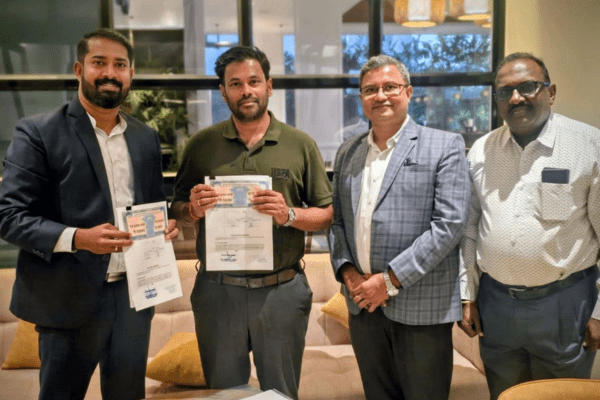
The Department for Promotion of Industry and Internal Trade (DPIIT), operating under the Ministry of Commerce and Industry, has joined hands with Clockwork Media Private Limited, the parent company of TICE News, to improve media access and visibility for startups across India. The two entities formalized their collaboration by signing a Memorandum of Understanding (MoU) in New Delhi, marking a strategic effort to support over 1.8 lakh DPIIT-registered startups, with a special focus on those in Tier 2 and Tier 3 cities.

Sumeet Jarangal, Director at Startup India, and Manoj Singh, Founder and Editor of TICE News, signed the MoU. The agreement aims to bridge a critical gap in media exposure, branding, and outreach services for early-stage startups.

Through this partnership, TICE will provide free media coverage along with affordable PR, branding, and video production services to startups that often face challenges in gaining visibility due to limited resources. These services help founders strengthen their brand presence, engage more effectively with investors and markets, and navigate policy and regulatory frameworks more efficiently.

Speaking at the signing, Sumeet Jarangal said, “This MoU will give new wings to Indian startups by enhancing their visibility and access to growth opportunities. TICE will bridge a critical gap by offering cost-effective media and branding support, particularly for early-stage startups in smaller cities. This partnership will also help bring to light the inspiring journeys of over 1.8 lakh Startup India beneficiaries, encouraging a stronger entrepreneurial culture across the country.”

As part of the DPIIT–TICE collaboration, TICE TV will roll out a series of innovative initiatives aimed at promoting inclusion and innovation within India’s startup ecosystem. One such initiative is the Entrepreneur Generated Content (EGC) Program, which empowers startups to tell their own stories through videos, blogs, and interviews.

The Incredible Incubators of India series will spotlight the pivotal role played by incubators in nurturing entrepreneurial talent across the country. To celebrate and support women-led ventures, Shepreneur Shakti will feature impactful stories of female entrepreneurs and startups.

Additionally, the Aavishkari Entrepreneur Series will focus on showcasing startups operating in emerging sectors such as DeepTech, CleanTech, AI, and Manufacturing. Lastly, the Startup Club of India will serve as a platform to facilitate policy dialogue, engage ecosystem stakeholders, and host curated events, fostering stronger collaboration between state and central agencies.

TICE has also introduced a Hindi section titled “Startup Bharat” on its website to enhance accessibility and inclusivity for regional startups across India. In addition to broadening language access, the platform aims to host curated startup events, workshops, and policy discussions in partnership with state governments and industry stakeholders. These initiatives align and strengthen collaboration between central and state-level startup programs, ensuring more cohesive and inclusive ecosystem development.

Manoj Singh, Founder of TICE News, said, “This MoU allows us to give startups from every corner of India a stronger voice. We’re committed to providing them with media and branding support that is both impactful and affordable. Our goal is to bridge the media gap in India’s startup ecosystem and help Bharat’s entrepreneurs go global through strategic storytelling and engagement. We thank DPIIT, Startup India, Invest India, and NITI Aayog for their trust, and extend special thanks to Sanjiv Singh and Sumeet Jarangal for their invaluable support in making this partnership a reality.”

With more than 180,000 startups registered under the Startup India initiative, the DPIIT–TICE partnership seeks to amplify the voices of entrepreneurs innovating across emerging sectors and underserved regions. By harnessing the power of digital media, curated events, and targeted policy engagement, TICE aims to build a unified platform for storytelling and advocacy within the Indian startup ecosystem.

Over the next two years, the initiatives outlined in this MoU are expected to make the Startup India Mission more accessible, visible, and impactful—one startup story at a time.