

Thursday, May 7, 2026
Home Blog Page 111

Roblox rolls out open-source AI system to protect kids from predators in chats

0
Matt Kaufman, chief safety officer at Roblox

Roblox, the online gaming platform wildly popular with children and teenagers, is rolling out an open-source version of an artificial intelligence system it says can help preemptively detect predatory language in game chats. 

The move comes as the company faces lawsuits and criticism accusing it of not doing enough to protect children from predators. For instance, a lawsuit filed last month in Iowa alleges that a 13-year-old girl was introduced to an adult predator on Roblox, then kidnapped and trafficked across multiple states and raped. The suit, filed in Iowa District Court in Polk County, claims that Roblox’s design features make children who use it “easy prey for pedophiles.”

Roblox says it strives to make its systems as safe as possible by default but notes that “no system is perfect, and one of the biggest challenges in the industry is to detect critical harms like potential child endangerment.”

The AI system, called Sentinel, helps detect early signs of possible child endangerment, such as sexually exploitative language. Roblox says the system has led the company to submit 1,200 reports of potential attempts at child exploitation to the National Center for Missing and Exploited Children in the first half of 2025. The company is now in the process of open-sourcing it so other platforms can use it too.

Preemptively detecting possible dangers to kids can be tricky for AI systems – and humans, too – because conversations can seem innocuous at first. Questions like “how old are you?” or “where are you from?” wouldn’t necessarily raise red flags on their own, but when put in context over the course of a longer conversation, they can take on a different meaning.

Roblox, which has more than 111 million monthly users, doesn’t allow users to share videos or images in chats and tries to block any personal information such as phone numbers, though – as with most moderation rules – people constantly find ways to get around such safeguards. 

It also doesn’t allow kids under 13 to chat with other users outside of games unless they have explicit parental permission – and unlike many other platforms, it does not encrypt private chat conversations, so it can monitor and moderate them.

“We’ve had filters in place all along, but those filters tend to focus on what is said in a single line of text or within just a few lines of text. And that’s really good for doing things like blocking profanity and blocking different types of abusive language and things like that,” said Matt Kaufman, chief safety officer at Roblox. “But when you’re thinking about things related to child endangerment or grooming, the types of behaviors you’re looking at manifest over a very long period of time.”

Sentinel captures one-minute snapshots of chats across Roblox – about 6 billion messages per day – and analyzes them for potential harms. To do this, Roblox says it developed two indexes – one made up of benign messages and, the other, chats that were determined to contain child endangerment violations. Roblox says this lets the system recognize harmful patterns that go beyond simply flagging certain words or phrases, taking the entire conversation into context.

“That index gets better as we detect more bad actors, we just continuously update that index. Then we have another sample of what does a normal, regular user do?” said Naren Koneru, vice president of engineering for trust and safety at Roblox. 

As users are chatting, the system keeps score – are they closer to the positive cluster or the negative cluster? 

“It doesn’t happen on one message because you just send one message, but it happens because of all of your days’ interactions are leading towards one of these two,” Koneru said. “Then we say, okay, maybe this user is somebody who we need to take a much closer look at, and then we go pull all of their other conversations, other friends, and the games that they played, and all of those things.”

NPrep secures Pre-seed funding to strengthen AI-based skilling for Nurses

0

NPrep, an AI-powered skilling platform focused on nursing students and professionals, has raised pre-seed funding from All In Capital. The company did not disclose the funding amount.

Additionally, IIMA Ventures, U.S.-based EdTech firm Chegg, and various family offices and angel investors also joined the round. This makes the funding one of the most notable early-stage investments in India’s healthcare skilling space.

With the new capital, NPrep plans to expand its course offerings. Moreover, it will strengthen its AI-driven learning platform to serve a broader user base.

The company also aims to deepen its partnerships with hospitals and healthcare institutions across India. In particular, NPrep wants to support nursing students from Tier 2 and Tier 3 cities by growing its regional language capabilities.

NPrep is building a platform that tailors learning paths using generative AI. This personalization is based on each student’s strengths and weaknesses.

Furthermore, the platform will simulate real-life clinical scenarios for enhanced skill training. It will also provide real-time feedback to learners.

Beyond training, NPrep supports job readiness. It offers mock interviews, resume building tools, and automated assessments that improve placement outcomes.

The company’s long-term goal is to bridge the gap in nursing education and healthcare quality. It intends to improve the workforce by combining smart technology with targeted training.

Looking ahead, NPrep plans to expand its placement services in India by FY26. It also aims to go global by FY27, using its strong base in medicine and AI technology.

Outzidr secures $3.1M to expand Gen Z-focused Fashion Line

0
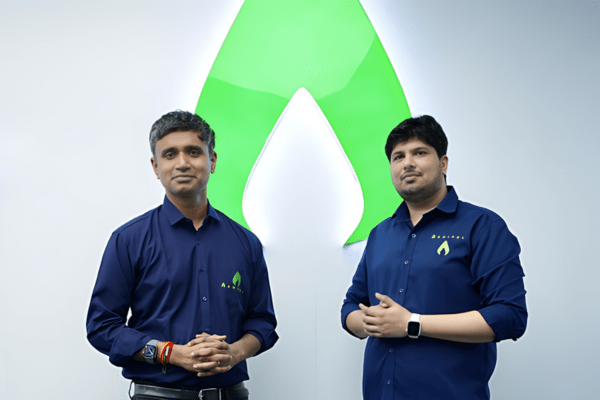
Justin Mario, Nirmal Jain, and Manikant Mani, Co-founders, Outzidr

Gen Z women’s fashion brand Outzidr has raised ₹27 crore (about $3.1 million) in a pre-Series A round led by RTP Global, with continued backing from Stellaris Venture Partners.

Previously, the Bengaluru-based startup secured ₹30 crore (approximately $3.5 million) in a seed round led by Stellaris, along with a group of strategic angel investors.

With this fresh capital, Outzidr plans to scale aggressively. It aims to launch its first exclusive offline store by March 2026. Moreover, the company will grow its design, operations, and tech teams, according to its press release.

Founded in 2024 by Nirmal Jain, Mani Kant Mani, and Justin Mario, Outzidr targets Indian women aged 18–28. It offers trendy western wear for modern occasions — brunches, date nights, college fests, airport looks, and weekend getaways.

To stay ahead, the brand uses a “test and scale” model. This allows it to experiment with small batches and expand production on bestsellers.

Outzidr claims to launch up to 2,000 new styles each month, or around 500 every week, across its own D2C platform and major marketplaces like Ajio, Myntra, and Nykaa Fashion.

“Outzidr represents the energy of a new generation — fast-paced, fresh, and fearless,” said Nirmal Jain, Co-founder and CEO of Outzidr. “We’re building a brand that listens, learns, and reacts in real time. This fundraiser is a strong validation of our mission to become the everyday fashion choice for Gen Z women — and of the incredible team and opportunity we’re building for.”

Notably, India’s fast fashion market, currently worth $10 billion, could reach over $50 billion by FY 2031, growing at a 30% CAGR, based on market data.

In just five months, Outzidr has attracted over 100,000 customers, achieved 1.5x retention rates, and launched more than 8,000 styles on its website. It competes with brands like NEWME, Zudio, and Style Union in the same space.

Satsuma raises $218M to strengthen Bitcoin strategy

0

Satsuma Technology, a London-listed tech firm, has secured £163.66 million (around $217.6 million) in gross proceeds during its second convertible loan note round. Notably, nearly $125 million of that was received in Bitcoin. This fresh capital will bolster the company’s ongoing Bitcoin treasury strategy.

The round, which closed on July 28, exceeded its $129 million target by over 63%. This surge was fueled by growing interest from both crypto-native investors and traditional institutions.

“This moment represents a landmark validation of our core belief: that fusing a Bitcoin-native treasury with decentralised AI is a paradigm shift in corporate value creation,” said Satsuma CEO Henry Elder.

The company revealed that 1,097.29 Bitcoin was accepted instead of $125 million in cash. “The fact that many chose to subscribe in the first-ever Bitcoin subscription in London speaks to their trust in our ability to innovate and execute,” Elder added.

Top-tier crypto funds backed the raise, including ParaFi Capital, Pantera Capital, Arrington Capital, Blockchain.com, Kraken, Digital Currency Group (DCG), and Kenetic Capital. Additionally, several equity funds based in London — managing over £300 billion collectively — joined the investment round.

Satsuma plans to convert the loan notes into equity at $0.013 per share, pending shareholder and regulatory approvals. The raised funds will cover operational expenses like hiring developers and expanding Bitcoin reserves via its Singapore-based subsidiary, Satsuma Pte.

Previously in June, Satsuma raised $135 million to kickstart its Bitcoin accumulation. As of now, it holds 1,126 BTC — worth around $128.66 million — purchased since July 14. The company’s average acquisition cost per Bitcoin is $115,149. This places it at a small unrealized loss of 0.76%, according to BitcoinTreasuries.NET.

Beyond treasury moves, Satsuma operates validator nodes and a Subnet Task Marketplace through its Bittensor-based AI infrastructure. Bittensor is a decentralized AI platform, and Satsuma plays a key role by developing AI agents and systems for this ecosystem.

Meanwhile, the broader crypto treasury space is heating up. Last week alone, firms revealed more than $7.8 billion in planned crypto buys. Ethereum led the way, with over $3 billion in public company commitments. However, Bitcoin remained a strong contender.

For instance, Strategy (formerly MicroStrategy) raised $2.5 billion to purchase 21,021 BTC. The UK’s Smarter Web Company invested $26.5 million to buy 225 BTC. Japanese firm Metaplanet added 780 BTC worth $92 million to its balance sheet.

#BitcoinTreasury #SatsumaTechnology #CryptoInvestment #DigitalAssets  #InstitutionalCrypto

Lords Hotels & Resorts Signs New Hotel in Jamnagar, Strengthens Presence in Gujarat

0

Lords Hotels & Resorts, one of India’s leading and fastest-growing mid-market Hospitality brands, has announced the signing of a new hotel in Jamnagar, further strengthening its substantial presence in Gujarat. With this addition, the group now boasts a robust portfolio of 28 hotels in Gujarat, including three in Jamnagar alone.

Known for its commitment to True Value Hospitality, Lords Hotels & Resorts continues its strategic expansion across tier I, II, and III cities, catering to the evolving needs of business, leisure, and pilgrim travelers.

Commenting on the development, Pushpendra Bansal, Chief Operating Officer, stated, “Jamnagar has emerged as a key industrial and commercial hub. With the rising demand for quality hospitality experience, we see great potential in this market. Our new hotel here will reflect our ongoing commitment to the state of Gujarat, a region that has always embraced the Lords brand with trust and enthusiasm.”

Sudhir Jena, Corporate Vice President, added, “This collaboration marks a significant step in enhancing the hospitality landscape of Jamnagar. With Lords Hotels & Resorts’ operational excellence and guest-centric approach, we aim to create a space that blends comfort with local charm. We look forward to welcoming travelers with an experience that reflects both the spirit of Jamnagar and the warmth of the Lords brand.”

The upcoming hotel will offer well-appointed rooms equipped with modern amenities, complemented by the warm and reliable service for which the brand is known.

Khetika Launches New State-of-the-Art Manufacturing Plant in Mumbai to Scale Fresh Product Line

0

Mumbai, 4 August 2025: Khetika, one of India’s largest clean and healthy food brands in the staples category, has announced the launch of its new manufacturing facility today. The facility is dedicated exclusively to its fresh product category, including preservative-free batters and chutneys. Located in Taloja Industrial Area, near Panvel, Maharashtra, the facility strategically positions the brand to serve the growing demand in Western India better.

Spread across 5,000 sq. ft., the Mumbai plant is equipped with cutting-edge automation and modular infrastructure to support not just high-volume production but also future innovation in the fresh product space. The unit manufactures 11 SKUs from Khetika’s FRESH range and can produce up to 20 tons of batter daily. This capacity is expected to scale further in alignment with consumer demand.

“This launch marks a pivotal milestone in Khetika’s journey of bringing clean, honest, and authentic Indian food closer to urban kitchens,” said Dr. Prithwi Singh, Co-founder and CEO of Khetika. “The Mumbai facility allows us to reduce turnaround time significantly, ensuring that our zero-preservative products reach consumers within 24 hours of production. More importantly, it reinforces our commitment to innovation, sustainability, and farm-to-fork freshness.”

Khetika’s clean-label promise continues to be powered by direct sourcing from farmers across India, such as turmeric from Sangli, chillies from Guntur, and moong from Rajasthan. This ensures the best ingredients and fresh product from their native regions while supporting farming communities.

The plant strengthens Khetika’s existing hub-and-spoke model and streamlines operations for faster, fresher distribution. Mumbai’s access to high-demand consumption zones and key logistics corridors will enable the facility to boost supply chain efficiency, reduce cost-to-serve, and enable regional scalability.

The new facility uses recyclable packaging in line with the company’s sustainability vision. It is gradually transitioning its last-mile logistics fleet to electric vehicles (EVs), supporting the brand’s broader zero-waste and low-emissions goals.

About Khetika

Started by Prithwi Singh, Co-founder & CEO, Darshan Krishnamurthy, Co-founder & CTO, Raghuveer Allada, Co-founder & CFO, in 2017, Khetika is one of India’s largest clean and healthy food brands in the staples category, committed to transforming the way the world eats. The brand offers a wide range of preservative-free food products — including batters, spices, chutneys, millet-based staples, makhana, and dry fruits— developed through traditional stone-ground processes and clean-label innovation. Khetika’s proprietary tech-enabled supply chain operates across ambient and chilled categories, enabling real-time distribution to online and offline channels and through SuperZop, to traditional trade. Khetika has established a trusted network of farmers across 14 Indian states for procurement, ensuring traceability, quality, and fair value sourcing.

TreeHouse Hotels Launches LinkD: A Boutique Brand for Independent Hotels

0

TreeHouse Hotels has unveiled TreeHouse-LinkD, a new boutique collection brand. This innovative concept aims to support independent, design-forward hotels by connecting them with modern, discerning travellers.

The brand empowers hotel owners by offering flexibility, cooperation, and innovation—without demanding heavy investments or brand conformity. In fact, owners can retain their original branding while benefiting from TreeHouse’s established systems and clientele.

TreeHouse-LinkD offers strategic advantages, including advanced technology tools, centralized revenue management, and a vast distribution network. As a result, partner hotels can enjoy increased market visibility, optimized pricing, and better occupancy rates.

“We are excited to launch TreeHouse-LinkD – a brand built for the future of boutique hospitality in India. As we engage with potential partners across the country, we see a strong desire for brand-backed independence with Owners wanting to keep their own brand identity too – and TreeHouse-LinkD is our answer to that,”— Jayant Singh, Managing Partner, TreeHouse Hotels & Resorts.

Unlike traditional hospitality models, TreeHouse-LinkD promotes strategic collaboration over control. Hotel owners maintain full authority over operations, design, and guest experience. Meanwhile, TreeHouse provides optional support in marketing, staff training, and business development.

In addition, the brand’s variable fee structure reflects the realities of running an independent hotel. During downturns, it cushions owners by adjusting costs, thus creating a win-win model focused on shared growth.

TreeHouse Hotels & Resorts, under Karma Hospitality LLP, continues to expand rapidly. The company runs hotels across India under various brands like Th.e Luxury Selection, TreeHouse Exotic, Nest by TreeHouse, hi-way Motels, and now TreeHouse-LinkD.

TreeHouse prides itself as a “Made in India” brand, dedicated to serving business and leisure travellers alike. Backed by a leadership team with over 100 years of combined industry experience, the company delivers strong operational, marketing, and digital support across its entire portfolio.

GameRamp raises $5.4M to power AI-driven publishing for mobile games

0
Sashank Vandrangi, Co-founder GameRamp, Anuj Tandon, Partner India & UAE BITKRAFT Ventures, Vivek Ramachandran, Co-founder & CEO GameRamp

GameRamp, a cutting-edge AI-native publishing platform, has secured $5.4 million in a pre-seed funding round. BITKRAFT Ventures led the investment, with participation from South Park Commons, Mixi, DeVC, and other global angel investors. With this funding and new product launches, the startup is positioned to become a major player in the mobile games publishing space.

With this fresh capital, GameRamp will grow its engineering and applied AI teams across both the United States and India. The company is also gearing up to launch two major services.

First is Sentinel — a real-time, AI-driven platform that uses reinforcement learning to personalize in-game economies and monetization. Next is Grow — a one-click embedded financing tool designed to provide game developers with easy access to capital.

Founded by Vivek Ramachandran and Sashank Vandrangi, GameRamp aims to simplify and accelerate game publishing for the next generation of mobile games and consumer apps.

Their tools enable developers to test, optimize, and implement monetization strategies with minimal manual input. While developers focus on gameplay, the platform automatically fine-tunes revenue models and user experience in the background.

By offering deep automation and intelligent personalization, GameRamp helps studios drive both growth and profitability without sacrificing player satisfaction.

“Scaling new apps or games has become increasingly competitive. Developers are expected to excel in areas beyond just building a great product. We asked ourselves—what if AI could significantly accelerate this process?” said Vivek Ramachandran, Co-founder & CEO of GameRamp. 

“It’s not just about refining existing workflows; it’s about unlocking a new level of experimentation and insight. Early traction in markets like Vietnam, India, and Turkey has been promising, and we’re preparing for a broader global rollout.”

Anuj Tandon, Partner at BITKRAFT Ventures, added, “GameRamp’s team brings a rare mix of machine learning expertise, product growth understanding, and investment experience. Their focus on delivering tangible outcomes for developers is reflected in the strong early feedback. As we expand our focus on emerging markets, GameRamp’s approach and execution made them a natural choice for one of our first lead investments in the region.”

#GameRamp #AIGaming #MobileGameMonetization #GamingStartups

#BITKRAFTVentures

Rifa AI secures $1.1M to expand voice tech in regulated industries

0

Rifa AI, a rising voice automation startup, has raised $1.1 million in pre-seed funding. Seaborne Capital led the round, with additional contributions from NASSCOM and FalconX.

With this funding, Rifa AI plans to expand its presence in North America. The startup will also strengthen its AI-powered enterprise call center platform. Furthermore, it will accelerate development of modular and scalable voice automation solutions for highly regulated sectors.

Founded in 2023 by IIT-Bombay graduates Sameer Fulzele and Shubham Khoker, Rifa AI builds voice agents that sound and respond like real humans. These agents are designed to help enterprises automate customer service interactions effectively.

To power its voice tech, Rifa AI combines advanced AI models with structured decision trees, policy-driven workflows, and seamless API integrations. This setup allows its agents to handle customer conversations in real-time, with little or no human intervention.

More importantly, Rifa AI ensures full compliance with industry-specific regulations. Its technology adheres to standards such as HIPAA (Health Insurance Portability and Accountability Act) and TCPA (Telephone Consumer Protection Act), guaranteeing both data security and legal compliance.

“We’ve built for complexity from day one, and this funding will help extend our platform to more enterprise customers. Our focus is on scaling voice workflows in sectors where human involvement has traditionally been essential due to compliance challenges. As AI agents become mainstream, the real question is whether they work where it matters most in high-stakes environments,” said Sameer Fulzele, co-founder of Rifa AI.

As industries like healthcare, finance, and insurance turn to automation, Rifa AI positions itself as a key solution provider. The company bridges the gap between cutting-edge voice AI and the stringent compliance needs of regulated sectors.

The startup aims to offer enterprise-grade voice agents that handle complex workflows responsibly. It focuses on delivering secure, scalable, and human-like voice solutions that can operate across various high-compliance domains.

Following this latest funding round, Rifa AI is poised for rapid growth. It seeks to dominate the voice-driven customer service market by continuing to refine its automation platform. Backed by leading investors and guided by a clear mission, the startup is now better equipped to transform how businesses manage customer communication.

PhonePe’s Indus Appstore and Alcatel ink strategic OEM partnership 

0

In a significant development for India’s digital ecosystem, PhonePe’s Indus Appstore has announced a strategic OEM partnership with Alcatel, the French consumer technology brand. Under this long-term agreement, the Indus Appstore will come pre-installed on all upcoming Alcatel smartphones sold in India, positioning itself as a key player in the localized app distribution space.

The collaboration reflects both brands’ shared commitment to enhancing accessibility and digital inclusion across India. By offering a homegrown alternative to traditional app stores, the Indus Appstore is expected to provide millions of users with a regionalized, user-first app discovery experience.

With a catalogue spanning 45 categories, the Indus Appstore supports 12 Indian languages, offers voice search in 10 regional languages, and features video-led previews—allowing users to watch an app in action before downloading. These features underscore Indus Appstore’s vision of a more intuitive and personalized mobile experience, especially for first-time internet users and those in tier 2 and 3 cities.

The partnership has been driven by NxtCell India, which exclusively represents the Alcatel brand in India and select international markets under a licensing agreement with TCL. NxtCell’s collaboration with Indus aligns with the Government of India’s ‘Make in India’ initiative, underscoring a commitment to promote local technology solutions and empower both Indian developers and end-users.

The timing of this partnership is strategic, coming shortly after the official launch of the Indus Appstore, and will embed the marketplace into Alcatel’s ecosystem from day one, giving the appstore an edge in expanding its footprint rapidly.

Speaking about the partnership, Priya M Narasimhan, Chief Business Officer, Indus Appstore said,We’re thrilled to partner with Alcatel at the early stages of their journey in India. This collaboration enables Alcatel users to discover and experience apps through a homegrown platform that delivers true localization and personalization. This partnership also expands Indus Appstore’s reach while providing developers and marketers opportunities to showcase their apps and connect with more users across India.

Commenting on the association, Atul Vivek, Chief Business Officer, NxtCell India, said, “As we prepare to reintroduce Alcatel smartphones to the Indian market, our focus is on creating meaningful differentiation through localized innovation. Partnering with PhonePe’s Indus Appstore allows us to deliver a digital experience tailored to Indian preferences right from the first boot. They have been an integral part of our journey since the beginning, and we look forward to a long-term partnership. This association reaffirms our commitment to enabling innovation and reliability for our consumers.”