Thursday, May 7, 2026
Home Blog Page 105

ALIVAA HOTELS & RESORTS ADDS STUNNING MUKTESHWAR PROPERTY TO ITS PORTFOLIO, EXPANDING “THE HOFTEN” BRAND

0

ALIVAA Hotels & Resorts is pleased to announce a significant expansion of its portfolio with the addition of a beautiful property in Mukteshwar, Uttarakhand. The property, previously known as SNOWIA LUXURY STAY, will now operate under “The Hoften” brand.

Nestled in the serene and picturesque landscape of Mukteshwar, The Hoften offers breathtaking valley-facing rooms that provide a stunning view of the Himalayas. Mukteshwar is renowned for its lush fruit orchards, dense conifer forests, and panoramic views of the Nanda Devi and other majestic Himalayan peaks. This location provides an ideal retreat for travelers seeking tranquility and natural beauty.

The Hoften brand is celebrated for its efficient, smart service designed to cater to the modern, young traveler with contemporary amenities and a seamless experience. This latest venture underscores ALIVAA Hotels & Resorts’ commitment to extending its footprint across India’s dynamic hospitality landscape. The Hoften brand currently has properties in Gurugram, Bengaluru, Noida, and Dalhousie.

“Adding Mukteshwar to our portfolio is a strategic move that aligns with our vision of offering unique and exceptional experiences in both established and emerging travel destinations,” said Akash Bhatia, CEO – ALIVAA Hotels & Resorts (Managed & Franchise Business). “This beautiful property, with its stunning location, is a perfect fit for our Hoften brand, which focuses on providing modern amenities and a seamless experience for the new-age traveler.”

Inderpal Batra, co-founder of ALIVAA Hotels & Resorts, emphasized the company’s ambitious growth plans. “We are thrilled to welcome The Hoften, Mukteshwar, to our family. This partnership marks another significant step in our journey to become a leading hospitality player in India. Our aggressive expansion strategy focuses on bringing our signature hospitality to key locations, and Mukteshwar is a gem that we are proud to add to our collection.”

Divyanshu Yadav, owner of The SNOWIAMukteshwar, commented, “Joining forces with ALIVAA Hotels & Resorts and bringing our hotel under The Hoften brand is a momentous occasion for us. Their deep expertise, innovative approach, and unwavering commitment to guest satisfaction perfectly complement our vision for providing outstanding stays. We eagerly look forward to this new chapter and delivering even more memorable experiences to our guests through this collaboration.”

About ALIVAA Hotels & Resorts:

ALIVAA Hotels & Resorts is a vibrant and expanding hospitality group dedicated to creating exceptional guest experiences. With a diverse collection of hotels and resorts operating under the ALIVAA and The Hoften brands, the company focuses on quality, innovation, and guest delight. ALIVAA Hotels & Resorts aims to create unforgettable stays in both established and emerging travel destinations across India, consistently striving for excellence in hospitality.

Botanix Resorts announces opening of Shivalaya Resort in Nainital

0

Botanix Resorts Pvt Ltd has launched Shivalaya Resort by Botanix in Ghorakhal, Bhowali, Nainital. Spread over 1.2 acres in the Kumaon hills, the boutique property offers a serene escape for leisure, wellness, and corporate guests.

Atul Vashisth, managing director of Botanix Resorts Pvt Ltd, said, “At Botanix, our vision is to create soulful sanctuaries that celebrate local landscapes and traditions. Shivalaya Resort by Botanix brings together Kumaon’s spiritual heritage, natural splendor, and authentic flavors, while staying true to Botanix’s ethos of warmth and sustainability amidst lush greenery.”

According to a company release, Shivalaya Resort by Botanix, set against the majestic Himalayas, blends modern comforts with tranquility and the cultural charm of Kumaon. Surrounded by lush landscapes, the resort offers distinctive experiences ranging from an exotic bird aviary and a valley-view observation deck to indoor games, serene sit-outs, and immersive interactions with Kumaoni folk dances and village life—delivering a balance of leisure and cultural exploration.

Shivalaya Resort by Botanix houses 25 elegantly designed rooms, including deluxe and executive options, premium rooms, luxury suites, deodar suites, and spacious family suites. The property also features Panache, a multi-cuisine restaurant with seating for 50 guests indoors, alongside 8 Alfresco, which offers a blend of Kumaoni specialties and global dishes.

Guests can enjoy a landscaped lawn, a flexible mini banquet-cum-conference hall for both social gatherings and corporate events, a fully equipped gym, a year-round heated indoor pool, and a badminton court that doubles as a multi-sport area.

Aligned with Botanix Resorts’ growth vision, the resort plans to expand by 2026 with 20 more rooms, a modern banquet hall, and a large party lawn, positioning it as a preferred destination for weddings, retreats, and social celebrations.

With this launch, Botanix Resorts not only advances its broader mission of building 11 botanical-themed resorts across North India but also further reinforces its commitment to redefining hospitality through sustainable, wellness-driven experiences rooted in nature.

From Homemakers to High Achievers: How Sankari Sudhar Empowers Overqualified Housewives

0
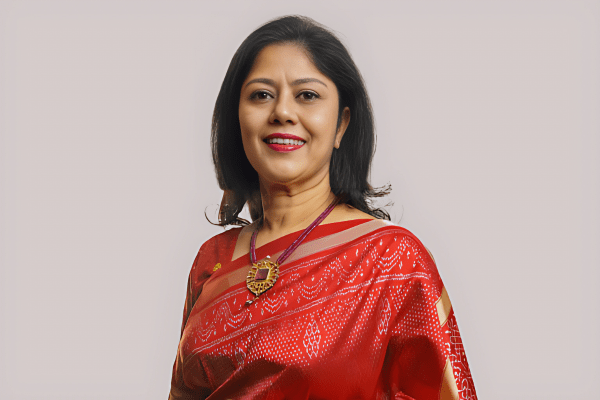
Sankari Sudhar, Founder, Overqualified Housewives

When Sankari Sudhar realized that highly educated women, many with master’s degrees and PhDs, were still sidelined from the workforce, she decided to act. What began as a simple idea to connect women with jobs has evolved into Overqualified Housewives, a platform that blends opportunities, skill development, mentorship, and storytelling to help women reclaim their professional identity.

Driven by her experiences of struggling to find reliable opportunities, Sankari turned skepticism into action. Today, her work empowers homemakers, career returnees, and graduates alike, proving that women’s empowerment is not just about education, it’s about access, confidence, and financial independence. Join us as we dive into the mind of a true pioneer, whose passion for empowerment has sparked more than just a platform — it has ignited a movement that’s reshaping how India views women, work, and financial independence.

1. Can you walk us through the early days of building this platform, what were some key turning points or challenges that defined your path?

When I first started building Overqualified Housewives, I assumed most women we’d support would share a background similar to mine, educated, professionally exposed, and simply seeking a career restart. But the reality turned out to be very different.

Many women who joined had strong academic credentials, master’s degrees, even PhDs, yet had never worked formally. Around 40% of our users hold two or more degrees, while 25% never entered the workforce, often due to cultural or family pressures. For many, higher education was encouraged, but pursuing a career was not. This revealed a crucial gap: degrees alone weren’t enough — women needed practical skills and mentorship to re-enter the job market.

Initially, our vision was to connect businesses with skilled women ready to restart. But we quickly realized opportunities alone wouldn’t work. To make them meaningful, women also needed upskilling, training, and guidance. That insight reshaped our mission, evolving the platform into a holistic ecosystem that offers full-time, part-time, and freelance opportunities, alongside skill-building programs and mentorship.

Another breakthrough was sharing women’s stories. These narratives not only inspired others but also helped break deep-rooted cultural barriers.

Looking back, these early lessons transformed our platform into more than just a career bridge. It became an inclusive space where overqualified homemakers, career returnees, and skilled graduates gain the confidence, tools, and opportunities they need to thrive.

2. Many would hesitate to step into an unconventional space like this. What gave you the conviction to pursue it despite societal norms or market skepticism?

I never spent much time worrying about skepticism or societal norms. My conviction came from lived experience. As a professional, I often struggled to find reliable opportunities, and I saw countless women facing the same challenge. Instead of dwelling on the problem, I chose to build the solution: a trusted space where women can access meaningful work.

From a young age, I’ve believed women deserve choices,  to study, pursue ambitions, and achieve financial independence. That belief kept me going, even when others doubted the vision. Skepticism, after all, reflects how deeply society has been conditioned. If we stop sharing stories or raising our voices, nothing changes.

The numbers speak for themselves: in 2024, just 19% of urban, educated Indian women participate in the workforce, even though girls consistently top in academics across India and globally. The gap isn’t education, it’s the leap to financial independence.

What struck me most is that hesitation often comes not from tier-three or low-income families, but from middle and upper-middle-class women, who face cultural pressure despite their degrees. That’s why we focus on storytelling, awareness, and action to normalize women making their own financial choices.

For me, it’s not about resisting society. It’s about creating change so women everywhere can pursue independence with confidence.

3. How does Overqualified Housewives function as a platform—what’s the core model behind connecting skilled women with flexible work opportunities?

At its core, Overqualified Housewives is a holistic platform that connects businesses seeking flexible and skilled talent with graduate women who are eager to restart their careers. Our mission is simple yet powerful: to help women become financially independent while enabling businesses to access a pool of reliable, highly qualified candidates.

Many of the women on our platform, Overqualified Housewives, are career restarters who face significant barriers when re-entering the workforce. One of the biggest challenges is the unconscious bias that exists, especially against mothers. There’s even a term for it, the “motherhood penalty.” Too often, women are unfairly judged as being less committed, less dependable, or too emotional once they become mothers. As a result, businesses hesitate to hire them, even though these women are highly capable and skilled.

We created Overqualified Housewives to break these barriers. Every candidate on our platform is vetted and verified, ensuring that businesses can hire with confidence. Overqualified Housewives operates on a subscription-based model where companies pay a fixed fee to access our women-only talent pool. Unlike traditional hiring platforms, we don’t charge commissions per hire. Instead, businesses get unlimited access to a diverse pool of top-quality candidates, allowing them to scale their teams efficiently.

Through this model, we’re creating a win-win solution: more women gain opportunities to rebuild their careers, and businesses benefit from trustworthy, skilled employees who bring both expertise and commitment.

4. How do you identify and build partnerships with businesses that are aligned with your mission and open to hiring women returning to the workforce?

Our primary focus has always been content marketing. Instead of chasing quick wins, we’ve built a long-term strategy centered on storytelling and meaningful engagement. We don’t just post for visibility; we create narratives that resonate with women who feel overlooked or underutilized.

This approach has allowed us to build trust and authenticity with our audience. Every article, campaign, and social post is designed to educate, inspire, or empower. By consistently delivering value, we’ve been able to grow organically and establish a strong community that identifies with our mission.

At the heart of our strategy is a simple belief: when you lead with value, people respond with loyalty. We’ve seen firsthand how women connect with our stories, adopt that mindset, and find joy in being part of something bigger than themselves. And that, to me, is the most rewarding outcome of all.

5. In your experience, what are the most common barriers skilled homemakers face when trying to re-enter the workforce, and how does your platform address them?

One of the most common barriers women face is finding opportunities that offer true flexibility. Many talented women want to return to work after a career break, but rigid job structures often make it difficult for them to balance personal responsibilities with professional aspirations.

Another major challenge is the lack of awareness about alternative career paths. Too often, women believe they must return to the exact same roles they left behind. But in reality, there are countless opportunities where their skills and experiences can be transferred and valued.

At Overqualified Housewives, we emphasize skill-building, mentorship, and confidence restoration. Our goal is to help women recognize that they are not starting from scratch — they are restarting from a place of experience and resilience. When they adopt this mindset, re-entering the workforce becomes far easier and more empowering

6. How do you manage the delicate balance between being a mission-led brand and a scalable, sustainable business?

Overqualified Housewives has always been designed as a mission-led brand, because the mission is truly at the core of everything we do. From the beginning, I believed that if we focused on creating genuine impact and serving women wholeheartedly, the rest would follow.

When I first started, my expectation was modest, I thought maybe 1,000 women would join within the first year. But to my surprise, in just the first month alone, 500 women came on board. By the end of that first year, the community had grown to more than 10,000 women. Those numbers showed us the power of a mission-driven approach.

It’s the mission that made our platform scalable. It’s the mission that turned it into a sustainable business. When you prioritize solving real problems and delivering value without compromising your vision, growth becomes a natural outcome. And today, with the support of technology, scaling that mission and building a long-lasting, sustainable brand has become even more achievable.

7. Are there any policy or structural changes you’d like to see in the employment ecosystem that could support your vision more effectively?

Yes, Definitely. When it comes to policies that support women, it cannot be the responsibility of just one person or one institution. A woman may give birth, but it takes the combined effort of companies, governments, communities, and families to create an ecosystem where she feels supported, and never guilty, for choosing to work.

Companies, in particular, must step up with stronger policies around flexibility, inclusion, and trust. The workplace environment needs to empower women rather than make them feel as though their choices are wrong. The government also plays a critical role in setting the tone through progressive policies, while communities and families shape mindsets that allow women to pursue their ambitions without judgment.

Unfortunately, many families still view women’s degrees as a status symbol rather than a professional asset. Degrees are often seen as tools to secure a “suitable” match — an engineer marrying an engineer, or a doctor marrying a doctor — instead of being valued for the skills and careers they can unlock. This mindset limits choice and continues to undervalue women’s professional potential.

To change this, we need more open-mindedness, especially in unconventional hiring. Businesses that have embraced this approach are already seeing results, because they’re tapping into talent that would otherwise remain hidden.

India has the highest number of overqualified housewives in the world, an enormous, untapped resource. If companies recognize this potential and commit to offering flexible and reliable opportunities, the payoff could be transformative. As India works toward becoming a global superpower, solving this equation is not just important, it’s essential.

8. Many talented women feel undervalued or disconnected after a career break. How do you personally navigate and address the emotional and psychological aspects of this journey through your platform, beyond just providing job opportunities?

After a career break, many women naturally feel undervalued and disconnected. But the first step is reminding them they’re not alone, and that taking time off is absolutely okay. Bringing life into the world is the most important work there is, and pausing a career for it should never diminish confidence.

That’s why we run skill development programs, where industry experts engage with our women weekly. This keeps them connected to current trends, helps them decide whether to return to their field or pivot to something new, and shows them the paths others have taken.

My own journey reflects this: I began as an engineer, worked in IT, then chose entrepreneurship for a more meaningful second innings. Likewise, a banker can become a designer, or an IT architect can transition into teaching. With the right skills and community, every path is valid.

By showcasing real women who’ve successfully restarted, we prove that it’s possible, and that confidence fuels the leap to the next level.

9. In building Overqualified Housewives, how have you balanced honoring the traditional roles many women embrace with empowering them to reclaim their professional identities on their own terms?

When we launched Overqualified Housewives, a common misconception surfaced: some people assumed we were devaluing homemakers. That couldn’t be further from the truth.

Our mission is simple — every woman deserves a choice.

At one stage in my life, I chose to be a homemaker because it was the best decision for my child. Many women make the same choice, and if caring for their families gives them identity, joy, and belonging, that is equally powerful and valid.

But choice works both ways. Some women may want to freelance for a few hours a day. Others may crave full-time careers beyond traditional roles of wife, mother, or daughter-in-law. If they feel unfulfilled by only household responsibilities, they must have the opportunity to pursue something more.

We are not putting down housewives. We are saying women should have the freedom to define their own paths, whether that’s managing a home, freelancing, or building a career.

10. What role do you believe technology and digital platforms must play in redefining women’s participation in the workforce, particularly in contexts where social expectations are deeply entrenched?

Technology has been a game-changer for us. When we started nearly three years ago, just before COVID-19, remote work was considered a privilege reserved for senior professionals. For most, it wasn’t even an option.

Then the pandemic changed everything. Suddenly, work-from-home became mainstream, internet access expanded even into Tier 4 towns, and laptops and digital tools became widely available. This shift opened new doors for women to upskill, connect with like-minded professionals, and re-enter the workforce.

Of course, technology is a double-edged sword. Its impact depends entirely on how we use it. But when applied with purpose, it enables scalability, flexibility, and access, making it possible for women everywhere to pursue meaningful careers.

11. Looking back, what’s the most unexpected lesson you’ve learned about leadership or impact while driving a mission that intersects entrepreneurship with social change?

One of the most unexpected lessons I’ve learned is realizing my privilege, to have a supportive family, quality education, and the freedom to choose my own path. Not everyone, whether man or woman, has this choice. And with privilege comes responsibility: we must use it to create impact and add value to others’ lives.

Working for social change has shown me many stories that are difficult to accept. Some women we aim to support aren’t ready to take the leap, no matter how much we encourage them. At times, our efforts feel wasted. But that’s part of the journey.

The key is persistence. Change doesn’t happen overnight. Just like water slowly shapes stone through constant drops, impact requires steady effort, regardless of immediate results. Entrepreneurship is never easy, and building a social-impact venture is even harder. Yet, what matters is showing up consistently, pushing forward, and delivering on our mission.

That’s the real lesson — to keep striving, even when outcomes are uncertain.

12. When you’re building something that challenges traditional norms, like the idea that homemakers are ‘underutilized’—how do you handle resistance, not just from the market, but from within the very community you’re trying to uplift?

Of course, there will always be underutilization and resistance when we challenge traditional norms. But what I’ve learned is this: while a few may openly criticize on social media, many more are silently watching and slowly changing their mindset. Over the past three years, I’ve witnessed remarkable shifts, especially among men.

One man told me that after following Overqualified Housewives, he finally understood his wife’s struggles. With his support, they launched a social media agency together. Another founder shared how his sister, once discouraged from studying, fought through resistance, built a career, and later funded his college fees, a turning point that reshaped his views on women’s financial independence.

These stories prove that our work doesn’t just empower women. It also empowers men to become allies. Actual change happens when both men and women support each other, breaking cycles of bias and unlocking real potential.

Darpan Sanghvi launches CoFounder Circle to boost AI-first startup growth

0
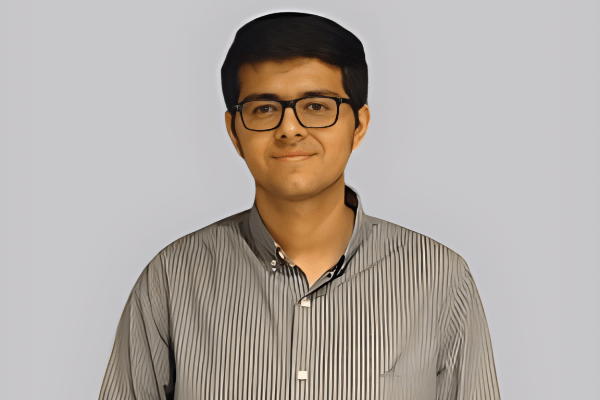
Darpan Sanghvi, founder, CoFounder Circle

Good Glamm Group founder Darpan Sanghvi has introduced CoFounder Circle, an AI-first acceleration platform for startups and MSMEs, offering access to co-founders, talent, service partners, AI tools, mentors, incubators, and investors.

According to Sanghvi, close to 50% of CoFounder Circle’s equity will be distributed among the community, including employees, active mentors, and former Good Glamm stakeholders, as part of what he called his “restitution pledge.”

Reflecting on his journey, Sanghvi wrote on LinkedIn, “That’s it. You failed, Darpan. Now roll over, stay down, and never get back up. Failure is lonely. It leads to crippling self-doubt and fear, leaving you sleepless, staring at the wall, replaying moments you wish you could have handled differently.”

He acknowledged the weight of responsibility that comes with building and losing a business, “Make no mistake, I am not the victim here. I was the founder of a company that scaled and then failed. And when you fail after that scale, you fail hard, and real people get hurt. As the founder, the consequences are mine to bear.”

Sanghvi said that his shift towards creating CoFounder Circle came after speaking to young entrepreneurs, “The more I spoke to entrepreneurs, and the more I was able to help them, the more alive I felt. That is when I realized I had discovered my purpose, to help others build, and in that process, I will build again.”

According to Sanghvi, CoFounder Circle will bring together people, partners, AI-powered tools, mentors, and investors on a single platform. He added that “Generative AI is set to spawn a whole generation of new businesses while also turbocharging existing businesses. CoFounder Circle will be at that intersection of AI, business, capital, and community.”

Meanwhile, the platform has opened a waitlist for entrepreneurs, allowing them to gain early access to incubation programs and, in addition, providing the opportunity to pitch to investors at a demo day.

FirstClub raises $23 Mn in funding from existing investors

0
Ayyappan R, founder, FirstClub

Bengaluru-based FirstClub, a quality-focused quick commerce startup founded by Flipkart veteran and former Cleartrip CEO Ayyappan Rajagopal, has raised $23 million in a Series A round led by Accel and RTP Global, with participation from Blume Founders Fund, 2am VC, Paramark Ventures, and Aditya Birla Ventures.

The funding round values the company at $120 million (₹1,050 crore) and comes just eight months after its $8 million seed round, which saw backing from industry leaders including Binny Bansal, Mukesh Bansal, Lalit Keshre, Ankit Nagori, and Kunal Shah, among others.

Launched in June, FirstClub currently offers packaged foods, bakery, dairy, and nutrition products; has set up four dark stores in Bengaluru; has added 4,000+ SKUs; and has scaled to a 180-member team.

With the latest capital infusion, the startup aims to expand to 35 stores across all Bengaluru pincodes within six months while diversifying into home essentials, kids’ food, pet care, and gifting. It is also testing new models such as subscription deliveries and in-store cafés at dark stores serving food prepared with FirstClub’s own ingredients.

By focusing on premium groceries instead of discounts and 10-minute delivery hype, FirstClub is achieving stronger unit economics.

“We are operating with 2x average order values versus any other platform in this category. Our repeat rates are over 60 percent… and we are also operating with the highest gross margin in the industry,” Ayyappan said.

The same discipline is evident in its dark store model—rather than building dense, high-rent networks to chase faster deliveries, FirstClub keeps a leaner footprint with each store covering several pincodes.

“Instead of having three different stores in three different pincodes, we are operating with one store that services all three, which brings down capex,” Ayyappan said. By offering 30-minute deliveries, the firm is also able to locate stores in lower-rent zones.

The company is planning to fast-track expansion in Bengaluru with slotted deliveries and a subscription offering. “We realized that we can roll out our slotted delivery and subscription models much faster than quick commerce. So that is what we are currently focused on,” he added.

FirstClub’s premium focus hasn’t limited its reach; a notable share of orders originates from budget communities and paying guest facilities, underscoring cross-segment appetite for clean-label groceries, according to Ayyappan.

“FirstClub has demonstrated rare early product-market fit within just three months of launch, building a full-stack platform with category ownership, operational discipline, and strong consumer love,” said Barath Shankar Subramanian, Partner at Accel.

Nishit Garg, Partner at RTP Global, added, “In a world of overwhelming product choices and confusing ingredient labels, FirstClub is closing the trust gap for Indian consumers.”

Ayyappan also said the company has explored acquisition opportunities in adjacent categories but plans to stay focused on organic growth in the near term.

“There are quite a few D2C brands in the categories we are looking to get into that are available from an M&A perspective, and we have had on-and-off conversations. But for the next three months, we do not want to dilute our focus. But that is something we will definitely explore at some point in time,” he said.

As India’s $6 billion quick commerce market races toward a $40 billion future, FirstClub is betting on quality to stand apart. The next six months in Bengaluru, including the festive season, will be a decisive test of its leadership potential.

Vivanta Stays to strengthen portfolio with 500 new villas by 2026

0

Vivanta Stays, a luxury villa network backed by Bajaj Auto, has unveiled plans to add over 500 villas across India by March 2026. The expansion highlights the company’s strategy to scale its footprint while ensuring consistent service standards in the rapidly growing alternative accommodation sector.

The upcoming portfolio will include a diverse mix of properties, ranging from family-friendly villas to affordable luxury options tailored for groups. Each home will feature private pools, chef services, and event-ready facilities. To strengthen its network, Vivanta Stays will collaborate with villa owners, supported by centralized quality checks and structured hospitality training programs.

Technology will remain at the core of Vivanta Stays’ expansion, with new systems enabling instant confirmations, secure payments, and real-time guest support to ensure a smooth booking journey. The company’s operating protocols also emphasize staff training, hygiene audits, food safety, and customer grievance redressal, reflecting a process-driven approach to hospitality.

Currently, Vivanta Stays operates across destinations such as Lonavala, Igatpuri, Alibaug, Karjat, Nashik, Goa, and Himachal Pradesh. Guests often cite privacy, professional staff, and transparent booking policies as major reasons for returning. The payment model—60% advance and 40% at check-in—along with clear refund policies, has further strengthened traveler trust.

Unlike aggregator-driven platforms, Vivanta Stays positions itself as a product-first brand, with villa managers actively handling each booking, including dining setups, transfers, and event arrangements to deliver personalized experiences. This hands-on approach, combined with a strong focus on operational discipline, helps the brand stand out in a competitive landscape.

Looking ahead to 2026, Vivanta Stays aspires to be recognized as one of India’s most trusted villa networks, defined by its curated properties, consistent hospitality standards, and transparent guest engagement.

TBO to acquire US-based Classic Vacations from Najafi Companies

0
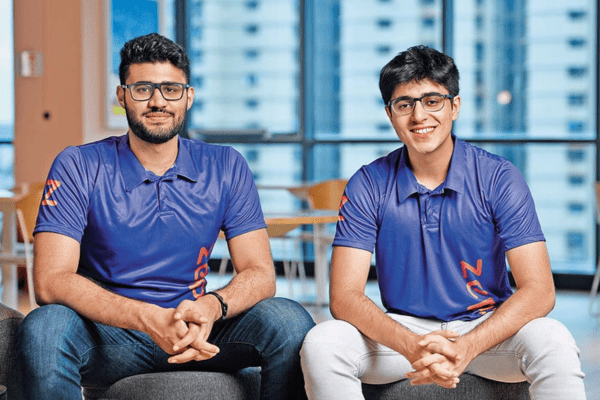
(L to R) Gaurav Bhatnagar, Co-Founder and Joint Managing Director, TBO Tek and Ankush Nijhawan, Co-Founder and Joint Managing Director, TBO Tek

Gurugram-based TBO has announced plans to acquire US-based Classic Vacations from Phoenix-headquartered investment firm The Najafi Companies in a deal valued at up to $125 million. The Najafi Companies had earlier acquired Classic Vacations in 2021 from Expedia Group.

TBO stated that the acquisition will integrate its technology-driven platform and global inventory with Classic Vacations’ wide network of luxury travel advisors and suppliers. For the fiscal year ending December 31, 2024, Classic Vacations posted $111 million in revenue and an operating EBITDA of $11.2 million.

This move enables TBO to expand into the premium outbound travel segment, aligning its growth with Classic Vacations’ exclusive B2B brand and high-value advisor network, strengthened by nearly five decades of expertise and brand recognition.

Founded in 2006, TBO is a global travel distribution platform focused on simplifying the buying and selling of travel services. By leveraging technology, it connects over 159,000 travel buyers with 1 million travel suppliers across more than 100 countries at scale.

“We’re thrilled to bring Classic Vacations into the TBO family—the company’s longstanding delivery of outstanding services has earned the trust of its more than 10,000 travel advisors in the U.S. and their end customers, making them a seamless fit for our vision moving forward in the fast-evolving travel and tourism industry,” said Gaurav Bhatnagar, TBO’s cofounder and Jt. Managing Director. “Classic Vacations is led by a strong team of experts and will continue as an independent brand while leveraging TBO’s technology and distribution capabilities to grow their business.” 

“This acquisition continues to further our strategy to invest in both organic and inorganic growth opportunities. As we start working on integrating Classic Vacations with TBO, we will remain open to similar strategic alliances going forward,” said Ankush Nijhawan, cofounder and Jt. Managing Director of TBO. 

“We’re excited for this next phase in our company’s journey—TBO’s tech-centric solutions are geared fully toward our travel advisor community,” said Melissa Krueger, CEO of Classic Vacations. “TBO connects us to its first-class technology platform unlike what the wholesale market has ever had access to—allowing us to bring even more resources, tools, and insider connections to our valued travel advisors.” 

“Together, we’re strengthening Classic Vacations’ position as the premier luxury partner in the market while extending our reach onto the global stage, reflecting the worldwide footprint of our most important customers and supplier partners,” Krueger added. 

“This acquisition and partnership is a natural next step for our portfolio company Classic Vacations, and we’re happy to have worked successfully with them for the last four years, maximizing the company’s strengths and expertise in luxury travel. With a proven track record of delivering value to partners and travelers alike, Classic is uniquely positioned to lead the industry forward, building on its legacy of performance for years to come,” said Jahm Najafi, founder and CEO of The Najafi Companies. 

In this transaction, Moelis & Company LLC served as the exclusive financial advisor, and Ballard Spahr LLP acted as the legal advisor to Classic Vacations. On the other side, Cooley LLP advised TBO on legal matters, while PwC provided financial and tax advisory services.

Eden Homestay launches online portal to simplify and speed up bookings

0

Eden Homestay has rolled out its official booking portal to make planning stays in Hyderabad faster, easier, and more convenient for both domestic and international travelers.

The website features a modern design, quick loading speed, and a mobile-friendly interface that works seamlessly across smartphones, tablets, and desktops. Guests can now check availability, view updated photos, read detailed stay descriptions, and confirm bookings online within minutes.

To further elevate the travel experience, the platform offers:

  • Multi-currency support for international tourists to enable smooth payments and communication
  • Transparent pricing for both Indian and global guests
  • A rewards points system that travelers can redeem on future bookings
  • Gift cards available for purchase and redemption
  • Options for property owners to list their stays, boosting tourism in Hyderabad and beyond
  • Verified guest reviews to help visitors choose the right accommodation
  • 256-bit encrypted secure payments for safe and reliable transactions
  • Multi-language support to cater to global users

Sharing the thought behind the revamp, a spokesperson from Eden Homestay said, “We wanted the booking process to feel as comfortable and effortless as the stay itself. This upgrade is part of our commitment to offering ease, warmth, and quality to every guest.”

The new website also introduces several key features. To begin with, it offers a real-time room booking system for instant reservations. In addition, guests can explore an updated photo gallery that highlights rooms and facilities. Furthermore, the platform provides clear and detailed room descriptions, and it integrates Google Maps to ensure quick and convenient navigation.

Based in Hyderabad, Eden Homestay has built a reputation for its cozy atmosphere, clean rooms, and family-friendly experience. It serves a diverse mix of travelers—ranging from families and students to corporate guests and solo visitors—who value a comfortable yet affordable stay. With the launch of its new portal, Eden Homestay aims to strengthen both domestic and international tourism in the city.

AI agent startup Sierra set to raise $350 Mn at $10 Bn valuation

0
Clay Bavor & Bret Taylor, co-founders, Sierra

AI agent startup Sierra is nearing a $350 million funding round, led by Greenoaks Capital, which would value the company at $10 billion.

The report also noted that Sierra is on track to surpass $100 million in enterprise annual recurring revenue (ARR).

The startup previously secured $175 million in October 2024, also led by Greenoaks, with participation from Thrive Capital and Iconiq, at a $4.5 billion valuation.

Founded in 2023 by Bret Taylor (former Salesforce co-CEO and current OpenAI chair) and Clay Bavor (ex-Google executive), Sierra builds AI-powered chatbots that manage customer service for large enterprises. Its client roster includes brands like WeightWatchers and Sirius XM.

In June, the company shared on X that 15% of its customers generate more than $10 billion in annual revenue, while nearly half report revenues exceeding $1 billion annually.

This year, AI agents have emerged as a major focus across the tech industry, with companies like Microsoft and OpenAI testing different strategies to develop and deploy them.

Elon Musk’s AI venture xAI entered the race last week by launching grok-code-fast-1, a coding agent it described as fast and cost-efficient, even though it arrived relatively late to the space.

Learning startup Seekho raises $28 Mn in funding round

0
L-R: Keertay Agarwal, Rohit Choudhary & Yash Banwani, co-founders, Seekho

Short-form learning startup Seekho has secured $28 million in a funding round led by Bessemer Venture Partners, a Silicon Valley-based VC firm.

The round also drew backing from consumer tech-focused Goodwater Capital along with existing investors Lightspeed Venture Partners and Elevation Capital.

Seekho intends to deploy the fresh capital to develop innovative content formats and integrate AI-powered solutions to improve user experience.

“We want to create new learning journeys in a more hybrid and interactive format, leveraging AI to deliver personalized learning experiences across all categories,” founder Rohit Choudhary said.

Established in 2020 by Choudhary, Keertay Agarwal, and Yash Banwani, the Bengaluru-based learning startup provides short, curated learning modules in vernacular languages. The startup delivers three- to five-minute videos that tailor content to support career development and personal growth, covering topics such as digital service usage, building an online presence on Instagram or YouTube, enhancing business operations, language learning, and self-help skills.

“We will soon be launching Kannada and Bangla, and at the same time, we are also expanding to English-speaking users,” said Choudhary. The subscription-based platform currently offers content primarily in Hindi and introduced Telugu and Tamil about a quarter ago.

Industry experts with practical experience produce the videos in their respective domains. According to him, the majority of users are private-sector professionals or entrepreneurs managing their own businesses.

“I think there’s still a 10x potential just in India. I’m coming from the perspective that this is a highly aspirational country, where people want to improve their lives. They understand that they need to learn something new, and that is the major insight we have been building on,” Choudhary added.

Currently active in India, the company plans to expand globally in the upcoming fiscal year. Choudhary stated that Seekho serves 25 million monthly active users and is witnessing 60% quarter-on-quarter growth in both revenue and paid subscriptions.

The startup previously raised $8 million in December 2024.

Commenting on the investment, Anant Vidur Puri, partner at Bessemer Venture Partners, said, “The trifecta of over 800 million smartphone users in India, each of them spending seven to eight hours a day, and frictionless online payments means that almost all aspects of life have moved to digital platforms—from buying groceries to financial transactions and now, with Seekho, education as well.”