




Wednesday, October 28, 2026
Home Blog Page 512

Cashfree Payments teams up with PharmEasy to simplify payment settlements

0

To enable rapid and efficient payment settlements for its retail clients, Cashfree Payments, a provider of payments and API banking solutions, has partnered with PharmEasy, one of India’s top digital healthcare platforms. Through this collaboration, transactions for the retail network will be automated using Cashfree Payments’ Payouts technology. 

With the help of Cashfree Payments’ payouts solution, businesses can promptly pay suppliers, handle customer refunds, and disperse loans, among other things. According to the company, payouts are successful 99.98% of the time.

In its capacity as a marketplace and intermediary, PharmEasy enables and facilitates (a) the sale of pharmaceutical and healthcare products and services across a variety of categories through its third-party retail partners, who are dispersed throughout the country, and (b) the payments for the sale and purchase transactions that are conducted between consumers and retail partners. On the website or mobile app of PharmEasy, a consumer can place an order and choose to pay online or choose COD (cash on delivery). Following the customer’s payment, PharmEasy collects and distributes daily any payments that must be made to the retail partners.

With the help of this collaboration, PharmEasy will be able to fully automate this procedure and provide settlement to retail partners within 48 hours of customer payments. 

Cashfree Payments has assisted PharmEasy in tracking, and processing bounced/failed payouts transactions as a result of their partnership.

Reeju Datta, Co-Founder, Cashfree Payments, said, “We are delighted to partner with PharmEasy and extend our payouts solution. Payouts helps PharmEasy to automate their payment settlements to the retailers and vendor payouts reconciliation, thus creating a superior transaction experience for the company’s partners. We look forward to helping the company automate the entire payments process and contributing to its bid to make quality healthcare accessible to the masses.”

With over 50% market share among payment processors, Cashfree Payments leads the way in bulk disbursals in India with its product payouts. Recently, the State Bank of India invested in Cashfree Payments underscoring the company’s role in building a robust payments ecosystem. Cashfree Payments works closely with leading banks to build core payments and banking infrastructure that powers the company’s products and is also integrated with major platforms such as Shopify, Wix, Paypal, Amazon Pay, Paytm and Google Pay. Apart from India, Cashfree Payments products are used in eight other countries, including the US, Canada and the UAE.
Payoda plans over 1000 employee base by 2025

0

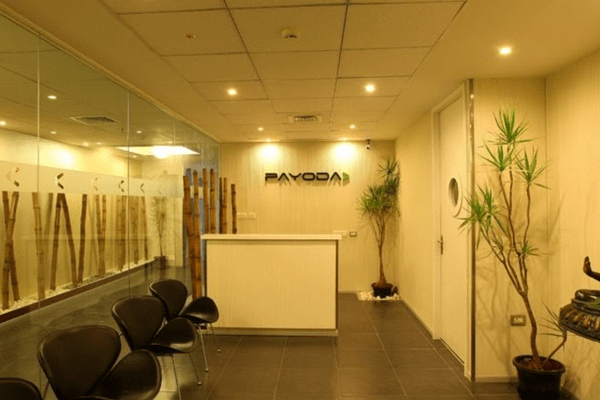
Payoda, a software development and technology company, has plans to double its employee base across several verticals to over 1,000 during the next three years, a top company official revealed. The company has its headquarters in Coimbatore and has offshore workplaces in Texas, the United States, Dubai, and Romania. It also has offices in Chennai and Hyderabad.

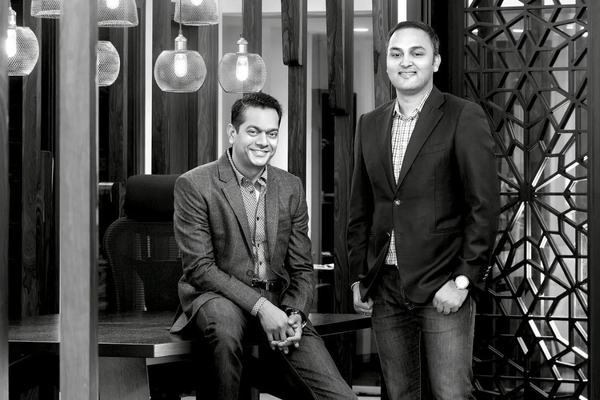
“Technological advancements over the past couple of years have triggered a pertinent need for stakeholders to expand their horizon through robust infrastructure and skilled human resources,” company co-founder Karunya Sampath said in a company statement. 

“To keep pace with time, we have put in place a strategic hiring plan wherein the strength at all our centres would improve. Even as we would continue to have most team members from India, we foresee expansion in our global teams in the near future,” she said.

She added that all key departments, including technology, sales, human resources, administration, and marketing, are included in the strategic need-based employment plan for the upcoming three years. 

The company claims that workers work three days a week in an office setting and have the option of working the other two days remotely.

Furniture decor startup Sunday Design receives $1.5mn from Havells India family office, others 

0

Sunday Design, furniture and home decor brand, has raised $1.5 million from a clutch of family offices, including those of Havells India (QRG Investment & Holdings), SRF Ltd. (Kama Group), and coal logistics firm KCT Group, among others. 

To produce and market high-end furniture, Gautam Baid founded Sunday Design in 2021. According to the company, it has expanded at a 10% monthly rate since its inception.

“We are grateful for the trust of our new and existing investors, who have encouraged us to harness this vision and make a greater impact. With this investment, we intend to collaborate with top European designers and grow our footprint in an omnichannel format by introducing product lines on a strategic basis,” said Baid, founder of Sunday Design.

By opening retail locations in Mumbai and Bengaluru and an e-commerce platform, Sunday Design aims to leverage the fresh capital to increase its online and physical presence.

UK-based Fintech BankiFi bags $4.8mn in funding led by Praetor Ventures

0

BankiFi, a provider of embedded banking products for small- to medium-sized businesses (SMBs), announced that it had raised $4.8 million. The funds would be used for the company’s foray into the North American market. 

BankiFi, a company founded in 2018 by Mark Hartley, aims to help more than two million SMEs globally by 2024 by working with banks and other financial institutions to create technologies that will improve business banking. According to the press release, the company’s offering enables banks to incorporate goods especially helpful to SMB operators into their products.

At the time, Chief Executive Mark Hartley said, “SMBs in the United States are facing the same problems we’ve seen in the United Kingdom and Australia, including late payments and time delays due to financial administration. Within our technology, we aim to transform services available to SMBs within community banking, across the U.S.”

BankiFi announced the launch of its U.S. operation in July of this year.

“Technology investments have been slowing down this year, and to see our investors show such a strong commitment is a huge vote of confidence in BankiFi’s direction and growth,” Keith Riddle, chief executive of BankiFi Americas, said in the release. “Our mission is to make all aspects of cash management and payments easier for SMBs everywhere, and this investment is another huge step to making that a reality.”

The funding is headed by Praetura Ventures, with participation from other investors, including Greater Manchester Combined Authority (GMCA).

Praetura Ventures Managing Partner David Foreman added, “BankiFi has proven to be an industry-leading open cash management provider in Europe, Australia, New Zealand and other countries. Now that they have launched in North America, BankiFi has an opportunity for dramatic growth.”

In addition to Columbus, BankiFi has offices in Sydney, Australia, Antwerp, Belgium, and Manchester, England.

Adani Logistics to buy ICD Tumb for ₹835 crore

0

Adani Logistics announced that it had signed a definitive agreement to acquire ICD Tumb (Vapi) from Navkar Corporation for ₹835 crores.

In a statement, Adani Logistics, a wholly-owned subsidiary of Adani Ports and Special Economic Zone Ltd, stated that the deal includes the purchase of the operating ICD with a handling capacity of 0.5 million TEUs (twenty-foot equivalent unit). 

As more industrial corridors and logistic parks are built along these DFC (Dedicated Freight Corridor) routes, it was noticed that the associated 129 acres of land offer a further extension path to enhance capacity and cargo soon.

ICD Tumb has a private freight terminal with four rail handling lines connecting it to Western DFC, custom-notified land, and bonded warehouse facilities, the statement claims. 

Tumb’s strategic location along the Western DFC, bordered by industrial facilities owned by the Gujarat Industrial Development Corporation (GIDC) and the Maharashtra Industrial Development Corporation, services both the Hazira port and the Nhava Sheva port (MIDC).

APSEZ CEO and Whole-Time Director Karan Adani said, “This acquisition fits well with our transformation strategy towards becoming a transport utility as well as move us closer to our objective of providing economical door-to-door services to our customers”.

ALL has developed and operates Multi-Modal Logistics Parks (MMLP) at Patli, Kishangarh, Kilaraipur, Malur, Mundra, Nagpur and Taloja.

APSEZ is part of the globally diversified Adani Group.

Realty tech companies help increase productivity in hybrid mode

0

As the focus turns from sanitization to enhancing workplace efficiency, organizations are looking to real estate tech companies for assistance, according to Sandeep Dave, Global Head-Digital & Technology, CBRE. 

Artificial intelligence (AI) is another tool businesses use to determine how to make employees’ days more productive.

“Now it is very much about how a company can ensure that when an employee decides to go to the office, he will be productive,” said Dave.

Corporates are now using data to increase the efficiency of employees.

“We have a product that ensures that employees’ calendars are the same, so they can figure out who is going to the office that day. People in the office can also see occupancy in real time. They can see that social distancing is being maintained, among other things,” Dave said.

According to CBRE’s “2022 India Office Occupier Survey,” around 73% of occupiers in India are considering implementing hybrid working arrangements in the future. 

The Covid-19 outbreak prompted businesses to choose flexible working arrangements, which is how the trend started. 

Office applications became a communication tool soon after the pandemic, and during the second wave, it was employed to maintain employee safety. After that, it was all about monitoring sanitization and getting actual occupancy information.

“Over the last five or six years, this used to be a very manual industry, whereas technology and automation have become a part of the industry even before Covid19. Post covid, it got accelerated,” said Dave.

Corporates are also using technology to achieve a net zero target.

“Most of the solutions available on the market are good for getting data for one building. But if you want to do it on a portfolio scale, which is what is required to achieve Net Zero targets, the company needs information on energy efficiency and workplace experience,” said Dave.

And clients are also asking for deeper insights.

“Commercial real estate is a siloed data environment, where data comes from various places, it doesn’t merge together. There’s a property record in 15 different locations,” Dave said.

Businesses use data to evaluate various factors, including operational effectiveness, energy usage, health and safety records, and occupancy levels. 

According to experts, coming back to work is a global issue, and everyone is attempting to predict the future of employment.

“The future of work is going to be distributed. A workspace is not only a place where people come in to get work done, but more so to collaborate. So now the design of the space is not just a row of workstations, but also an agile room, wellness rooms, and collaboration rooms,” Dave said.

YouTube plans to begin streaming video service: Report 

0

The Wall Street Journal reported Friday that YouTube, a subsidiary of Alphabet Inc., plans to open an online store for streaming video services.

According to the report, which cited people familiar with the recent discussions, the company has renewed talks with entertainment companies about participating in the platform, which it refers to internally as a “channel store.” 

According to the report, the platform has been in development for at least 18 months and may launch this fall.

The upcoming launch would enable YouTube to join companies like Roku Inc. and Apple to get a portion of the already crowded streaming market as more consumers cut the cord on cable or satellite TV and switch to subscription-based streaming services. 

The New York Times reported that Walmart Inc. had discussions with media companies about incorporating streaming entertainment into its membership service earlier this week.

Taj outlines expansion plans, rides travel revival

0

Taj Hotels will aggressively expand its footprint in the next two to three years due to a strong travel industry recovery. Although domestic tourism will account for most of this development, North America, Europe, and the Middle East are among the places where there is a sizable Indian diaspora and other countries where desi travellers frequently travel. 

The Tata Group company now operates two hotels, each in the US, UK, and Africa, three in the UAE, and eight in India’s immediate neighbourhood. 

The Indian Hotels Company (IHCL), the parent company of Taj, has a portfolio of 242 hotels under its various brands, with 63 now under construction in more than 100 sites on four continents. By 2025, 300 hotels will be in operation.

While remaining a debt-free company, IHCL MD-CEO Puneet Chhatwal is planning a shift in the ownership management contract properties. “IHCL will focus on re-structuring its portfolio to achieve a 50:50 mix between its owned/leased and managed hotels, which currently stands at 54:46,” he said.

On global expansion, Chhatwal said, “We are exploring strategic partnership opportunities in key global markets across the UK, the US and Europe, among others, which have substantial customer crossover with India. The Middle East, with locations such as Makkah — where IHCL has a Taj hotel in the pipeline, will continue to be a strong focus area for us in the next couple of years for developing our brand.”

IHCL is looking to explore new destinations and will open hotels in Lakshadweep and Diu in light of how domestic tourism is affected by the pandemic.

Brand and experience design studio ShopTalk joins Dept

0

ShopTalk, a brand and experience design studio, has joined Dept, a digital agency. 

The London-based agency will expand the studio’s existing clients while supporting the digital agency’s creative practice in the UK.

Paul Ferry, director and co-founder of ShopTalk, said, “We’re passionate about using brand and creative as powerful commercial tools for companies large and small, lifting them to great things.”

“What really resonated with us at the agency was the boutique level of service that they offer their clients, but with the talent, expertise and scale to provide brand experiences akin to that of a global network agency,” he added.

James Wood, creative director, and co-founder, of ShopTalk, said, “The agency has been making waves in the creative industry for some time now.”

“It was inspiring to spend time with their teams across Europe to witness how they combine marketing, technology and creativity to deliver next-level brand experiences. We’re so excited about this next step for our company,” he added.

Dimi Albers, global chief executive officer of Dept, said, “Ferry, Wood and their team have built an awesome team culture and deliver premium brand experiences and top-notch creativity, while staying fast and flexible.”

“The team has tons of experience and will bring our branding and experience design work to the next-level,” he added.

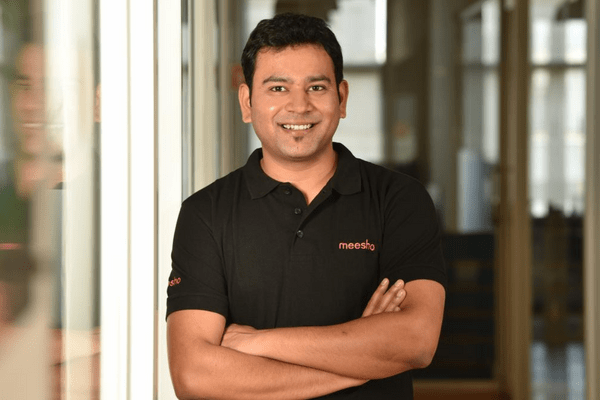
Meesho adds 8 new regional languages to serve 377 million potential customers 

0

Meesho, an e-commerce company backed by Softbank, announced on Friday that it had expanded its platform to add eight new vernacular languages to reach its target market of 377 million people worldwide. In addition, Meesho has introduced Bengali, Telugu, Marathi, Tamil, Gujarati, Kannada, Malayalam, and Odia to its platform to attract customers from the region. 

This allows Meesho customers to place and track orders in their chosen language, pay for items using an Android phone, and access account and product information.

“It is important to note that around 50% of our users are new to e-commerce and have probably never transacted on such platforms before. By introducing vernacular languages on the platform, Meesho aims to eliminate language barriers. This is a natural step in our journey of becoming the single shopping destination for the next billion users in India,” Meesho chief technology officer Sanjeev Barnwal said in a statement.

Last year, Meesho introduced Hindi as a language option on the platform, which has seen a high adoption rate of 20% to date. 

“The company aims to target a potential user base of around 377 million, as per data shared by Kantar ICUBE 2021. The majority of Meesho customers come from tier 2 and beyond cities like Ahmedabad, Vadodara and Jamshedpur and non-Hindi-speaking states, where English or Hindi may not always be the language of choice,” the statement said.

Meesho claims that since March 2021, the number of users transacted on its platform has increased roughly 5.5 times, and the number of products available has increased nearly 9 times to about 72 million. 

Meesho stated that customers from tier 2 and above markets, who make up about 80% of all customers, had been a critical factor in the company’s success.