



Monday, October 26, 2026
Home Blog Page 40

Pine Labs posts strong Q1 FY27 results with fourfold rise in net profit

0

Pine Labs reported a 20 per cent year-on-year increase in revenue to Rs 737 crore in the first quarter of FY27, while its profit after tax (PAT) quadrupled to Rs 20 crore from Rs 5 crore in the corresponding quarter last year.

The fintech company also turned profit before tax (PBT) positive at Rs 38 crore, compared with a loss of Rs 5 crore a year earlier. Pine Labs said its contribution margin remained strong at 72.3 per cent, or Rs 533 crore, while adjusted EBITDA stood at Rs 126 crore, representing a 17.1 per cent margin.

The strong quarterly performance reflects continued growth in India’s digital payments ecosystem, where rising UPI adoption, merchant digitisation and embedded financial services are driving demand for integrated payment infrastructure.

During the quarter, Pine Labs processed approximately Rs 4.22 lakh crore in gross transaction value (GTV), or nearly USD 45 billion, highlighting increasing preference among merchants and banking partners for its payments infrastructure.

The company’s digital checkout point network expanded 18 per cent year-on-year to 21.7 lakh. More than 70 per cent of all transactions were processed through UPI, underscoring the growing adoption of screen-based, UPI-first checkout solutions.

Pine Labs said every layer of its platform—including payments, affordability, credit and merchant engagement—is becoming increasingly relevant as businesses shift towards integrated digital-first operations. While enterprise merchants continued to account for a dominant share of the business, mid-market adoption accelerated by more than 40 per cent year-on-year.

The company added 1.3 lakh digital checkout points in the mid-market segment, making it the fastest-growing part of its business. It also reported that Flow, affordability and transaction-processing GTV increased by more than 54 per cent year-on-year to Rs 91,000 crore. Meanwhile, UPI GTV grew 80 per cent, while Dynamic Currency Conversion (DCC) GTV rose 40 per cent during the quarter.

On the online commerce front, Pine Labs onboarded more than 40 new merchants across quick commerce, e-commerce, direct-to-consumer (D2C), travel and enterprise segments. The company said its checkout and affordability solutions continued to gain traction with major commerce platforms, while Shopflo Checkout processed more than Rs 400 crore in D2C and small and medium business (SMB) transaction volumes during the quarter.

Pine Labs also expanded its presence in the government and hospitality sectors through new business from DMRC and higher merchant volumes generated via payouts and autopay services.

International revenue increased 21 per cent year-on-year to Rs 114 crore, accounting for nearly 16 per cent of the company’s consolidated revenue across 22 countries. Pine Labs attributed overseas growth to deployments with GCash in the Philippines, new affordability programmes in the UAE and Singapore, and expanded partnerships with British Airways, TAROM, Emirates NBD and Wio Bank. The company said it follows a “seed, land and expand” strategy in global markets.

In its issuing and acquiring business, revenue rose 31 per cent year-on-year as Pine Labs expanded into new consumer categories. During the quarter, the company launched gaming gift-card solutions with Xbox, Roblox and Nintendo, while introducing new prepaid programmes with BharatNXT, Chronon and VA Tech.

Commenting on the company’s strategy, Chief Executive Officer Amrish Rau said Pine Labs is building a new financial infrastructure layer on top of India’s digital payments ecosystem.

“P3P and Credit Line on UPI are not products — they are architectural primitives,” Rau said. “India built the public rails; we are building the intelligence and credit layer on top of them.”

Looking ahead, Pine Labs aims to deepen its payments ecosystem by expanding intelligent payment infrastructure, strengthening credit-enabled solutions and accelerating growth across domestic and international markets while building on India’s rapidly evolving digital payment rails.


Cyera to acquire Oasis Security in $1 Bn deal to strengthen AI cybersecurity platform

0

Data security company Cyera has signed a letter of intent to acquire Oasis Security for approximately $1 billion, marking another major acquisition as the company expands its AI-driven cybersecurity capabilities. The transaction is expected to be paid primarily in cash, with the remaining consideration in Cyera shares.

The announcement comes shortly after Cyera raised $600 million at a $12 billion valuation, highlighting investor confidence in the rapidly growing cybersecurity sector amid increasing enterprise adoption of artificial intelligence.

Founded in 2022, Oasis Security specializes in non-human identities, primarily AI agents. As organizations deploy more AI agents across their operations, they require cybersecurity solutions that monitor these agents’ behavior and manage their access to enterprise applications and software. Oasis has raised approximately $195 million from investors, including Accel, Craft Ventures, Cyberstarts and others.

The acquisition underscores the growing demand for cybersecurity providers that help enterprises defend against increasingly sophisticated AI-powered cyber threats. As AI adoption accelerates, businesses are investing in platforms that secure both data and machine identities, creating significant growth opportunities for cybersecurity companies.

Cyera and Oasis also share investors Accel and Cyberstarts, further strengthening the strategic alignment between the two companies. The proposed acquisition follows Cyera’s recent purchases of Index Ventures-backed Ryft and Genie Security, a startup that was less than one year old at the time of its acquisition.

Following the completion of the transaction, Cyera plans to integrate Oasis Security’s technology into a unified identity and data security platform, expanding its capabilities to address evolving enterprise security requirements.

Despite surpassing $150 million in annual recurring revenue (ARR), Cyera remains unprofitable, the company reported last month. Founded five years ago, the cybersecurity firm has raised approximately $2.3 billion in total funding.

The planned acquisition reflects Cyera’s strategy of expanding through acquisitions while strengthening its AI security offerings. By integrating Oasis Security’s technology, the company aims to build a more comprehensive platform capable of protecting enterprises against the growing challenges posed by AI-driven identities and cyber threats.

Moustache Group strengthens hospitality portfolio with revenue surge in Q1 FY27

0

Moustache Group of Hotels reported ₹18.34 crore in revenue for the first quarter of FY27, nearly doubling the ₹9.3 crore it recorded during the corresponding quarter last year. The hospitality company also closed FY26 with a net profit of ₹4 crore, supported by higher occupancy levels, expansion of its operating portfolio and growing demand for its mid-range Moustache Select hotels.

The strong quarterly performance reflects continued momentum in India’s hospitality sector, where rising domestic travel and increasing demand across leisure destinations are driving occupancy and revenue growth for hotel operators.

The group currently operates 37 properties across three business verticals—20 Moustache Hostels, 10 Moustache Select hotels and seven Luxuria by Moustache properties. The company said each brand caters to a distinct travel segment, enabling it to serve guests across different budgets and travel preferences.

During the quarter, Moustache Select recorded the highest customer inflow, with Uttarakhand emerging as its strongest-performing market. Families remained the largest customer segment, while couple stays also increased across the portfolio. Mountain destinations, including Nainital, Mussoorie, McLeodGanj and Shoja, ranked among the best-performing properties, benefiting from strong summer travel demand and higher occupancy compared with the same period last year.

Looking ahead, Moustache Group plans to add 80 new properties by 2030 through a destination-led, asset-light expansion strategy, reinforcing its long-term growth ambitions.

Commenting on the company’s performance and future strategy, Deepak Agarwal, Co-Founder and Director, Moustache Group of Hotels, said, “Revenue growth is encouraging, but the next phase must be driven by financial discipline. We have defined budgets across functions, set clear return expectations for every property and will continue to scale through an asset-light model. As we prepare for the fundraise and expansion, our priorities are faster stabilisation of new properties and stronger returns on every investment.”

The company also expanded its portfolio during the quarter by adding two new properties. Moustache Select Rishikesh Mohanchatti opened in May, extending the brand’s footprint beyond central Rishikesh. In June, the group launched Moustache Hostel Lonavala, located near the Lohagad trekking circuit. These additions followed the opening of Moustache Hostel Nainital and Moustache Select Nainital in March, strengthening the group’s presence across Uttarakhand and Maharashtra while catering to a wider range of travellers.

As the Moustache Group prepares for its next phase of growth, the company plans to combine disciplined financial management with an asset-light expansion strategy while accelerating new property additions and preparing for its upcoming fundraising initiative.

Anicut Capital unveils second seed fund with Rs 175-Cr corpus, eyes 20+ startup investments

0

Alternative asset management firm Anicut Capital has launched the Grand Anicut Seed Fund (GASF), its second early-stage investment vehicle, with a target corpus of Rs 175 crore and a greenshoe option of Rs 75 crore, reinforcing its commitment to backing India’s growing startup ecosystem.

The fund will invest in more than 20 startups spanning the pre-seed to Series A stages across deep-tech, enterprise tech, consumer and financial services. Anicut Capital plans to invest Rs 5-8 crore in each startup and is targeting a first close soon, the company said in a statement on July 29.

The fund’s limited partner base is expected to comprise institutional investors, high-net-worth individuals (HNIs), and domestic and international family offices. The company said it has already begun deploying capital and has closed three investments.

The launch of the new fund reflects sustained investor confidence in India’s early-stage startup ecosystem, where venture capital firms are increasingly backing innovative founders at the earliest stages to help build scalable businesses across high-growth sectors.

“Our early-stage investment strategy has been validated through our previous fund, Grand Anicut Angel Fund, which is currently tracking materially ahead of relevant benchmarks and has backed several category-defining companies. With our second fund, we aim to build on this proven strategy by partnering with exceptional founders in their 0-to-1 journey,” said Ajay Anand, Partner at Anicut Capital.

Since 2021, Anicut’s Grand Anicut Angel Fund has invested in 68 startups from the pre-seed to pre-Series A stages. According to the company, these portfolio companies have collectively raised more than Rs 6,000 crore in follow-on funding and achieved 10x revenue growth since Anicut made its initial investments.

The firm’s portfolio includes startups such as Agnikul Cosmos, GIVA, Blue Tokai Coffee Roasters, Snapmint, CapGrid and Galaxeye, highlighting its focus on identifying high-growth businesses across multiple sectors.

With the launch of the Grand Anicut Seed Fund, Anicut Capital plans to expand its early-stage investment portfolio by supporting promising founders from the idea stage through growth, while continuing to strengthen its presence in India’s venture capital ecosystem.

Construction materials startup Fixxly secures $5.5 Mn to bring quick commerce to building supplies

0
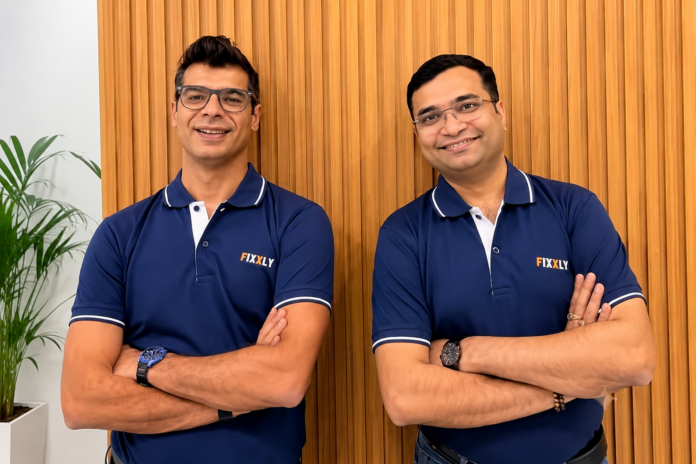
Shezan B. & Sachith Varma, co-founders, Fixxly

Building materials quick commerce startup Fixxly has raised $5.5 million in a seed funding round led by Accel, Fireside Ventures and Lightspeed India as the company prepares to digitise construction material procurement through rapid deliveries.

Fixxly will use the newly secured capital to strengthen its AI-powered technology platform and expand its operations ahead of its commercial launch scheduled for September 1. The company will begin operations in Bengaluru before expanding into additional cities.

Earlier this year, DesignCafe co-founder Shezan Bhojani and former Zepto supply-chain executive Sachith Varma founded Fixxly to develop an AI-powered procurement platform that delivers construction materials—including plywood, paint, electricals, lighting, plumbing supplies and hardware—to worksites in as little as 30 minutes.

The startup primarily serves contractors, electricians, plumbers, carpenters, painters, interior designers and homeowners, addressing a market that still depends heavily on fragmented dealer networks for urgent procurement requirements.

“We started Fixxly with one belief: no site should lose a working hour because a single item didn’t arrive. The people building India are professionals, and their time is money. Fixxly exists to keep that from happening by getting the right material on site when it’s needed,” co-founder and chief executive Bhojan said.

The funding reflects growing investor confidence in startups that are extending the quick commerce model beyond grocery deliveries into newer categories such as medicines, electronics, fashion, home services and auto parts. The move also underscores increasing interest in digitising India’s construction supply chain, one of the country’s largest yet least-digitised retail segments.

Offline distributors and neighbourhood dealers continue to dominate construction material procurement despite rising demand for faster fulfilment, creating opportunities for technology-led platforms to improve efficiency and delivery timelines.

“Building material procurement in India remains highly fragmented, with contractors and homeowners often dependent on local suppliers and unpredictable delivery timelines. As projects become more time-sensitive, the need for on-demand access to materials is only increasing,” said Prashanth Prakash, partner at Accel.

Vinay Singh, co-founder and partner at Fireside Ventures, said last-mile delivery of building materials remains “a largely unsolved problem”. “We couldn’t think of a better person than Shezan to solve this given his deep experience in the space. We have been proud investors in his previous startup, DesignCafe, and continue to support him in his new venture,” he said.

Romit Mehta, vice president at Lightspeed India, said the fragmented nature of the sector makes it well suited for a quick commerce model. “Quick as a format creates a breakthrough by serving customers at the point of their need and allowing supply to reach customers faster. With years of experience in building supply relationships and understanding user needs, we believe Shezan is the best founder to build the infrastructure to consolidate this multi-billion dollar industry,” he said.

Bhojani brings more than two decades of experience in the home improvement sector and previously co-founded DesignCafe, which merged with HomeLane in 2024. Varma previously led supply-chain design at Zepto and managed last-mile operations at Flipkart, contributing extensive logistics and supply chain expertise to the venture.

As quick commerce continues to evolve into new industry verticals, Fixxly aims to modernise construction material procurement through AI-driven technology and ultra-fast deliveries. With its commercial launch set for September 1, the company plans to establish its presence in Bengaluru before expanding to more cities, supported by its newly raised seed capital.

ImaAppWeb launches AsIma AI platform to automate hotel sales operations

0
Saurabh Singh, Founder, ImaAppWeb

AI-powered business transformation company ImaAppWeb has launched AsIma, an agentic AI platform designed to automate sales operations for the hospitality industry, enabling hotels to respond to guest enquiries in real time and improve booking conversions.

According to the company, AsIma addresses a key challenge in hotel sales, where enquiry management and booking conversions continue to depend heavily on manual intervention despite the widespread adoption of digital channels such as websites, online travel agencies (OTAs) and social media.

The AI-powered platform enables autonomous sales operations across multiple customer touchpoints, including voice calls, WhatsApp, websites and other digital channels. It monitors incoming enquiries, responds instantly to unattended conversations, identifies booking intent, checks room availability through property management system (PMS) integrations, guides guests through the reservation process and synchronises interactions with hotel systems.

The launch comes as hotels contend with shrinking booking windows and rising consumer expectations for immediate responses across digital channels, driving greater adoption of artificial intelligence to improve operational efficiency and customer engagement.

Commenting on the launch, Saurabh Singh, Founder, ImaAppWeb, said, “Hospitality has modernised how it generates demand, but sales execution has remained largely manual. As booking windows continue to shrink, hotels need systems that can actively manage guest conversations instead of simply routing them. AsIma enables autonomous sales operations while allowing hotel teams to focus on moments where human interaction creates the greatest value.”

The company said the platform supports continuous, real-time sales operations by ensuring guest enquiries receive immediate responses regardless of business hours or time zones. This helps hotels minimise missed booking opportunities while improving conversion rates through faster and more efficient customer engagement.

With AsIma now available to hospitality businesses globally, ImaAppWeb aims to help hotels modernise their sales operations through agentic AI, enabling faster responses, improved booking conversions and enhanced guest experiences across digital channels.

Deeptech startup Yaanendriya secures ₹15-Cr funding to expand GPS-denied navigation systems

0
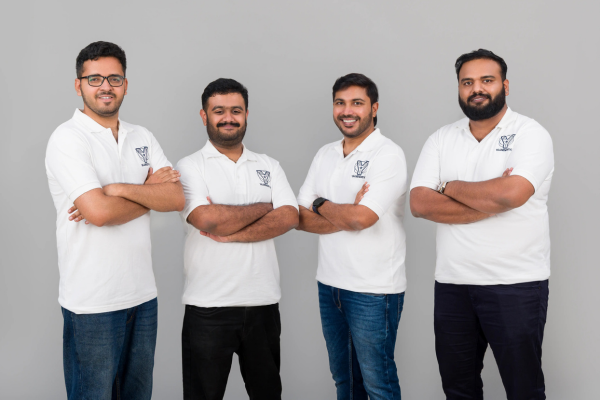
Vamshi Bharadwaj, Vijay H P, Aravind Thumbur and Vyshak Y, co-founders, Yaanendriya

Bengaluru-based deeptech startup Yaanendriya has raised ₹15 crore in a funding round from Piper Serica. The fresh capital will be deployed to strengthen research and development, accelerate product development and expand the company’s portfolio of high-precision navigation systems for mission-critical applications.

Founded in Bengaluru, Yaanendriya develops indigenous sensor, navigation and control technologies that enable autonomous systems such as drones, ground robots, spacecraft and underwater vehicles to navigate in environments where GPS signals are unavailable or disrupted.

The company also plans to scale its SynCore navigation controller series and YDX inertial sensors, develop a hardware-agnostic navigation platform, and advance work on high-precision MEMS accelerometers and gyroscopes for the NewSpace sector.

“Reliable autonomy begins with a system’s ability to sense motion, understand its state, and control itself,” said Vamshi Bharadwaj M V, founder of Yaanendriya.

Commenting on the investment, Satyadeep Singh of Piper Serica said, “Autonomous systems will define the next generation of defence, aerospace, industrial automation and mobility, but their foundation lies in technologies that enable machines to sense, navigate and control themselves reliably. Yaanendriya’s long-term technology roadmap and execution capabilities gave us the conviction that it can build a globally competitive navigation technology company from India.”

The latest funding is expected to support Yaanendriya’s efforts to expand its indigenous navigation technology portfolio while accelerating the development of advanced solutions for defence, aerospace, industrial automation, mobility and NewSpace applications.

Babylon Hotels & Resorts signs new four-star hotel in Ayodhya

0

Babylon Hotels & Resorts has signed a new four-star hotel in Ayodhya, further strengthening its presence in India’s hospitality sector. The project is part of the company’s ongoing expansion strategy as it continues to grow its hotel portfolio across the country.

The upcoming hotel is designed to cater to pilgrims, leisure travellers and business guests visiting Ayodhya. It will feature well-appointed guest rooms; multi-cuisine dining options; banquet and conference facilities; along with a range of guest amenities tailored to meet the needs of different categories of travellers.

The expansion is being led by Paramjeet Singh Khanuja, Chairman & Managing Director, and Karanjeet Singh Khanuja, Managing Director, as Babylon Hotels & Resorts continues to expand its footprint across India’s hospitality market.

With Ayodhya witnessing a steady rise in tourism and pilgrimage activity, the new hotel is expected to enhance the city’s accommodation capacity while supporting the growth of its hospitality infrastructure.

Babylon Hotels & Resorts said it looks forward to welcoming guests to the property following its opening, reinforcing its commitment to expanding quality hospitality offerings in key travel destinations across India.

Rapido integrates Ownly into app, expands zero-commission food delivery service

0
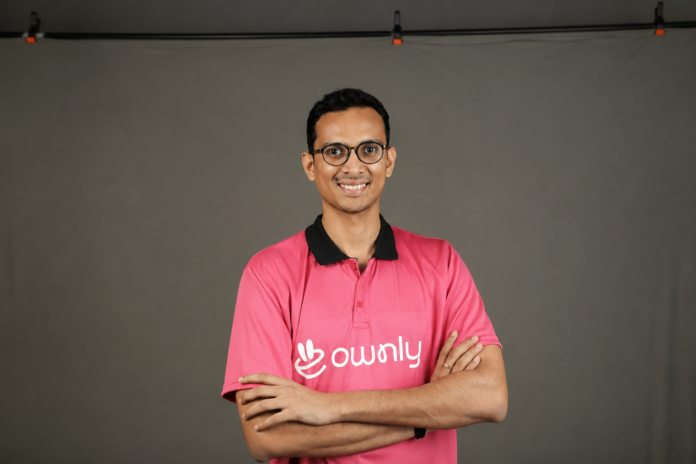
Aravind Sanka, Co-Founder - Rapido and Ownly

Rapido’s standalone food delivery platform, Ownly, on Tuesday integrated with the Rapido app, making its zero-commission food delivery service available to the ride-hailing platform’s monthly active users through a single, seamless experience.

The integration significantly expands Ownly’s reach by leveraging Rapido’s established user base and robust logistics network to provide a fast and reliable delivery experience. According to the company, India’s ride-hailing user base is nearly twice the size of its online food ordering user base, presenting a significant opportunity to introduce food delivery to millions of consumers who already rely on Rapido for daily mobility but have not yet adopted an online food ordering platform.

Customers can now access Ownly directly within the Rapido app while booking bike taxis, autos and cabs, allowing them to manage everyday mobility and food delivery from one platform.

Commenting on the integration, Aravind Sanka, Co-Founder of Rapido and Ownly, said, “Ownly was created to solve one of the biggest structural challenges in food delivery, making the business work better for restaurants without compromising customer experience. Our zero-commission model has shown that restaurants can retain more of every order while customers enjoy honest pricing without hidden platform fees. Integrating with the Rapido app is an important step in taking this proposition to millions more users while staying committed to building a food delivery ecosystem rooted in transparency, fairness and long-term sustainability.”

Since its launch, Ownly has sought to redefine the economics of food delivery through its zero-commission model, enabling restaurants to retain a larger share of their earnings while offering customers fair menu prices without hidden platform charges.

The company said that by utilizing Rapido’s existing rider network, Ownly operates with structurally lower logistics costs, allowing the model to remain sustainable without passing additional costs on to restaurants. The approach also improves rider utilization during off-peak mobility hours, strengthening the broader delivery ecosystem.

With Ownly now integrated into the Rapido app, the company continues to advance its vision of building a more transparent, affordable and equitable food delivery ecosystem for restaurants and customers. To mark the integration, new users can download the Ownly app via Rapido and receive 50% off, up to ₹100, on their first order.

The Circle.Work brings hospitality-led flexible workspace to Bengaluru’s Koramangala

0

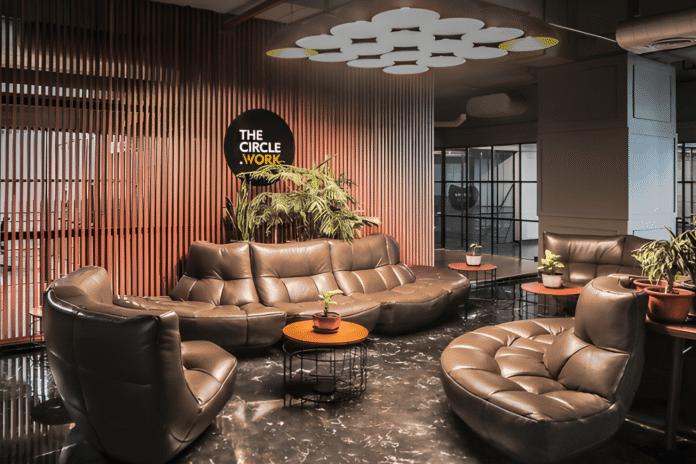
The Circle.Work (TCW), the premium flexible workspace provider, has expanded into South India with the launch of its first Bengaluru centre in Koramangala. The new facility marks another milestone in the company’s national growth strategy, strengthening its footprint after establishing a presence across Delhi NCR, Dehradun and Goa.

Located in one of India’s most active startup and technology hubs, the 30,000 sq. ft. Koramangala centre has the capacity to accommodate more than 500 professionals. The workspace is designed for founders, enterprises, consultants and independent professionals seeking premium flexible workspace backed by a vibrant business community. Members will also have seamless access to every The Circle.Work location across India, enabling them to work across multiple cities.

In addition to flexible workspaces, members gain access to The Circle: Founders Club and The Circle.Work’s cross-border startup accelerator. The platform is designed to help ambitious companies scale faster through go-to-market strategy, strategic mentorship, B2B partnerships, investor and corporate connections, fundraising support, business services, and soft-landing opportunities across more than 18 international markets. Together, The Circle.Work and The Circle: Founders Club provides founders with an integrated platform to work, connect, scale and expand globally.

The Bengaluru centre has also partnered with Jamie Oliver Pizzeria, reinforcing The Circle.Work’s hospitality-led philosophy of workplace design. According to the company, the collaboration reflects its belief that exceptional workplaces should inspire productivity while encouraging collaboration, networking and meaningful conversations beyond traditional office environments.

“Bengaluru has long been one of India’s most dynamic entrepreneurial and technology ecosystems, making it a natural choice for our expansion into South India,” said Rajiv Bathla, CEO, The Circle.Work. “Our vision extends beyond creating premium workspaces. Through The Circle: Founders Club, we’re building a cross-border startup accelerator that helps founders access customers, capital, strategic partnerships and global markets. The launch of our Koramangala centre is the first step in our broader South India growth strategy, with Chennai and Hyderabad firmly in our expansion pipeline.”

The Bengaluru launch further strengthens the momentum of The Circle.Work’s expanding network, which today serves founders, enterprises and independent professionals through premium flexible workspaces, curated business programming and a growing national community. With memberships for the Koramangala centre now open, the company continues to advance its strategy of building hospitality-led workspaces while expanding its presence across key business destinations in India.