Tuesday, June 30, 2026
Home Blog Page 246

Stripe valuation hits $70 billion in Sequoia deal 

0

Stripe’s valuation has risen to $70 billion because Sequoia Capital is buying shares from investors who want to sell their stake in the fintech company. Stripe helps merchants process customer payments.

Sequoia is offering $27.51 per share, as reported by people familiar with the deal, who asked not to be identified because the details aren’t public. The venture capital firm extended this offer to limited partners in funds from 2009 to 2012, who might be seeking liquidity for their shares. According to Axios, Sequoia purchased up to $861 million in shares on Monday, one source mentioned.

The payment processing firm and Sequoia representatives did not comment on the matter.

Stripe, one of the most valuable private tech companies, was recently valued at $65 billion after a deal allowed current and former employees to sell some of their shares. This valuation increased from $50 billion last March but is still below the $95 billion in 2021 funding.

Founded over a dozen years ago by brothers John and Patrick Collison, Stripe has grown significantly. Its competitors include PayPal Holdings Inc. and Adyen NV.

TCS announces plans to hire 40,000 freshers this year 

0

As the global IT sector undergoes major changes, India remains a key hub for talent, effectively navigating the industry’s shifts. In the June quarter, Tata Consultancy Services (TCS) added 5,452 employees, bringing its total headcount to 606,998. The company plans to hire around 40,000 freshers this financial year, maintaining its strong recruitment drive.

Milind Lakkad, TCS’s CHRO, emphasized India’s enduring appeal for talent despite diverse skill requirements and geopolitical challenges elsewhere.

“India is the destination for talent, and that is not going to change in the near future,” Lakkad affirmed. He emphasized The company’s initiatives to bridge academia-industry gaps through extensive reskilling and upskilling programs, uniquely positioned at scale. “I am very confident about a positive way forward for Indian talent,” Lakkad added, optimistic about future achievements. 

Addressing concerns about AI’s impact on employment, Lakkad reassured that TCS employees can adapt to technological changes. TCS has implemented salary increases ranging from 4.5% to 7%, with top performers receiving 10-12%. The Elevate Runway program further incentivizes career growth, especially for junior employees, by offering accelerated learning paths that can double their compensation.

The program, open to employees at all levels, focuses on both financial rewards and career advancement aligned with personal aspirations. Over 400,000 employees have enrolled, showcasing its popularity and impact. Additionally, TCS’s Mid-Level Transformation (MLT) program helps employees acquire market-relevant skills for new roles within the company.

TCS recently updated its variable pay policy to include office attendance as a key factor, reflecting evolving work dynamics. Lakkad noted that about 70% of employees have returned to the office, and the policy change aims to maintain discipline and foster a positive workplace environment. “The idea is not punitive but to incentivize office attendance positively,” Lakkad clarified. 

As India’s IT sector continues to evolve, TCS’s proactive measures highlight its commitment to nurturing talent and adapting to global technological shifts, reinforcing its industry leadership.

IndusDC earmarks Rs 100-Cr to build 5 deep tech startups in 2 years

0
(L-R) IndusDC founders Satyanarayanan Seshadri, Kaustubh Hanmantgad and Kushant Uppal

IndusDC, a venture studio, has set aside Rs 100 crore (about $12 million) to identify and develop deep tech startups in India’s industrial and energy sectors for fiscal years 2025 and 2026.

According to its founders, the studio aims to build five startups within the next two years and over 50 startups globally in the next decade.

Each startup founded by IndusDC will receive Rs 20 crore (approximately $2.4 million) in capital.

IndusDC has already secured commitments from Mirik Gogri of Spectrum Impact, the family office of Aarti Industries promoters.

“We’re primarily focusing on industrial hardware solutions that have the capability to cut 40-50 million tonnes of CO2 emissions by 2035,” Kaustubh Hanmantgad, founding director and COO of IndusDC, said in an interaction. “Cumulatively, the industry as a whole will be able to cut a billion tonnes of CO2 from the industrial segment,” he said.

It has to make sense for industries economically, and one should be able to build it in a capital-efficient manner, “which will push us to use more accessible materials, keep the costs clean, and make it easier to navigate,” Hanmantgad said. 

IndusDC, founded in 2023 by Kushant Uppal, Satyanarayanan Seshadri, and Hanmantgad, will be cofounders for each startup. They will work closely with entrepreneurs in residence (EIR) to develop lab-stage ideas and intellectual properties (IPs) up to the product-market fit (PMF) stage.

“The venture capital world over the past decade has focused extensively on business-to-consumer (B2C) and software as a service (SaaS) companies,” Uppal, who is the chief executive of IndusDC, said. “However, larger investors and family offices have realized that there is significant market and business potential in climate, hardware, and deep tech.” 

The studio will oversee product development, pilot production, digital technology integration, customer validation and funnel, startup governance, team building, and fundraising support.

“I think the fundamental role of a venture studio is that you’re going into a startup as one of the founders. So, there’s significant time and commitment that you’re putting into building out a venture. So, there are only very few entities that one can take on as a venture studio,” Uppal said. 

The studio is co-building three deep-tech startups in collaboration with the Indian Institute of Technology, Madras.

Transforming Railway Technology: Anant Waghchoure of MOTWANE discusses innovations and future plans 

0
Anant K. Waghchoure, National Sales Manager, MOTWANE

At the recent 3rd Rail Modernisation Summit in New Delhi, organized by Traicon Events and with Business Review Live as one of the media partners, industry leaders gathered to explore transformative advancements in railway technology. Among the distinguished speakers was Anant Waghchoure, National Sales Manager for India at MOTWANE, a respected name in the field of electrical testing and measurement instruments. With a solid reputation built over the years, MOTWANE is known for its commitment to quality and innovation in serving sectors such as railways, utilities, and OEMs. It was a unique opportunity for Business Review Live to sit down with Mr. Waghchoure for an insightful interview, where he shared MOTWANE’s strategic vision and proactive initiatives to enhance safety and efficiency across critical infrastructures.

Q1. What recent innovations has Motwane introduced in electrical testing and measuring instruments?

Firstly, they have integrated Bluetooth technology into all their devices. This allows users to connect their instruments seamlessly to other devices. Additionally, Motwane has introduced cloud connectivity. With this feature, customers can easily tag asset IDs of their infrastructure. As a result, they can access historical trends and make well-informed decisions for long-term maintenance.

Q2. What are the main challenges in the electrical testing industry, and how is Motwane addressing them?

The electrical test and measurement industry faces significant challenges, including the influx of low-quality products from specific international competitors. These inferior products, sold at low prices, diminish customer interest and compromise safety and performance.

Motwane addresses these challenges through comprehensive customer education. They conduct training sessions, webinars, and workshops to inform customers about safety ratings, performance parameters, and product serviceability. These initiatives ensure that customers make informed decisions and prioritize safety and quality.

Q3. What quality control measures does Motwane implement to ensure product reliability?

Motwane is a customer-centric company that prioritizes customer safety and satisfaction. We implement rigorous quality control measures to ensure product reliability. From the start of the purchase cycle, we carefully select components to meet all specifications, safety parameters, and product durability standards. Our R&D team conducts thorough research and development based on customer applications. We then perform trial runs, followed by a product launch through our engineering department.

Post-launch, we test the product at 20 to 40 sites, offering it as a sample for customers to use over a certain period. The R&D and engineering teams then review performance data to ensure it aligns with design expectations.

We recheck the products in the final quality assurance stage before starting batch production. After distribution, we obtain performance certificates from customers to confirm that the product meets their requirements. 

Q4. What are Motwane’s plans for product development and market expansion?

Motwane is expanding aggressively. We are a 60-year-old company with the goal of reaching 100 crores in the next two years. Our primary objective is to help every customer solve their problems, regardless of their industry or background. We are committed to enhancing our product portfolio with innovative solutions that meet the evolving needs of our customers. Our focus remains on quality, performance, safety, and accuracy.

Additionally, we are investing in advanced technologies like cloud integration to create smarter, more connected devices. This will improve data collection and analysis, helping customers make more informed decisions.

We are also expanding our market presence by entering new geographical regions and industries. This involves strengthening our distribution network and forming strategic partnerships to reach a broader audience. Overall, Motwane aims to lead the industry with cutting-edge products and exceptional customer service, ensuring we remain a trusted electrical testing and measurement solutions partner.

Q5. How does Motwane reach out to customers to provide solutions?

Motwane takes a proactive approach to understanding customer needs and providing tailored solutions. We act as consultants, engaging directly with customers to identify their pain points and offer solutions that address their specific challenges. Our focus is on demonstrating how our products can effectively support critical applications.

We have segmented our approach into four main categories: divisions, projects, railways, and dealers form one segment. The second segment comprises OEMs, including manufacturers of transformers, cables, and motors. The third segment covers utilities: generation, transmission, distribution, and renewables.

By organizing our efforts into these segments, we ensure we can effectively reach customers at the grassroots level, delivering solutions that meet their unique requirements. This customer-centric approach fosters satisfaction and drives sales as a natural outcome of meeting customer needs.

For more information about MOTWANE, visit their website: https://motwanesecuritysystems.com

For Further Enquiries Please Contact: Anant K. Waghchoure – National Sales Manager | Email: Waghchoure.anant@motwane.com | Mob: +91-9823626705

amã Stays & Trails reaches a milestone of 200-plus bungalows in its portfolio

0

amã Stays & Trails, the premium homestay offering by Indian Hotel Company, has reached a milestone. It now has over 200 bungalows in its portfolio, spread across offbeat locations in more than 15 states in India.

Deepika Rao, executive vice-president, New Businesses and Hotel Openings, IHCL, “Homestays is a fast-evolving segment in India’s hospitality landscape with the growing demand for experiential leisure travel. In line with IHCL’s strategy of achieving scale and being the most premium offering in the segments we operate in, our luxury homestay brand has today exceeded a 200+ bungalow portfolio.”

She added, “Our growth strategy has been two-fold, penetrating into high demand clusters like Goa and Maharashtra and building a footprint anchored around IHCL hotels to enable cross synergies and service excellence. The development of homestay villas is witnessing infusion of fresh capital via green field projects reflective of growing investor confidence. Today, over 65% of the pipeline are in the nature of new builds.”

amã Stays & Trails offers a unique blend of heritage and modernity with its diverse collection of bungalows. These include British colonial-style villas, Portuguese cottages, homes inspired by traditional Kerala architecture, and contemporary homestays. Each property is thoughtfully designed to reflect the local culture and heritage, giving guests a chance to immerse themselves in the region’s history and charm.

Spread across idyllic destinations, amã Stays & Trails boasts a portfolio of 203 bungalows, with 97 more under development.

HCLTech headcount dips by 8,080 in Q1FY25

0

HCLTech, India’s third-largest IT services company, saw a significant drop in its employee count by 8,080 for the three-month period ending in June.

In the previous quarter, the headcount had increased by 2,725. As of the end of June, the Noida-based IT giant’s total headcount stood at 219,401, down from 227,481 in the previous quarter. A year ago, from April to June, the number was 223,438.

In contrast, on Thursday, its larger peer and India’s largest IT company, Tata Consultancy Services (TCS), added 5,452 employees for the April to June quarter, bringing its total employee count to 606,998.

In the fourth quarter of FY24, ending in March, HCLTech was the only large player to increase its headcount, adding 2,725 employees despite the industry trend of reducing employees.

For the full year in FY24, top IT companies TCS, Infosys, Wipro, and Tech Mahindra announced a combined headcount reduction of 70,704 employees. In Q1FY25, HCLTech hired fewer freshers, adding 1,078 compared to 3,096 in the previous quarter.

During the quarter, HCLTech’s attrition rate slightly worsened to 12.8%, up from 12.4% in Q4FY24. After market hours on Friday, HCLTech reported a 20.4% year-on-year increase in net profit for the first quarter of fiscal year 2024-25, ending June. The net profit was Rs 3,534 crore, compared to Rs 3,534 crore a year ago. Its revenue rose 6.7% to Rs 28,057 crore, compared to Rs 26,296 crore a year ago.

Unlocking Growth – Real estate’s wish-list for Union Budget 2024-25

0

With Union Budget 2024-25 set to be tabled in July, the real estate sector pins renewed hope on the Modi 3.0 regime. Expectations are high for tax reliefs and other sentiment boosters. The future of the overall industry also depends on unfettered infrastructure deployment to support and improve urban living standards and develop and promote newer areas.

Will the government finally decide to give in to the long-standing demand for industry status for the entire housing sector? Will it take ‘real’ measures to revive the affordable housing segment, which has steadily declined after the pandemic?

The Indian housing sector remained upbeat in 2024, with housing sales and new launches creating new peaks in the top 7 cities. Sales reached an all-time high at about 4.93 lakh units in FY23-24, while 4.47 lakh units were launched.

However, this momentum must continue in the future, too – and the current growth trajectory is skewed towards mid-range and premium housing. Considering the specific housing needs of India’s lower-income groups, this momentum cannot ride solely on higher-priced homes while affordable housing continues to languish.

As per ANAROCK Research, the sales share of affordable housing reduced significantly after COVID-19 – from over 26% in 2022 and over 38% in 2019 to approx. 20% in Q1 2024. Due to low demand, this segment’s share of the overall housing supply in the top 7 cities also fell to 18% in Q1 2024, from nearly 40% in 2019.

Many interest stimulants previously extended to buyers and developers of affordable housing have expired in the last two years. This vital segment must be revived with high-impact measures like tax breaks for developers to focus more on affordable housing and for buyers to improve affordability.

Other Measures to Reignite Affordable Housing:

  • Credit-linked Subsidy Scheme under PMAY

This scheme for EWS/LIG, which expired in 2022, should be revived to incentivize first-time buyers of affordable homes across cities. This will once again invigorate demand in this segment. Subject to criteria specified under government guidelines, CLSS was previously available for housing loans to EWS/LIG buyers in new constructions and for adding rooms, kitchens, toilets, etc., to existing dwellings. Also, under PMAY (Rural), one could avail of this subsidy for all ‘kaccha’ homes being converted into ‘pucca’ ones, provided they fulfill the eligibility criteria.

Re-introduce 100% Tax Holiday for Affordable Housing Developers

To boost supply and incentivize developers to build more affordable housing, the government can re-introduce the ‘100% Tax Holiday’ benefit they previously enjoyed under section 80-IBA in the Finance Act, 2016. This section provided significant tax relief on the profits earned from developing and building affordable housing projects.

  • Tweak Definition of Affordable Housing Criteria to Widen Additional Deductions Benefits to More Buyers

According to the Ministry of Housing and Urban Poverty Alleviation, affordable housing is based on property size, price, and buyers’ income. For instance, affordable housing is a house or flat with a carpet area of up to 90 sq. m. in non-metropolitan cities and towns and 60 sq. m. in major cities, valued at up to INR 45 lakh for both. On the other hand, the central bank’s definition is based on the loans given by banks to people for building a house or buying apartments.

Considering city-specific market dynamics, the government must seriously reconsider revising the pricing of homes within the affordable housing budget. As per the current definition, the size of units at 60 sq. m. carpet area is appropriate. However, prices of units (up to INR 45 lakh) are not viable across most cities.

For instance, a <INR 45 lakh budget is meaningless for a city like Mumbai. It would need to be increased to at least INR 85 lakh. The budget should be increased to at least INR 60-65 lakh in other top cities. With such price revisions, more homes would qualify for the affordable price tag so that more buyers can avail of benefits such as lower GST rates at 1% without ITC, government subsidies, etc.

Additional Budget Expectations:

  • Rationalization of GST Rates for Under-construction Properties

The real estate sector has urged the government to rationalize the GST rates for under-construction properties. The current rate of 12% without input tax credit (ITC) is considered high and deters buyers from investing in under-construction homes. Reducing GST rates, or reinstatement of ITC, would make under-construction properties more attractive, boosting sales and easing the financial burden on buyers.

  • Single-window Clearance System

Introducing a single-window clearance system for all real estate projects can significantly reduce project delays and enhance business efficiency. This system would streamline approvals and clearances, reducing the bureaucratic red tape that often hinders timely project completion.

  • Extension of Tax Benefits under Section 24(b) and 80EEA

Enhancing the tax benefits for homebuyers under Section 24(b) (interest on home loan) and Section 80EEA (additional deduction for interest on home loan for first-time buyers) can make home loans more affordable. Increasing the deduction limit under these sections will encourage more people to invest in real estate, particularly in the affordable housing segment.

  • Incentives for Green and Sustainable Housing

Promoting green and sustainable housing projects through tax incentives and subsidies can address environmental concerns while fostering innovation in the construction sector. These incentives could include tax rebates for developers adopting eco-friendly practices and buyers investing in energy-efficient homes.

  • Infrastructure Status for the Real Estate Sector

Granting infrastructure status to the real estate sector has been a long-standing demand. This move would enable developers to access funds at lower interest rates and other financial benefits. Infrastructure status would also streamline regulatory processes and improve overall project viability.

Hospitality Sector

  • The hospitality sector needs the Union Budget to prioritize tax reduction, faster infrastructure development and improvement – especially in the newly developing tourism zones – and significantly upgraded tourism promotion.
  • A reduction of GST, funding for skills development, and incentives to invest in sustainable tourism are also high on the wish list. 
  • To further increase local and international tourism, the industry needs airports in dire need of upgrading to be paid immediate attention to. 
  • In previous union budgets, the Indian hospitality industry has consistently sought industry status to obtain advantages such as simplified rules, tax breaks, subsidies, and better access to capital. This status would make expansion, improving infrastructure, and reducing bureaucratic impediments easier. The industry’s substantial contributions to GDP, employment, and foreign exchange revenues deserve such recognition. The industry can’t progress sustainably without industrial status to help drive its growth.

By addressing these key areas, the Union Budget 2024-25 can provide the much-needed impetus to the real estate sector, ensuring sustainable growth and development across all segments.

Fintech startup Partior raises $60M in a funding

0
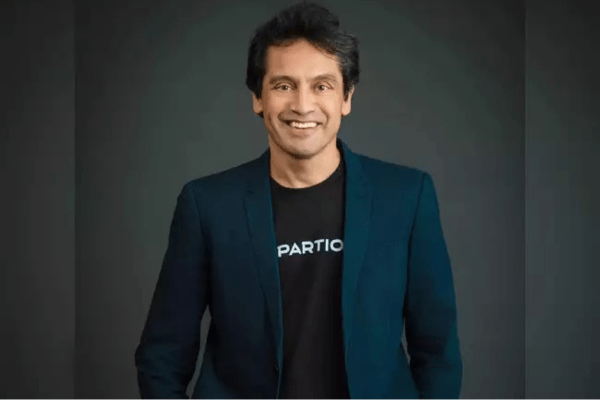
Humphrey Valenbreder, CEO, Partior

Blockchain-based clearing and settlement network Partior, backed by JP Morgan, DBS, Temasek, and Standard Chartered, has raised $60 million in a Series B funding round led by Peak XV Partners (formerly Sequoia Capital India).

Jump Trading and Valar Capital also participated in the funding round.

Partior, based in Singapore, will use the new funds to expand its international network and integrate more currencies. Currently, the network operates with the US dollar, Singapore dollar, and euro.

Additionally, the funds will help develop new features, including intraday FX swaps, cross-currency repos, and programmable enterprise liquidity management.

“Partior is breaking down silos and rewriting the rules for cross-border clearing and settlement. We see a very bright future for blockchain-based, frictionless, cross-border transactions. Having some of the world’s best banks and investors back our vision validates this even further,” said Humphrey Valenbreder, chief executive officer, Partior. 

Founded in 2021, the startup is a joint venture between DBS, JP Morgan, and Standard Chartered. It aims to create unified interbank payment systems for immediate clearing and settlement. Financial market participants, including banks and payment service providers, can join its network to access real-time, cross-border, multi-currency clearing and settlement.

The company’s blockchain network can work globally with real-time local currency payment and gross settlement (RTGS) systems. This allows both direct and indirect settlement flows with market players.

Major banks in financial markets such as London, New York, Singapore, Frankfurt, and Hong Kong use Partior.

“Partior is an extremely ambitious attempt to transform global money transfer and settlement amongst banks. It’s a unique approach where multiple banks have come together to catalyze change in this industry,” said Shailendra Singh, managing director of Peak XV.

Ashwani Gandhi appointed CEO of Niraamaya Life

0
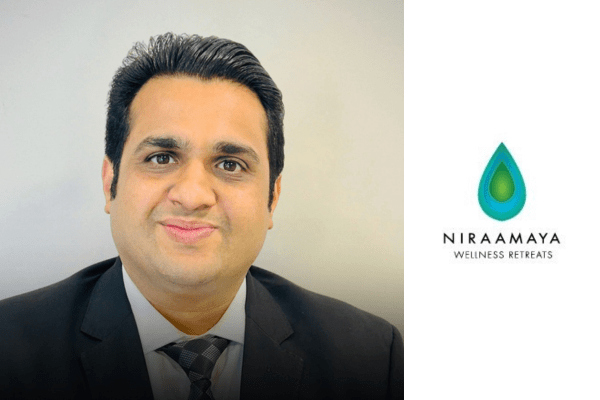
Ashwani Gandhi, CEO, Niraamaya Life

Niraamaya Life has appointed Ashwani Gandhi as its new CEO. With over 18 years of experience, he has a strong background in the digital space, having worked with global brands like Pfizer, Paras Pharma (Reckitt Benckiser), Himalaya, and the global startup Believe Pte. He is also an alumnus of IIM Lucknow and holds multiple management degrees from prestigious institutes.

Gandhi will lead the three business verticals—Retreats, D2C, and Products. His goal is to transform Niraamaya Life into a digitally native wellness platform. He plans to enhance retreats with personalized wellness programs, expand D2C’s reach with innovative e-commerce strategies, and introduce new wellness products through product innovation. The ‘Niraamaya Life’ wellness app is central to this initiative, offering services like yoga, Ayurveda, sleep management, and mindfulness to promote overall health and tranquility.

“I’m thrilled to join the Niraamaya family, a well-established and strong brand with a prominent position in the global market in the wellness segment. Our move into the direct-to-consumer space is a natural progression, and I am eager to lead this transformative journey. By expanding our offerings and innovating across all verticals, including the introduction of the ‘Niraamaya Life’ D2C App, we are looking to enhance further and elevate the wellness experience for our patrons worldwide, creating an ecosystem that nurtures health and well-being,” says Gandhi on his appointment.

Niraamaya Life, a portfolio company of Jupiter Capital, is a leading luxury wellness brand established in 2012. Known for its exceptional properties and holistic wellness experiences through its wellness retreats, Niraamaya focuses on personalized service and authentic treatments, offering guests a journey of rejuvenation and self-discovery.

Revolutionising Indian Agriculture: The ONO Way

0
Rama Rao Kancharapu, CEO ONO

In a country where agriculture forms the backbone of the economy, ONO is emerging as a trailblazer dedicated to transforming the agri-value chain through cutting-edge technology and data-centric solutions. Founded by Rama Rao Kancharapu to address critical inefficiencies within India’s agricultural ecosystem, ONO leverages digital innovation to empower farmers, traders, and commission agents.

After extensively travelling across India and studying the operational dynamics of over 675 APMCs and MANDIs, the ONO team identified key pain points such as information asymmetry, unreliable transactional data, and supply-demand mismatches. With its comprehensive suite of products—ONO CLICK, ONO MANDI, ONO CASH, and ONO CONNECT—ONO offers a groundbreaking approach to market intelligence, seamless trading, and accessible formal credit, paving the way for a more transparent, efficient, and prosperous agricultural sector. Join us as we delve into the journey of ONO and discover how this innovative startup is making waves and driving economic growth in India’s heartland.

Here are the snippets from the conversation with Mr Rama Rao Kancharapu, who has transformed the industry and brought a revolution in agriculture.

You mentioned that your desire to enter the entrepreneurial world goes back to your early career days, where you were instrumental in building automated and data-intensive solutions to eliminate inefficiencies and improve quality of life. Can you share more about what inspired you to start ONO and the fundamental problems you identified within the agriculture ecosystem that you wanted to address through your venture?

After 14+ years of professional experience in the USA, I have returned to India for good. I have been closely watching the Indian startup ecosystem and the progress of digital transformation. In 2021, Q3 moved back to India and started travelling across the country, especially visiting various APMCs / MANDIs. The impact created by India’s digital stack, like Aadhar, UPI, and eKYC, is a motivating factor for transforming into this agricultural domain. Given the late adoption of technology and data democratisation, we saw this as an opportunity to create value. 

Team ONO visited more than 675 APMCs / MANDIs in India to gain insights into the challenges faced by farmers, commission agents, traders, transporters, buyers, and lenders, among other participants in the agri-value chain. Information asymmetry, which causes inefficiencies and price swings; a lack of reliable transactional data, which restricts access to formal credit; and supply-and-demand mismatch and lack of transparency, which drive trust issues throughout the supply chain, are the three main issues of today’s agriculture.

You’ve highlighted that ONO has developed a distinctive business model that leverages data and technology to address the specific needs of stakeholders in the agriculture value chain. Can you elaborate on the unique aspects of your business model and how it utilises data-centric mechanisms and technological innovations to tackle challenges such as information asymmetry, lack of reliable transactional data, and supply-demand mismatches plaguing the agriculture sector?

Before ONO, At Mandis – Commission Agents / Trades maintained all books of accounts (Invoices, Ledgers, Payments, Collections, Expenses and Advances) through manual bill books and ledgers. Two issues with this approach are:

1) Tedious and error-prone 

2) Creating colossal supply and demand gaps, price fluctuations and lack of access to formal credit.

After ONO, digitising this flow (books of accounts) is helping them democratically see arrival quantities, market price intelligence, timely collections and payments, and improved stakeholder relationships. In addition, now all digital Mandis can avail of timely formal unsecured credit from their fingertips. 

You’ve mentioned that ONO has developed a suite of products and solutions, such as ONO CLICK, ONO MANDI, ONO CASH and ONO CONNECT, to cater to the specific needs of different stakeholders. Can you provide a more detailed overview of these offerings and explain how they address critical pain points like timely access to formal credit, price intelligence, market discovery, and supply-demand visibility, which have historically hindered the growth and efficiency of the agriculture sector?

ONO CLICK – MANDI DIGITIZATION PLATFORM

APMC / MANDI SaaS platform for commission agents and traders that offers price and market intelligence, invoices, payments, collections, and digitisation of APMC / MANDI operations.

ONO MANDI – MANDI TO MANDI TRADE PLATFORM

A mid-mile trading platform for traders. It enables supply and demand visibility, price intelligence, market discovery and seamless connectivity among APMCs / MANDIs. 

ONO CASH – NEO-LENDING PLATFORM

Neo-Lending is a platform for farmers, commission agents, and traders. It offers timely access to formal finance through invoice discounting, working capital loans, and farmer advances.

ONO CONNECT – FARMER PLATFORM

Crop Price and Mandi is a discovery platform for farmers. It allows users to locate neighbouring APMCs / Mandis and offers real-time, accurate crop prices across Mandis.

You’ve highlighted that ONO’s customer-first approach and focus on empowering all critical stakeholders at APMCs/MANDIs, rather than bypassing them, is a key differentiator for your company. Can you elaborate on how this customer-centric philosophy has shaped your product development, engagement, and partnership strategies? Additionally, can you share insights into how your pan-India network and collaborations with various stakeholders have helped build reliable and mutually beneficial relationships across the agriculture ecosystem?

In our business model, we have embedded a dedicated full-time MANDI CUSTOMER SUCCESS MANAGER at each MANDI who will stay with our partners daily. This has helped us build strong relationships, provide timely access to customer queries/enquiries, and provide continued business consultation for all our partners in MANDI. 

Prior ONO: Typically, Mandi Mandi trade and price discovery happens through a closed network of a few trades at Source Mandis and vice versa (A few traders at Destination Mandis). Beyond that, traders won’t have visibility of prices, quality and varieties of the crops available in the market. In addition, traders have to make long-distance physical visits now and then to address disputes or credit defaults and make new connections, which has been a hectic and cost-intensive process. 

With ONO: Now, traders can find a vast network of source and destination traders and various Mandis and their daily price intelligence from their fingertips. Our proprietary vetting process ensures credible trader discovery and complete assistance on credit recovery and quality for both source traders and destination traders, respectively. In addition, based on the trade behaviours with ONO, traders can now avail themselves of unsecured working capital loans and trade advances to increase their business. 

What are your plans for expanding ONO’s geographic reach and developing new products and solutions as you look ahead? How do you envision ONO contributing to the overall growth and transformation of the agriculture sector in India, and what role do you see the company playing in empowering farmers and other ecosystem players to achieve greater economic prosperity?

Our long-term vision is to enable economic growth opportunities for farmers and ecosystem players like Traders and Commission Agents. As part of this mission, we are on the right track to connect farmers with better destinations where the price realisation will be more timely sale as well.  In the next 2-3 years, we aim to reach 1000+ Mandis with 5M+ farmers.

For more information about ONO, visit their website: https://ono.ag/all-products