
Thursday, May 7, 2026
Home Blog Page 101

AI-powered astrology platform MyNaksh raises INR 7.5-Cr in funding

0
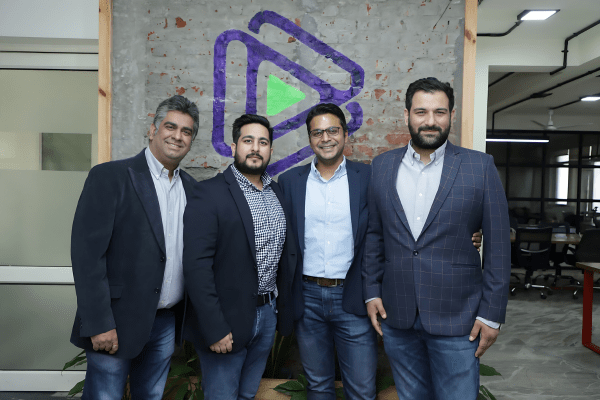
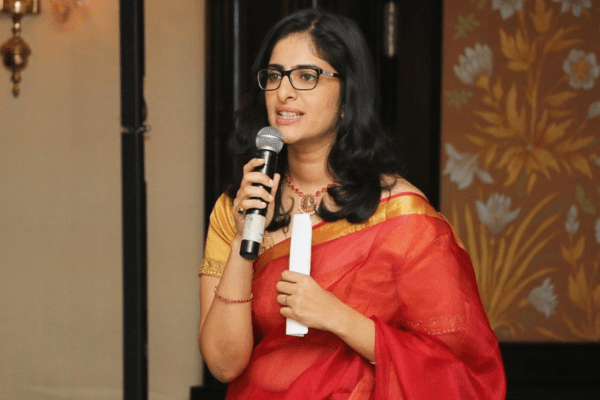
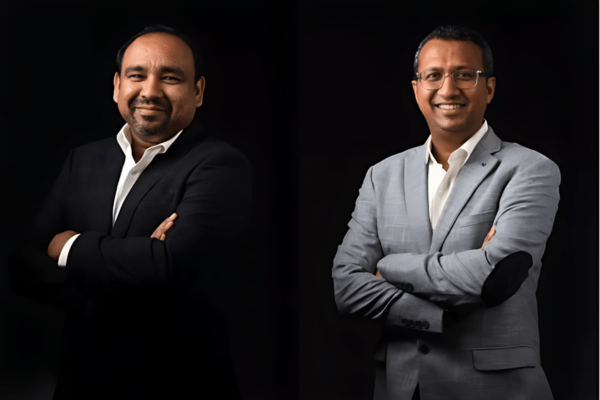
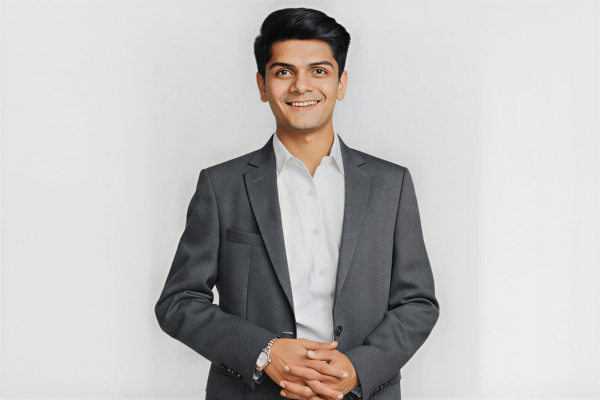
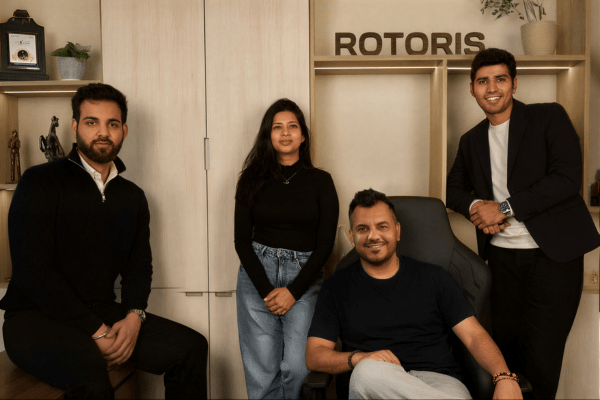
[L to R] Nitesh Salvi, Gaurav Mohta, Piyush Nagle, & Devaang Agarwalla, Co-founders of MyNaksh

MyNaksh, an AI-driven astrology startup, has raised INR 7.5 crore in a pre-seed funding round led by Eximius Ventures and Gemba Capital, with participation from Infinyte Club and several angel investors. This raise stands out as one of the largest pre-seed rounds in India’s rapidly expanding online astrology sector.

The company plans to deploy the new funds to advance product development, boost personalisation, and reimagine astrology as a contemporary tool for self-discovery and growth, while remaining rooted in cultural heritage.

Founded by Nitesh Salvi, Devaang Agarwalla, Gaurav Mohta, and Piyush Nagle, MyNaksh blends AI-based personalisation with the expertise of human astrologers. Through its subscription model, users receive customised astrology guides along with access to paid expert consultations. Over time, the AI evolves with user behaviour and context, providing tailored insights, while human astrologers add depth and authenticity.

“MyNaksh is a personal guide for each individual’s life journey, delivered via a product that understands their unique context and offers deeper experiences with each passing day than the chat-first format available online,” said Nitesh Salvi, Founder and CEO of MyNaksh. “This fundraise accelerates our mission to restore astrology’s status as a credible, culturally rooted, and deeply personal tool for self-awareness and growth.”

MyNaksh aims to redefine digital astrology by combining the power of AI with human expertise. The startup aims to make astrology more accessible, personalised, and relevant for modern users while staying true to India’s cultural legacy.

Alivaa Hotels strengthens portfolio with The Hoften Lotus Court in Greater Noida West

0

Alivaa Hotels has announced the addition of The Hoften Lotus Court in Greater Noida West, Uttar Pradesh. This milestone marks the 20th property in its expanding portfolio, reinforcing the company’s growth strategy in a vital market.

The new hotel will operate under The Hoften brand, recognized for delivering smart, efficient services designed for today’s modern traveler.

“We are absolutely thrilled to welcome Hotel Lotus Court into The Hoften family and the wider Alivaa Hotels & Resorts collection,” said Akash Bhatia, CEO of Alivaa Hotels & Resorts (Managed & Franchise Business). “Greater Noida is a dynamic destination, and this partnership enables us to offer our guests an even broader range of exceptional experiences. Hotel The Hoften Lotus Court perfectly embodies the unique charm and high standards of our brand, and we’re confident it will be a valuable asset to our expanding portfolio.”

Vikramjit Singh, Founder of Alivaa Hotels & Resorts, emphasized the company’s ambitious growth plans. “As we strive to become a leading national player, Greater Noida holds a critical position in our strategic roadmap. This signing establishes our foothold in the country’s growing corporate hub and is the first of many planned for this city. The upcoming Jewar Airport will be a game-changer, significantly boosting business and leisure travel to the region and creating immense opportunities for us.”

Arjun Singh, Owner of Hotel, The Hoften Lotus Court, commented on the new collaboration. “Joining forces with Alivaa Hotels & Resorts and bringing Hotel Lotus Court under The Hoften brand is a momentous occasion for us. Their deep expertise and unwavering commitment to guest satisfaction perfectly complement our vision for providing outstanding stays in Noida. This is our second property with the same brand, and this partnership shows our strong commitment and confidence. We look forward to this new chapter and delivering even more memorable experiences to our guests.”

With the launch of The Hoften Lotus Court in Greater Noida West, Alivaa Hotels continues to strengthen its footprint across India, offering modern travelers a blend of comfort, efficiency, and exceptional service. This addition reflects the brand’s commitment to expanding in key markets while upholding its promise of quality hospitality.

Treat Hotels & Resorts strengthens footprint with new properties in Rajasthan and Maharashtra

0

Treat Hotels & Resorts is broadening its footprint in North India with two new premium properties in culturally and historically rich locations: Kumbhalgarh in Rajasthan and Chhatrapati Sambhajinagar in Maharashtra.

The first property, Treat Aranya Resort, Kumbhalgarh, marks the brand’s entry into Rajasthan. Situated in the Aravalli Hills and conveniently close to the UNESCO World Heritage Kumbhalgarh Fort, the resort not only provides a serene getaway but also seamlessly blends heritage with modern comfort. Furthermore, guests can enjoy spacious accommodations, landscaped gardens, and panoramic views, making it an ideal destination for both relaxation and cultural exploration. Guests can enjoy spacious accommodations, landscaped gardens, panoramic views, and an ideal setting for relaxation as well as cultural exploration.

Located in the heart of the city, Treat Imperial, Chhatrapati Sambhajinagar, not only caters to weddings, corporate retreats, and family vacations but also offers a unique experience for each guest. Moreover, the property showcases majestic architecture, expansive banquet facilities, gourmet dining, and premium hospitality, thereby delivering large-scale events that celebrate the cultural essence of Sambhajinagar.

“These launches mark a new chapter in our journey,” said Mr. Alok Mundra, Managing Director, Treat Hotels & Resorts. “We’re not just building properties; we’re creating destinations that celebrate India’s diversity in architecture, cuisine, and celebrations, without compromising on luxury.”

Adding to this, Devendra Singh, General Manager, Development & Acquisitions, noted, “These developments are a testament to our vision of expanding thoughtfully into destinations that hold cultural, historical, and economic significance.”

With these new openings, Treat Hotels & Resorts reinforces its status as one of India’s fastest-expanding hospitality brands. Both properties embody the brand’s commitment to delivering memorable escapes, meaningful celebrations, and enriching experiences, all while celebrating India’s enduring cultural heritage.

Transit tech firm Via valued at $3.5 Bn as shares slip in NYSE debut

0

Transit tech company Via Transportation closed its first day on the NYSE with a valuation of $3.5 billion after its shares slipped 4.4% in debut trading.

The stock began at $44, coming in below the offer price of $46.

Through the IPO, Via and existing shareholders raised $493 million by offloading 10.7 million shares, priced above the earlier indicated range of $40–$44.

The U.S. IPO market has gained fresh momentum, with easing trade tensions and growing expectations of interest-rate cuts boosting investor demand, making it the busiest week for listings since 2021.

Unlike conventional ride-hailing firms, Via partners with existing public transit systems instead of operating on its own. The New York-based company offers software and operational solutions to cities, transit agencies, schools, and institutions, blending on-demand ride-sharing with smart routing to improve public transport efficiency.

While the business is growing, profitability remains elusive. For the quarter ended June 30, the transit tech posted revenue of $107.1 million alongside a net loss of $21.2 million.

“The model that Via offers brings its own challenges: lower margins, slower scaling across jurisdictions, and dependence on local relationships and regulatory compliance,” said Kat Liu, vice president at IPO research firm IPOX, noting that exposure to public-sector budgets and regulatory complexity continues to pose risks.

Shifting climate patterns, rising congestion, and accelerating urbanization have underscored the growing need to strengthen public transit systems worldwide.

That said, the performance of recent “tech” IPOs has remained mixed.

“While tech IPOs have been the most prominent this year, the standout performers have largely been in or related to AI and FinTech. Other tech segments have seen mixed, though generally positive, results,” said Edward Best, partner at Willkie Farr & Gallagher.

Via is one of the biggest transportation-related tech IPOs in the U.S., according to data from Dealogic.

Jumboking aims to double business in 2–3 years, eyes Dubai entry by 2025 end

0
Dheeraj Gupta, founder and CEO, Jumboking

Jumboking, the quick service restaurant (QSR) chain, aims to double its business over the next 2–3 years while making its international debut in Dubai by December 2025, according to founder and CEO Dheeraj Gupta.

The company also plans to expand its network to 300 outlets concentrated across 12 key markets, with a strategy centered on depth, operational efficiency, and customer loyalty.

Currently, the Mumbai-based burger brand runs close to 200 outlets across four cities, including 115 in Mumbai and 45 in Delhi. With its supply chain and formats streamlined in core regions, Jumboking is now preparing to enter 20–30 new cities within the next three years.

Gupta said, “Our focus so far has been on depth rather than breadth, but with the proof of concept now established, we are ready to go national.”

The company projects its revenues to double every 2–3 years, implying a compound annual growth rate (CAGR) of 26–42%. Gupta noted that the franchise-driven model powers this momentum by ensuring operational efficiency while keeping overhead costs low.

Jumboking’s compact store design—measuring 400–500 sq. ft. compared to larger international QSR formats—also offers a cost advantage, supporting more competitive pricing.

“The quality is comparable since suppliers are the same, but our lean capex and lower operating costs help us deliver better value,” Gupta noted.

Positioned as a vegetarian QSR brand, Jumboking is banking on its extensive range of veg offerings and deep understanding of Indian taste preferences to take on global rivals. According to Gupta, consumer surveys highlight three distinct advantages for the chain: stronger alignment with the Indian palate, a broader vegetarian menu, and a sharper value-for-money proposition.

Talkng about contribution and competition on delivery apps, Gupta shared that delivery contributes just 7-10 per cent of sales at transitheavy outlets but nearly one-third at sit-down stores. Gupta said platforms like Swiggy and Zomato are more cost-efficient than managing in-house fleets, “At a 25% commission, it’s still cheaper than running our own.”

The brand also benefits from a loyalty program with more than 1.5 million members, which Gupta noted offers key insights into consumer behavior and product choices.

On the recent GST revisions, Gupta said the restaurant sector’s exclusion from input tax credit (ITC) limits the benefit. “Our effective tax rate remains at 5 per cent, so we don’t gain much from these changes.

Allowing ITC would align with the original intent of GST and help the industry materially,” he said. The company has been profitable for the last decade and has no plans to raise fresh capital. “We are self-funded and follow a disciplined, noncash burn model. At most, secondary transactions may take place if existing investors seek exits,” Gupta added.

Jumboking is set to launch its first international outlet in Dubai by December under a master franchise arrangement. The company’s strategy is to establish 10 profitable stores in the city before scaling into additional global markets.

“We aspire to become the world’s first fully vegetarian or vegan burger chain. Dubai will be our pilot, and success there will give us the proof to enter other global markets,” Gupta said, adding that the move would mark an Indian QSR brand asserting its place on the world stage.

Chalet Hotels eyes occupancy rates in High 70s for second half of FY25

0
Dr. Sanjay Sethi, MD and CEO of Chalet Hotels Limited

Chalet Hotels expects occupancy rates to reach the “high 70s” in the second half of the financial year, said Sanjay Sethi, the company’s MD & CEO.

“Quarter two has had its own challenges. Monsoons have been a bit of a downer in many of the cities across India. But, H2 looks very, very bullish. Once we get into the H2, we expect occupancy rates heading back to the high 70s, as we’ve done in the past,” he noted.

Sethi added that the recent rationalisation of GST (Goods and Services Tax) rates, which puts more disposable income in the hands of consumers, is giving fresh “tailwinds” to the fast-growing hospitality sector. At the same time, he emphasized the need for deeper GST reforms to ensure sustainable long-term growth.

“This sort of propels and adds to the tailwinds that the hotel industry has had over the last few quarters. It covers all the aspects of Viksit Bharat and Sabka Vikas. What has changed is that the additional liquidity in the hands of the consumers will add to the tailwinds,” he said.

The revised 5% GST rate on hotel room tariffs under ₹7,500, without Input Tax Credit (ITC), will have little effect on Chalet Hotels, the CEO said.

“A very small part of Chalet Hotel’s room nights are sold below Rs 7,500. It’s in single-digit percentage numbers,” he explained.  Sethi firmly dismissed any suggestion that the company might reprice rooms to take advantage of the lower tax bracket, stating, “Not at all. We are a forward-looking company; we’d like to work on growing the business, not working in a negative fashion.”

He maintained that the removal of Input Tax Credit (ITC) on room tariffs below ₹7,500 ought to be rolled back, further stressing that the ₹7,500 threshold itself is no longer relevant.

“I think the right number there would be about Rs 12,000. To end this debate forever for the future, I think we should link this cutoff price to the CPI (Consumer Price Index) so that we don’t have to discuss this ever again, what the right number should be,” he underscored. Sethi remains confident about the industry’s trajectory, projecting double-digit RevPAR growth for the next few years.

“We continue to hold the double-digit RevPAR growth story for India for the coming few years. And that’s a good number to have. Costs are growing at about 5.5-6%. So, we should continue as an industry to add to the margins that we deliver,” he said.

Overall, Chalet Hotels remains optimistic about its performance in the second half of the year, backed by rising occupancy levels and supportive policy changes. However, the company continues to urge structural reforms in the GST framework to unlock the full growth potential of India’s hospitality sector.

Flipkart Marketplace cuts losses in FY25 as revenue growth slips to 14%

0

Flipkart Internet, the marketplace subsidiary of Flipkart, recorded revenues of ₹20,493 crore in FY25, reflecting a 14% year-on-year increase. Net losses contracted by 37% to ₹1,494 crore, as per filings with the Registrar of Companies.

The topline growth, however, slowed compared to the 21% rise in FY24, after consistently delivering over 20% growth in the two years before.

The company’s earnings primarily come from marketplace services, logistics, and advertising. In FY25, ad revenue surged 27% to ₹6,317 crore from ₹4,973 crore in the previous year. Marketplace fee collections more than doubled to ₹7,751 crore, up from ₹3,734 crore in FY24. On the other hand, logistics income saw a sharp decline, dropping to ₹4,224 crore from ₹6,838 crore.

Total expenses increased 8% year-on-year to ₹22,311 crore in FY25. Employee benefit costs fell 8% to ₹4,748 crore, while marketing expenditure jumped 37% to ₹4,100 crore, making up nearly 18% of overall spending.

In July, the company completed a $50 million employee stock option (ESOP) buyback, benefiting around 7,000 staff members.

Flipkart, which is headquartered in India, is also in the process of shifting its holding entity from Singapore to India. The Walmart-owned e-commerce giant, valued at about $36 billion, is reportedly gearing up for an initial public offering (IPO) within the next 12–15 months.

Kamat Hospitality Academy launches new industry-focused courses for 2025 batch

0
Dr Vikram Kamat, CMD of Vikram Kamat Hospitality

Kamat Hospitality Academy of Skills (KHAS) has rolled out three specialised courses as part of its 2025 curriculum. Designed to address the evolving needs of the industry, these programmes focus on equipping students with practical, job-ready skills.

Among the new offerings is the Diploma in Front Office (Room Division), a comprehensive programme covering front desk operations, guest relations, reservations, and room management. Another is Property Management System, which trains students for key roles within the lodging sector.

The new curriculum also features a Diploma in Revenue Management, which trains students to optimise room pricing, manage inventory efficiently using Channel Managers and Online Travel Aggregators, and apply data analytics to maximise profitability.

In addition, Kamat Hospitality Academy of Skills has introduced a Certificate Course in Hotel Accounts, a short-term program designed to build core financial skills tailored to the hospitality sector. The course covers accounting, preparing IOUs and expense vouchers, reconciliation, bookkeeping, and financial reporting.

Speaking about the new additions, Dr Vikram Kamat, CMD of Vikram Kamat Hospitality Limited, said, “The hospitality industry is rapidly evolving, and our role is to ensure students are equipped with the latest skills, knowledge, and professionalism. These new courses are designed in close consultation with industry experts to bridge the skill gap and prepare our students for high-demand roles from day one.”

Aslam Syed, Area Director, added, “We are committed to providing education that is both practical and aligned with industry trends. Our new programs focus on hands-on learning, industry exposure, and mentorship, ensuring that every KHAS graduate is job-ready and capable of excelling in their chosen career path.”

KHAS has built a strong reputation through its industry-driven training modules, collaborations with leading hotel brands, and faculty comprising seasoned professionals with extensive real-world expertise. The launch of these new courses reflects the academy’s commitment to aligning with modern industry standards while equipping students with a competitive edge in the job market.

Admissions for the 2025 batch are now open. Interested candidates can apply through the official KHAS website or visit the campus for more information. With its focus on skill-based learning and career readiness, KHAS continues to be a preferred destination for aspiring hospitality professionals.

Zupee to lay off 170 employees following ban on real-money gaming

0
Dilsher Singh Malhi, Zupee’s founder and CEO

Online gaming platform Zupee has cut 170 employees, roughly 30% of its workforce, shortly after the passage of the Online Gaming Bill 2025, which imposed a ban on real-money gaming (RMG).

“This has been a tough call for us, but was necessary to adapt to the new regulatory framework,” said Dilsher Singh Malhi, Zupee’s founder and CEO.

“Our colleagues who are leaving us have been an integral part of Zupee’s journey and we will always remain thankful for their contribution in building Zupee into what it is today. We are providing comprehensive support to help our colleagues step seamlessly & with confidence into their next roles,” he added.

The company stated that affected employees will receive severance packages of up to six months’ pay, depending on tenure, along with continued health coverage and access to a ₹1 crore medical support fund.

The startup has also promised to give these employees priority for rehiring as new roles become available. These layoffs place Zupee among several gaming companies cutting jobs in response to the real-money gaming (RMG) ban. Earlier this month, Head Digital Works, operator of A23 Rummy, laid off nearly 500 employees. Mobile Premier League (MPL) is reducing its India staff by up to 60%, Baazi Games, which runs PokerBaazi, cut around 200 jobs, and My11Circle parent Games24x7 has also implemented significant layoffs.

The Promotion and Regulation of Online Gaming Act, 2025, bans money-based online games where users deposit funds expecting financial returns. The comprehensive ban has disrupted a previously booming market for skill-based games such as rummy, poker, and fantasy sports, which collectively attracted millions of players and substantial investment.

Founded in 2018 by Malhi and Siddhant Saurabh, Zupee established its brand around culturally familiar board games like Ludo, Snakes and Ladders, and Carrom. Prior to the ban, the platform claimed over 150 million registered users.

Now, Zupee is pivoting. It has introduced Zupee Plus, a subscription priced at Rs 499 for three months that offers ad-free play and unlimited access to shows, and Zupee Studio, which produces bite-sized drama content. The company said it remains committed to its vision of “reimagining social gaming and entertainment that connects with our cultural heritage.”

The move highlights a wider industry push to rethink revenue models, with platforms exploring alternatives such as advertising, subscriptions, and ventures beyond gaming.

Coffee Island enters Maharashtra market with twin launch in Pune

0

Coffee Island, in collaboration with Vita Nova, has entered the Maharashtra market with the launch of two cafés in Pune—at Amanora Mall and Tribeca Highstreet. This milestone marks a step forward in expanding its footprint in India while introducing its signature European Coffee Culture to one of the nation’s fastest-growing cities.

By opening cafés at Amanora Mall—one of Pune’s busiest retail and lifestyle hubs—and the upcoming Tribeca Highstreet, Coffee Island is strategically placing itself at the center of the city’s thriving café culture. These locations enable the brand to engage with Pune’s diverse community, including young professionals, students, families, and global travellers, while becoming a part of the city’s vibrant social scene.

The new outlets will showcase Coffee Island’s signature offerings, featuring a carefully curated range of Global Single Estate Beans, Global Blends, and distinctive Home Blends. Coffee enthusiasts in Pune can enjoy unique beverages like the Prebiotic Overnight Brew, Java Chip Killer, Islander Cold Coffee, The Long Pour, Bobastic Coffeeccino, Ibrik Coffee, as well as refreshing matcha-based creations such as Bobastic Coconut Matcha, Vietnamese Matcha, and matcha made with J1 Ceremonial Grade Matcha.

Alongside the beverages, an all-day food menu crafted by internationally acclaimed chef Arjyo Banerjee will be served, featuring artisanal sandwiches, classic pastas, nourishing salads, and decadent desserts. For instance, menu highlights include Pepperoncini Spaghetti Aglio Olio, Roasted Tomato Basil Bocconcini Pide, Fried Chicken Crombollini, Basil & Tomato Pinwheel, Choco Chip Berliner, and Tiramisu Paris Brest.

Konstantinos Konstantinopoulos, CEO, Coffee Island, said, “Launching our first two cafés in Maharashtra marks a key milestone in building a strong footprint across India. Guided by our philosophy of Perfectly Engineered Coffee, we combine quality sourcing, authenticity, and innovation to deliver specialty coffee with consistency and care. As members of the Specialty Coffee Association, we use constantly evolving and innovative processes to ensure quality. Our passion becomes a distinctive coffee experience for every Indian consumer.”

Commenting on the opening, Pratyush Sureka, Founder, Vita Nova, added, “Pune is emerging as one of India’s most exciting urban markets, and we see immense potential here. With our cafés at Amanora Mall and Tribeca Highstreet, we’re bringing Coffee Island’s global expertise in coffee and craft to a city that values both tradition and innovation. This launch strengthens our vision to make world-class coffee experiences accessible across India.”

Beyond its café menu, Coffee Island introduces a wide variety of retail offerings, including Cold Brews, Protein Coffee, Iced Tea, Pour Overs, Ready-to-Eat snacks, and Craft Chocolates. The brand serves all of these in eco-conscious spaces thoughtfully designed to reduce environmental impact.

A defining feature of Coffee Island is its direct collaborations with micro farmers in regions like Kenya and Ethiopia, sourcing high-altitude beans prized for their complex and nuanced flavor profiles. This approach highlights the brand’s commitment to authenticity, premium quality, and transparent sourcing. With its modern interiors, innovative design, and carefully curated ambiance, Coffee Island creates vibrant spaces where coffee lovers, creative professionals, and trendsetters can connect over a premium, sustainable, and culturally rich coffee experience.

Staying true to its mission, Coffee Island consistently emphasizes sustainability and ethical practices. The brand directly sources beans from smallholder farmers under fair-trade principles, further repurposes coffee waste into everyday products, and ultimately serves beverages in biodegradable cups.

Following its debut in Pune, Coffee Island now operates across Delhi, Gurgaon, Hyderabad, and Pune. Looking ahead, the brand plans to expand into major metros like Mumbai and Bangalore, with a long-term vision of opening 250 cafés in India by 2029, while also entering neighbouring markets such as Nepal, Bhutan, Bangladesh, Sri Lanka, Mauritius, and the Maldives.