In an evolving travel landscape shaped by digital transformation, changing consumer behaviour, and the growing demand for personalised experiences, the idea of “home” is being redefined, with the rise of the private home segment transforming modern travel choices. Beyond traditional hospitality models, a new category is emerging where emotional connection, authenticity, and curated living spaces are becoming central to decision-making. This shift is not only influencing where people stay but also how they choose to connect, celebrate, and unwind, positioning experiential travel and premium villa stays at the forefront of India’s hospitality evolution.
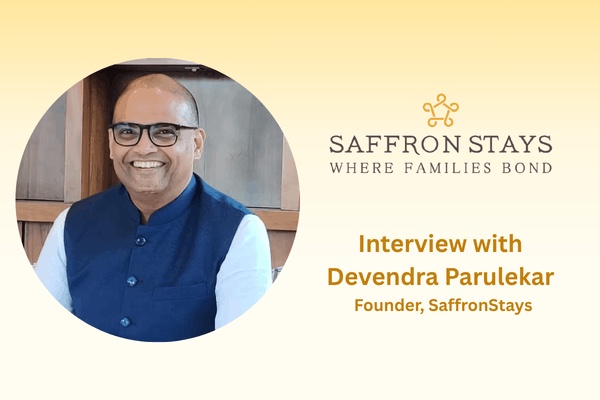
At the centre of this transformation is Devendra Parulekar, the Founder of SaffronStays, who has built a distinctive brand rooted in trust, emotional value, and consistent quality. In an exclusive interview with Business Review Live, the conversation explores key insights into India’s evolving travel ecosystem, including the rise of private, self-contained stays, the growing relevance of hinterland destinations, and the balance between technology, marketing strategy, and human connection. The discussion offers a forward-looking perspective on how data-driven decision-making and authentic guest experiences are shaping sustainable growth in the modern hospitality landscape.
1. When was the moment or experience that inspired you to build SaffronStays and convinced you that India needed a curated network of private luxury homes?
SaffronStays was born out of a deeply personal insight shaped by early experiences of the warmth and authenticity found in private guest houses associated with the Tata Group. These homes stood out for their intimacy, thoughtful service, and genuine sense of hospitality. Over time, it became clear that such experiences were limited and would no longer be accessible in the same way, prompting a broader question around why these carefully managed private homes were not available to a wider audience of families.
A decade later, in 2016, this realisation led to a decisive shift away from corporate careers to build what had long been envisioned. The outcome was SaffronStays, a curated network of private villas and bungalows designed to offer families a space to come together, slow down, and create meaningful connections.
2. How does the SaffronStays business model function behind the scenes, and what makes it sustainable in the long run?
The model is built on a clear understanding of the emotional and personal significance attached to private homes. Homeowners are not typical property owners; they are custodians of spaces built over time or inherited across generations. The approach focuses on partnering with them to unlock the full potential of these homes while managing operations end-to-end, including staffing, food, maintenance, and the overall guest experience.
Instead of relying on lease-based structures or minimum guarantees, the model ensures that incentives remain closely aligned. When a property performs well, both the homeowner and the brand benefit, creating a shared sense of ownership. This alignment strengthens long-term discipline, fosters trust, and supports sustainable growth.
3. With so many stay platforms today, what differentiates SaffronStays for guests and homeowners?
The differentiation lies in a strong foundation of emotion and consistency. The model does not operate as a listings platform, nor does it aim to span every price segment. Instead, the focus remains on building a legacy brand firmly positioned within premium, upscale, and luxury villas.
For guests, the experience is defined by trust, personalised home-style hospitality, and a consistent standard across hygiene, safety, food, and service. For homeowners, the approach ensures that the identity of each home is preserved, the asset is protected, and operations are professionally managed without converting a personal space into a conventional hotel environment.
4. Each home is unique. How do you ensure a consistent guest experience across your portfolio?
Consistency is delivered by standardising the essentials while preserving the unique character of each home. Every guest is welcomed by trained caretaking families and supported by spotless linen, clean bathrooms, strong safety standards, and authentic home-cooked meals prepared using local ingredients.
At the same time, the approach deliberately avoids hotel-style butler service. These spaces are positioned as homes rather than hotels, allowing guests to feel at ease while relaxing, cooking together, swimming, or simply enjoying the natural charm and individuality of the environment.
5. How is technology, especially AI, shaping your operations from pricing and bookings to guest experience and home management?
Technology plays a critical role in managing a wide and geographically diverse portfolio with efficiency. It enhances capabilities across forecasting, pricing optimisation, operational audits, team training, and seamless booking workflows, enabling more structured and scalable operations.
At the same time, technology is positioned as an enabler rather than a replacement for what truly defines the experience. The human warmth of caretakers, the authenticity of home-cooked food, and the emotional comfort of real homes remain at the core, ensuring that the essence of hospitality is preserved.
6. What emerging travel trends do you believe will dominate 2026?
The next phase of Indian travel is being shaped by three distinct and powerful shifts. Celebration-led travel is witnessing rapid growth, with villas increasingly becoming the preferred choice for occasions such as birthdays, reunions, bachelorettes, rokas, photoshoots, and even pet-centric celebrations. This reflects a broader move towards more personalised and experience-driven travel.
At the same time, group travel is playing a key role in democratising premium stays. By sharing the cost of a villa, groups are able to transform what would traditionally be high nightly rates into more accessible per-person contributions, making upscale experiences attainable for a wider audience.
Additionally, hinterland destinations are gaining strong momentum. Improved infrastructure, including highways, expressways, and Vande Bharat connectivity, is expanding access to previously underexplored locations such as lakes, mountains, and coastal regions, further diversifying travel preferences.
7. How have guest expectations evolved since 2020, and what major shifts are shaping how India travels today?
Private, self-contained stays have moved firmly into the mainstream, reflecting a clear shift in guest preferences. There is a growing emphasis on safety, hygiene, reliable Wi-Fi, home-style food, and the freedom to enjoy spaces exclusively within one’s own group. Travel patterns are also evolving, with a noticeable rise in multi-generational trips, women-led groups, and pet-friendly experiences.
At the same time, improved road connectivity has significantly influenced behaviour, leading to a strong increase in driveable vacations as travellers seek convenience, flexibility, and more personalised journeys.
8. What is the most underrated or misunderstood challenge in the premium homestay segment?
A significant yet often overlooked aspect of the business lies in the deep emotional connection homeowners have with their villas. These are not transactional assets, but highly personal spaces built with care or passed down as cherished legacies. Building trust and enabling homeowners to open these homes to guests remains one of the most complex and sensitive challenges.
At the same time, guest expectations continue to align with hotel-grade standards. Balancing these two worlds requires a thoughtful approach grounded in sensitivity, empathy, transparency, and strong operational systems that can uphold quality without compromising the personal essence of each home.
9. How do you balance expectations between homeowners and guests when their priorities often differ?
Balance is achieved through transparent communication and a deep respect for both stakeholders. Homeowners prioritise the protection and integrity of their homes, while guests seek consistency and predictability in service.
The approach maintains strong backend discipline through structured training, regular audits, and well-defined processes, ensuring reliability at scale. At the same time, the individuality and emotional warmth of each home are carefully preserved. This balance creates a foundation of trust that supports both homeowner confidence and guest satisfaction.
10. What is next for SaffronStays—new regions, categories, or experiential verticals?
India’s interior travel landscape is witnessing rapid expansion, driven by the development of new highways, expressways, and enhanced rail connectivity. This shift is enabling a deeper presence across regions such as Uttarakhand, Himachal Pradesh, Jammu and Kashmir, Maharashtra’s lake belts, Goa, and key religious corridors including Vrindavan.
Alongside this geographic expansion, there is a growing focus on strengthening a curated portfolio of heritage homes and investing in experiential villas that immerse guests in regional culture, local food traditions, and natural surroundings. This evolving approach reflects a broader belief that the next phase of Indian travel will be shaped by these emerging and previously underexplored hinterlands.
11. What economic or social impact does SaffronStays create for local communities, caretakers, and service staff?
Each home functions as an ecosystem that supports multiple livelihoods, including caretakers, cooks, housekeeping teams, local farmers, drivers, vendors, and other regional service providers. Many caretaking families have been associated with these estates for generations, and the introduction of structured professional management enables more stable and sustainable long-term income opportunities.
At the same time, there is a conscious effort to revive and sustain regional culinary traditions. This includes bringing forward pahadi flavours from Uttarakhand and Goan and coastal cuisines, as well as influences from the Nilgiris, ensuring that local food heritage continues to be preserved and experienced by guests.
12. What advice would you offer first-time hospitality entrepreneurs in India?
Hospitality as a sector rewards patience, trust, and a high degree of emotional intelligence. The approach emphasises respecting the integrity of each home, investing meaningfully in people, and maintaining a clear focus on a well-defined niche rather than attempting to cater to every segment.
Consistency, genuine value creation for homeowners, and authenticity in guest experiences remain central to this philosophy. The model is not driven purely by return on investment but by return on emotion. When that foundation is established effectively, it naturally drives all other outcomes.